
This article contains affiliate links. We may earn a commission if you buy through them, at no extra cost to you.
What Comes in a Medicinal Garden Kit? A Buyer's Checklist for First-Time Gardeners
Meta description: Wondering what a medicinal garden kit should include? Use this checklist to evaluate seeds, containers, soil, markers, and instructions before you buy.
Disclosure: This article contains affiliate links. If you buy through them, we may earn a commission at no extra cost to you. We have not tested any specific kit, and nothing here describes the contents of a particular product.
Choosing a medicinal garden kit can be confusing because the listings often lean on marketing language instead of specifics. This guide helps you compare kits by what's actually in the box. Kits vary widely, so we focus on what to look for, what to ask, and what to verify on any listing before you buy.
Quick Answer: What Should a Medicinal Garden Kit Include?
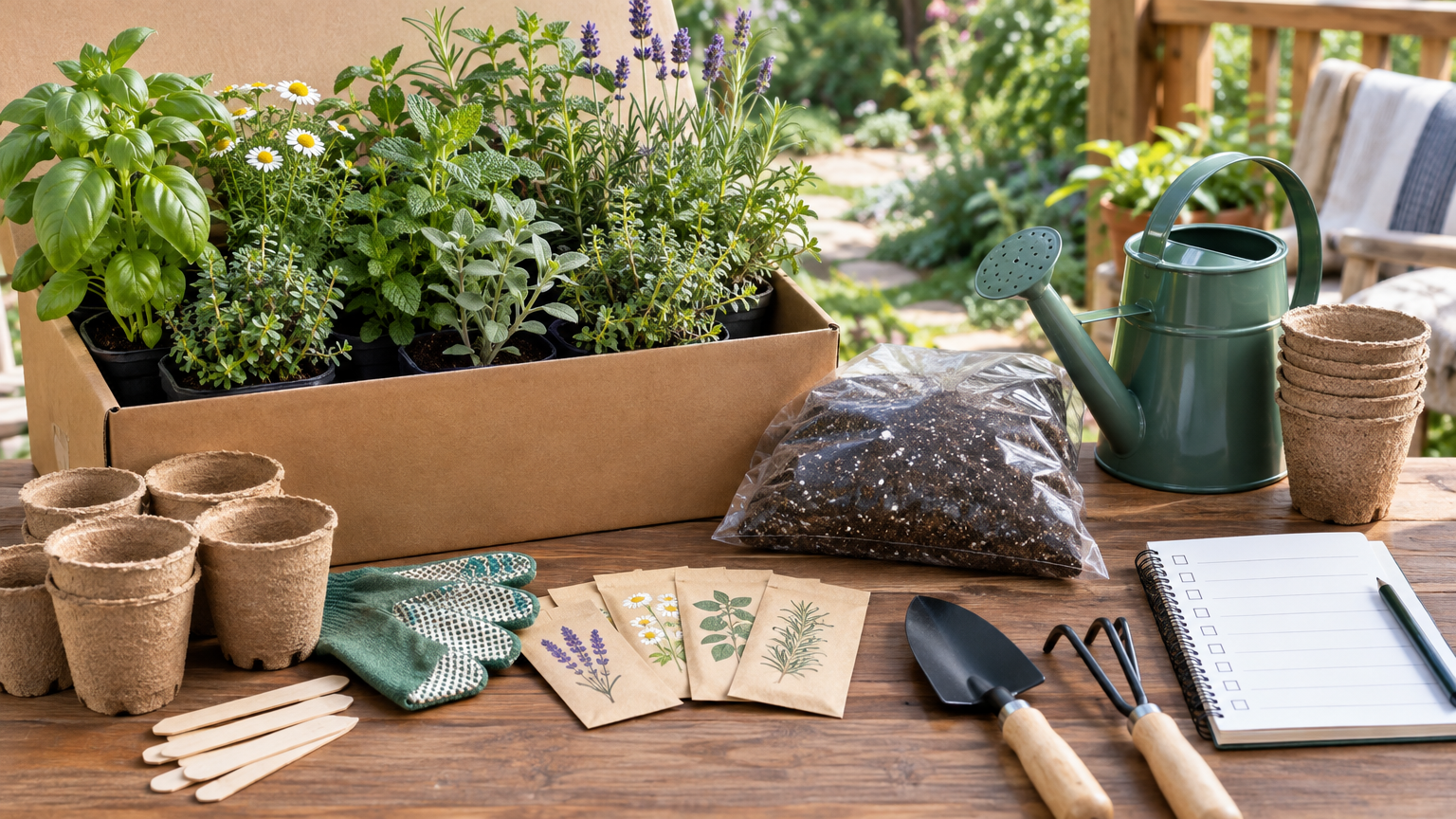
A good medicinal garden kit should include clearly identified seeds or plants, suitable containers with drainage, a starter soil or growing mix, plant markers, and written growing instructions. Look for a specific plant list (common and botanical names) and guidance on sowing, watering, light, and harvesting.
Key takeaways
- Seeds: Every plant should be named, ideally with its botanical name.
- Containers: They need drainage and should suit the plants' mature size.
- Soil or starter mix: Check what's included and whether it's enough.
- Markers: They should match the plant list and hold up to watering or weather.
- Instructions: Plant-specific, beginner-friendly guidance matters more than extras.
"Medicinal" is a category label. A kit maker's wording does not guarantee any health benefit, and kits supply plants to grow, not health advice (see the FAQs).
Before You Shop: Define What You Need
A kit that suits a sunny patio may fail on a dim windowsill. Settle these basics first.
Your Growing Space
Note whether you have a windowsill, balcony, patio, or yard, and how many hours of direct light each gets. Indoor-oriented kits and outdoor kits often assume very different conditions, so check which one the listing describes. If it doesn't say, ask. [VERIFY on each listing]
Your Experience Level and Time Commitment
If you've never grown anything from seed, favor kits with detailed, step-by-step guidance. Seeds need consistent attention early on, so be honest about how often you can water and check seedlings.
Your Goal
Are you after herbs for tea, plants that overlap with the kitchen, a learning project, or a gift? A gift kit may emphasize packaging, while a learning kit should emphasize instructions and plant information.
Safety Considerations
Think about pets, children, pregnancy, and any medications in your household. Some plants are unsuitable for certain people or animals. Consult a qualified health professional before using any plant medicinally, and rely on reputable sources for plant identification and safe use.
The Buyer's Checklist: What to Evaluate Inside the Kit
1. Seeds (or Starter Plants)
Seeds are the heart of the kit, so scrutinize them first.
- Names: Is every plant listed by common and botanical (Latin) name? Common names overlap and mislead. "Mint," for instance, covers many different plants.
- Variety and quantity: How many varieties are included, and does the listing state quantities per packet?
- Packaging: Are seeds in separate, labeled packets, or loose in one bag?
- Dates: Is there a packed-on, tested-for, or "use by" date? If it isn't shown, ask the seller.
- Claims: Terms like organic, non-GMO, or heirloom are claims. Ask the seller for certification details rather than assuming.
- Fit: Are the plants realistic for your climate and space? Check whether each is an annual or perennial and whether it suits indoor or outdoor growing.
Practical example: Suppose a listing says "6 healing herbs." That tells you nothing. A stronger listing might read "Calendula (Calendula officinalis), 1 packet" for each plant, so you can research each one before buying.
2. Growing Containers
- Material: Plastic, fiber, ceramic, or fabric. Does the listing describe it clearly?
- Drainage: Look for drainage holes and a tray or saucer, especially for windowsills.
- Size: Compare container size against each plant's mature size. A small pot may suit a seedling stage but not a full-grown plant.
- Location: Is it suitable for indoor use, outdoor use, or both?
- Reuse: Can you reuse the containers beyond one season?
3. Soil or Starter Mix
- Format: Is loose mix included, or compressed pellets or discs that expand with water?
- Description: Does the listing say what's in the mix?
- Quantity: Is there enough for the container sizes provided?
- Transplanting: Does the kit say whether you'll need to buy extra soil when seedlings outgrow their starting containers?
Starter mixes are often designed for germination, not long-term growth. Ask what the kit expects you to do after the seedling stage. [VERIFY with seller]
4. Plant Markers and Labels
Markers sound minor, but once seedlings sprout, many look alike.
- Are markers included, and do they match the plant list?
- Are they weather-resistant if you'll be outdoors?
- Is a pen or write-on surface provided?
5. Instructions and Guidance
This is where weak kits often fall short. Look for:
- Plant-specific details: sowing depth, spacing, light, watering, germination timing, transplanting, and harvesting.
- Beginner-friendly language: clear numbered steps, not dense paragraphs.
- Troubleshooting: tips on overwatering, leggy seedlings, and pests.
- Safety information: a reminder that plants should be correctly identified and used with caution.
- Support: online help, QR-linked guides, or a customer service contact.
If the listing offers a preview, PDF, or photos of the instruction booklet, read them. If not, ask what the guide covers.
If you're new to all of this, a beginner herb growing guide can fill gaps that a thin instruction sheet leaves.
6. Extras (Nice to Have)
Tools, plant food, a humidity dome, a grow light, or gift packaging can add convenience. Treat them as secondary to seed quality and guidance. A kit with ten accessories but vague seeds is a worse buy than a simpler kit with named plants and clear instructions.
Questions to Ask Before Buying
If the listing doesn't answer these, message the seller:
1. Which exact plants are included (common and botanical names)? 2. Are seeds, live plants, or both included? 3. When were the seeds packed, and how should I store them? 4. What do I need to supply (water, soil, light, tools)? 5. Is the kit suited to indoor or outdoor growing in my area? 6. What is the return, replacement, or germination policy? 7. Does the kit explain safe use of the plants, and does it avoid health claims it can't support? 8. Are there reviews from verified buyers describing germination and instruction quality?
A seller who answers clearly and specifically is showing you something about the kit's quality, too.
Red Flags to Watch For
- Vague plant lists such as "assorted herbs" or "healing plants" with no names
- Missing botanical names
- No growing guidance, or instructions that amount to "add water"
- Unsupported health claims using words like cure, treat, or prevent
- Stock photos of mature plants with no indication of what you'll actually receive
- No information on seed source, date, or storage
- Containers without drainage
- Too many plants for the container size or included soil
- No seller contact, return policy, or support
- Generic reviews that say "great kit!" but give no detail about results
One red flag may be explainable. Several together suggest you should keep looking.
How to Compare Two or More Kits
1. List the plants in each kit using botanical names. 2. Confirm which plants fit your light and space. 3. Check what's missing (soil, markers, tools) and estimate the added cost. 4. Compare instruction quality using any preview, PDF, or photos. 5. Read return and support policies. 6. Scan verified reviews for comments on germination, clarity, and packaging. 7. Choose the kit with the clearest contents and guidance, not necessarily the most items.
When you're ready to compare options, you can browse medicinal garden kit listings and run each one through the steps above. Confirm every detail on the specific listing, since contents can change.
Simple Comparison Table (Template)
Copy this into a notes app or spreadsheet and fill it in for each kit.
| Kit name | Plants listed (botanical names?) | Containers (drainage?) | Soil included? | Markers | Instructions | Return policy | Notes |
|---|---|---|---|---|---|---|---|
| Kit A | |||||||
| Kit B | |||||||
| Kit C |
Leave a cell blank if the listing doesn't say. A blank cell is a question for the seller.
After You Buy: First Steps
- Inspect the contents against the listing and note anything missing.
- Read all instructions before opening seed packets.
- Verify plant identification and note any safety information.
- Start with the easiest plants first, following the kit's guide.
- Keep the packaging for seed details and the support contact.
FAQs
Are medicinal garden kits good for beginners?
They can be, if the kit includes a clear plant list, simple instructions, and suitable containers. Beginners should favor kits with detailed, plant-specific guidance and avoid those with vague contents.
Can I use the plants from a medicinal garden kit as medicine?
Kits supply plants to grow. They don't replace professional medical advice. Consult a qualified health professional before using any plant for health purposes, especially if you're pregnant, nursing, taking medication, or giving it to children. Rely on reputable sources for identification and safe use.
Do I need to buy anything else besides the kit?
It depends on the kit. Check whether you'll need a water source, extra soil, tools, supplemental light, or larger pots for transplanting. If the listing is unclear, ask the seller.
Conclusion
The best medicinal garden kit isn't the one with the most items or the boldest claims. It has named plants (with botanical names), usable containers with drainage, a soil or starter mix, markers that match the plant list, and real instructions you can follow as a beginner.
Use this checklist to compare kits side by side, and contact sellers about anything the listing leaves unanswered before you purchase. When you're ready to compare, see current medicinal garden kit options and check each against the criteria above.