
This article contains affiliate links. We may earn a commission if you buy through them, at no extra cost to you.
Which Specialty Plant-Based Ingredients Are Worth Buying First? Nutritional Yeast, Tahini, Miso, and More
The Short Answer
Buy the ingredient that fixes a flavor gap in dishes you already cook. For most beginners, that means miso (savory depth), tahini (creamy sauces and dressings), or nutritional yeast (cheesy, savory flavor), whichever matches what you make most often.
Skip or delay ingredients tied to a single recipe, such as vital wheat gluten and kala namak, until you know you'll repeat that recipe. Prices and brands vary, so check each label for storage and shelf-life instructions.
Key Takeaways
- Start with one ingredient that solves a problem in meals you already make.
- Miso, tahini, and nutritional yeast cover the most common gaps: umami, creaminess, and cheesiness.
- Single-purpose items like kala namak and vital wheat gluten can wait.
- Buy the smallest size available, date the container, and use it in at least three meals in two weeks.
- Many gaps can be filled with pantry staples, so specialty items are a convenience, not a requirement.
How to Choose Your First Purchases (Practical Steps)
Specialty ingredients are easy to overbuy because each one promises a new style of cooking. A better approach is to start with the meals you already cook and work backward.
1. List your 5 most-cooked meals. Examples: pasta, grain bowls, stir-fries, soups, salads. 2. Identify what's missing. Is it creaminess, umami, cheesiness, smokiness, or egg-like flavor? 3. Match the gap to one ingredient from the guide below. 4. Buy the smallest size available, if one is offered. 5. Plan to use it in at least 3 meals within the first two weeks. If you can't name three, wait. 6. Check the label for storage directions, and write the open date on the container.
A practical example: Say your regular rotation is pasta with tomato sauce, a weekly grain bowl, and a vegetable soup. Your pasta may lack a savory, cheesy finish (nutritional yeast), your grain bowl may need a creamy dressing (tahini), and your soup may taste flat (miso). Pick the gap that bothers you most, buy that one, and use it up before buying another.
Ingredient-by-Ingredient Guide
Nutritional Yeast
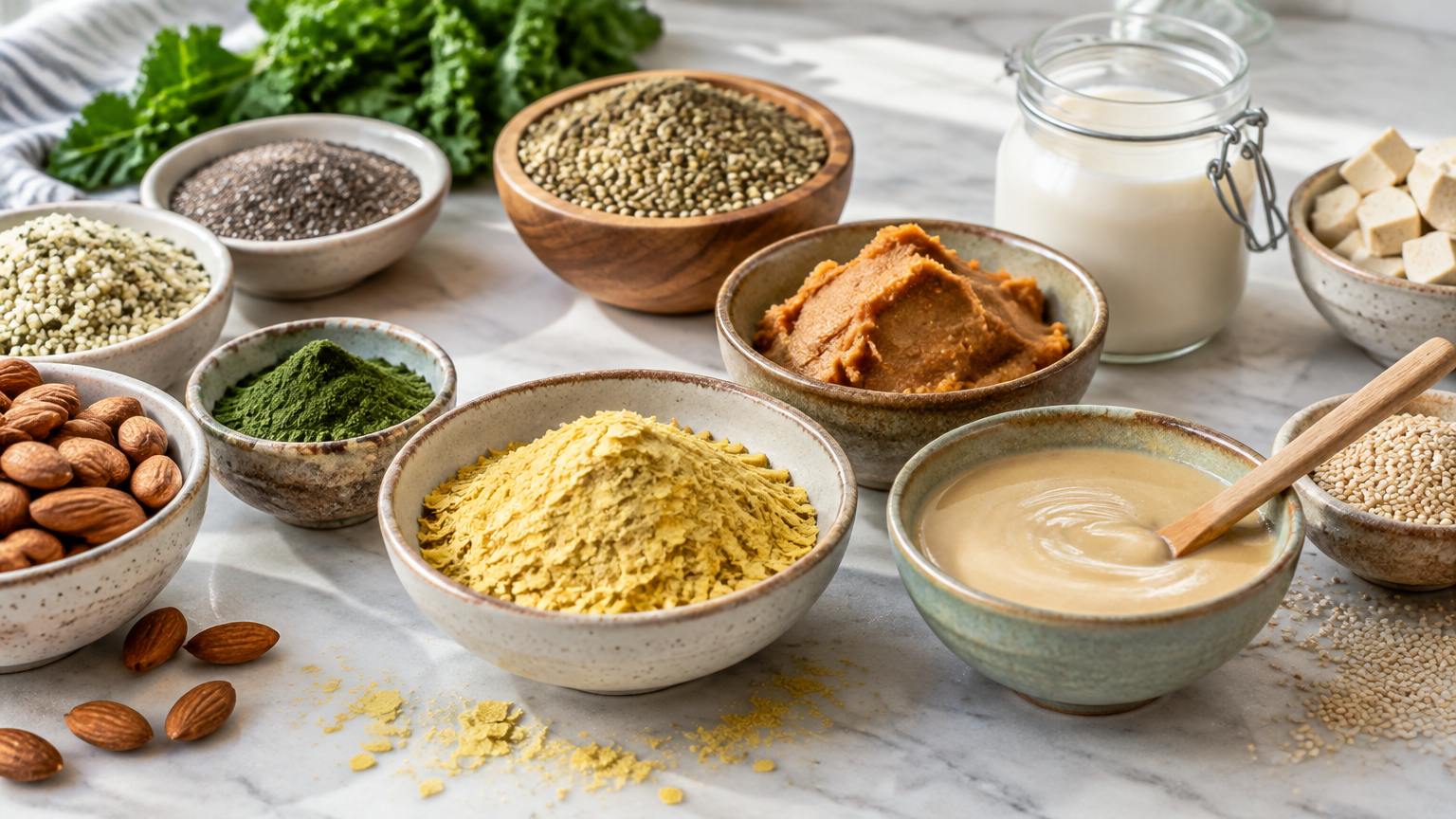
How it's used: Nutritional yeast is a flaky, savory seasoning with a cheesy flavor. It suits pasta, popcorn, roasted vegetables, tofu scrambles, and creamy sauces. Many cooks sprinkle it on at the end, as they would grated cheese.
How to store it: Keep it in an airtight container in a cool, dark, dry place, and follow any label directions.
Substitute or skip: Skip it if you don't want a cheesy-savory flavor. For a rough stand-in, use a little miso or salted ground cashews with lemon juice. The flavor will differ, but it can bring savory richness to a sauce or topping.
Buy it if: You make pasta, popcorn, or scrambles often and want a savory finish.
Tahini
How it's used: Tahini is a sesame paste. It's best for hummus, dressings, sauces, baked goods, and grain bowls. A spoonful thinned with lemon juice and water makes a simple sauce for roasted vegetables or salads.
How to store it: Follow the label. Many people refrigerate it after opening. Oil separation is normal, so stir well before using.
Substitute or skip: Sunflower seed butter, cashew butter, or peanut butter can work in some sauces, though the flavor will change. Skip tahini if you rarely make dressings or hummus.
Buy it if: You eat a lot of salads and bowls and want one ingredient that makes them more satisfying.
Miso
How it's used: Miso is a fermented soybean paste that adds savory depth. It works well in soups, marinades, glazes, dressings, and savory sauces. A small amount can make a plain vegetable broth or a simple dressing taste more rounded.
How to store it: Refrigerate it after opening, in a tightly sealed container.
Substitute or skip: Soy sauce or tamari plus a pinch of salt, or tomato paste, can supply umami, though you won't get the fermented funk. Skip miso if you avoid soy or sodium, or if you don't cook soups and sauces.
Buy it if: Your soups, noodle dishes, or sauces taste flat and you want more depth.
Tamari or Soy Sauce
How it's used: Both are everyday seasonings for stir-fries, marinades, noodles, and general salting. Many cooks already own one, so this is often less a specialty purchase than a quality choice.
How to store it: Follow the label, and keep the cap clean and tight.
Substitute or skip: Regular soy sauce works unless you need gluten-free food. In that case, choose tamari labeled gluten-free. Don't assume any tamari is gluten-free without checking.
Buy it if: You cook stir-fries or noodles regularly and don't have either yet.
Smoked Paprika or Liquid Smoke
How it's used: Both add a smoky note. They suit beans, roasted vegetables, plant-based "bacon" flavors, and chili.
How to store it: Keep spices in a cool, dark, airtight spot. Liquid smoke can go in the pantry.
Substitute or skip: Start with smoked paprika, which is more versatile. Skip liquid smoke unless you want a strong barbecue-style flavor.
Buy it if: Your bean dishes, chili, or roasted vegetables taste one-dimensional.
Raw Cashews
How it's used: Blended, cashews make cream sauces, dressings, desserts, and plant-based "cheese." They're a go-to for dairy-free creaminess, though they're often a pricier pantry item.
How to store it: Keep them in a cool, dry place. Refrigerate or freeze for longer storage to help prevent rancidity.
Substitute or skip: Silken tofu, white beans, or soaked sunflower seeds can replace cashews in some sauces. Skip them if you don't make creamy sauces regularly.
Buy it if: Creamy pasta sauces, soups, or dressings are already part of your routine.
Kala Namak (Black Salt)
How it's used: Kala namak has a sulfur note that gives egg-like flavor to tofu scrambles and similar dishes.
How to store it: Use an airtight container, kept dry.
Substitute or skip: Regular salt works, but you'll lose the sulfur note, and the flavor can mellow with cooking. Skip it unless you make egg-style dishes often.
Buy it if: You've already made egg-style dishes a few times and want the flavor to be closer.
Vital Wheat Gluten
How it's used: It's the base for homemade seitan and other chewier textures.
How to store it: Keep it in a cool, dry, airtight container.
Substitute or skip: Store-bought tofu, tempeh, beans, or mushrooms can provide hearty texture without the extra step. Skip it if you don't plan to make seitan, and avoid it if you need gluten-free food.
Buy it if: You've decided to try seitan and know which recipe you'll make first.
Quick Buying Priorities by Cooking Style
| If you mostly cook… | Buy first | Then consider |
|---|---|---|
| Soups and noodles | Miso | Tamari |
| Salads and bowls | Tahini | Miso (for dressings) |
| Pasta and snacks | Nutritional yeast | Smoked paprika |
| Creamy sauces | Raw cashews | Nutritional yeast |
| Egg-style dishes or seitan | Try the recipe once first | Kala namak or vital wheat gluten |
If you're ready to shop for the core trio, you can compare options for miso, tahini, and nutritional yeast and choose the smallest size offered.
How to Avoid Wasting Money
- Buy one ingredient at a time and use it up before adding another.
- Test substitutes first when a recipe calls for something you rarely use. A spoonful of tomato paste or soy sauce may tell you whether you'd miss the real thing.
- Choose small containers for items you're unsure about.
- Store according to the label, and write the open date on opened items.
A useful rule is that an ingredient has to earn a spot in your rotation. If you've used it in three meals and want it in a fourth, it's a keeper. If it's still sitting there after a month, skip it next time.
FAQs
What is the single best specialty ingredient for a beginner to buy first?
It depends on your cooking. Miso suits soups and sauces, tahini suits dressings and bowls, and nutritional yeast suits pasta, popcorn, and savory toppings.
Can I skip specialty ingredients and still cook good plant-based meals?
Yes. Everyday ingredients such as beans, tofu, soy sauce, tomato paste, lemon, garlic, and spices can cover many flavor needs. Specialty items add convenience or a specific flavor, not necessity.
How do I know if an ingredient has gone bad?
Check the label first. Discard items with mold, off or rancid smells, or unusual texture. Natural oil separation in tahini is normal, but a sharp rancid smell is not.
Conclusion
The most useful specialty ingredient is the one that solves a real flavor gap in the meals you already cook. Miso, tahini, and nutritional yeast are good starting points because each one covers a common need: savory depth, creaminess, or a cheesy finish. Hold off on single-purpose items like kala namak and vital wheat gluten until you know you'll make the recipe again.
Pick one ingredient, buy the smallest size, date it when you open it, and plan three meals around it. Then expand slowly. For ideas on how to put them to work, browse a starter list and recipe roundup using miso, tahini, and nutritional yeast.