This article contains affiliate links. We may earn a commission if you buy through them, at no extra cost to you.
Plant-Based Meal Prep for One Person: Why It Works and What to Expect
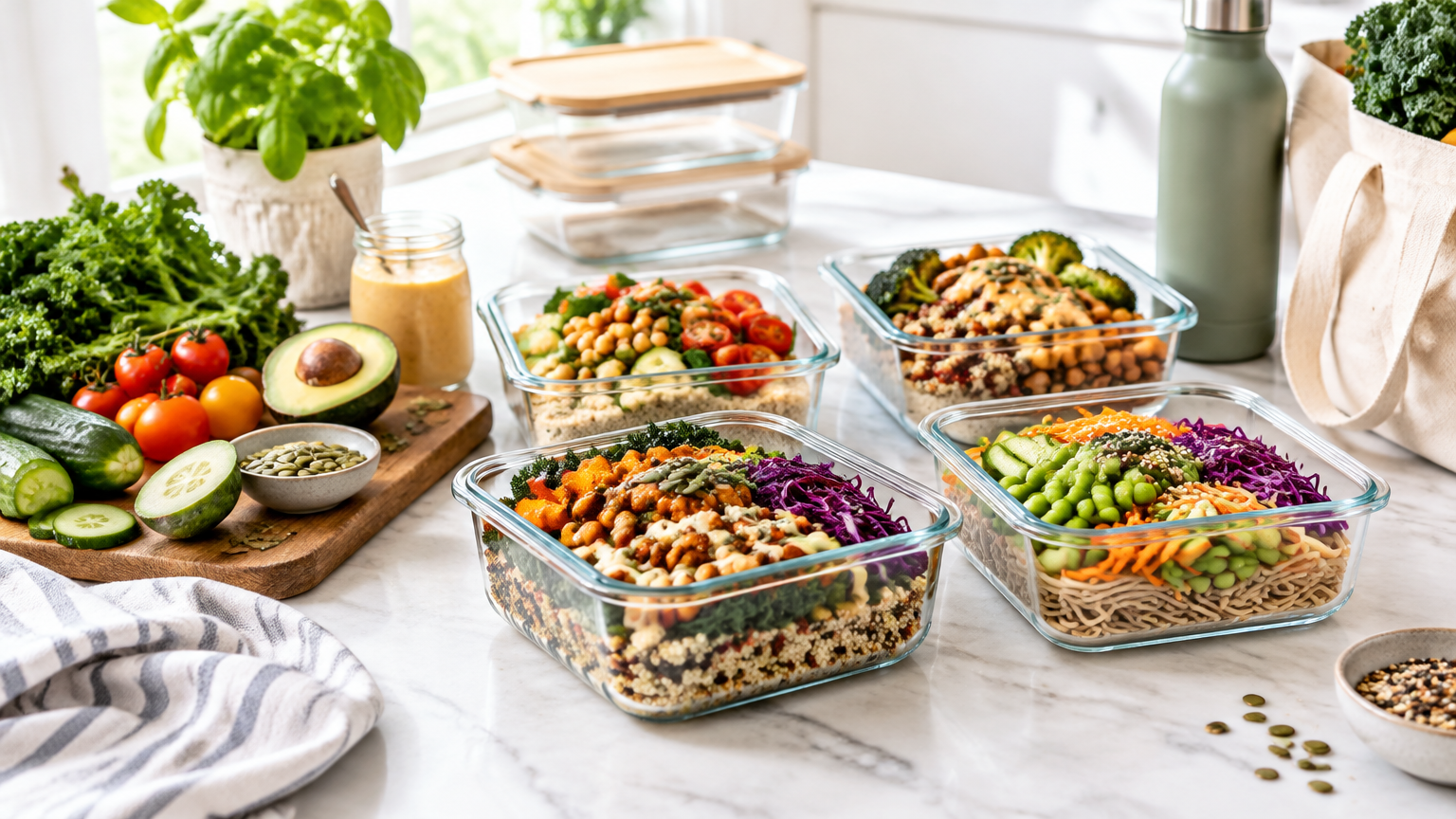
Plant-based meal prep for one person means cooking a few flexible components once, then turning them into different meals all week. Cooking for yourself is rewarding, but most recipes serve four to six. Produce wilts before you finish it, and you end up eating the same leftovers four days in a row.
A simple prep system fixes this. You cook in small batches, mix and match, and freeze what you won't get to. This guide covers equipment, pantry staples, a building-block formula, a sample weekly plan, smart shopping, a step-by-step prep session, storage times, and ways to keep meals balanced and interesting.
Why Plant-Based Meal Prep Suits Solo Eaters
Plant-based staples like grains, beans, lentils, and frozen vegetables are inexpensive, store well, and combine in many ways. That makes them a good match for one-person kitchens. Prepping ahead can also cut down on food waste, reduce impulse spending, and save time on busy weeknights. It helps you eat more consistently, too, because a balanced meal is already waiting when you're tired.
Common Challenges of Cooking for One
- Bulk packaging: A bag of kale or a family-size tofu pack can be more than you'll use.
- Wilted produce: Fresh items spoil quickly when you only use a little at a time.
- Family-size recipes: Dividing them down is awkward and often leaves partial ingredients.
- Boredom: Eating one big pot of chili all week gets old fast.
The sections below address each of these.
Benefits Beyond Reducing Waste
- Predictable grocery spending: Shopping from a plan makes your weekly total easier to anticipate.
- Fewer last-minute takeout decisions: Ready components make the easy option the homemade one.
- More variety in whole foods: Prepping a few different vegetables, grains, and legumes each week encourages a wider range than winging it.
Getting Started: Set Up Your Kitchen and Mindset
Before your first session, gather a few basic tools and stock a pantry that works for you. Aim for progress, not perfection. Your first week can be as simple as one grain, one legume, one tray of vegetables, and one sauce.
Essential Equipment and Storage Containers
You don't need much:
- One or two sharp knives and a cutting board
- Two sheet pans
- A medium pot and a skillet
- A blender (for sauces, smoothies, and soups)
- Glass containers in single-serving sizes, ideally with a mix of compartment and standard styles
For the question of the best containers for vegan meal prep, glass is a solid default. It doesn't hold odors or stains, and it's microwave-friendly. Choose lids that seal tightly, and make sure any container you plan to freeze is labeled freezer-safe. Leave a little headspace for liquids, since they expand. Use masking tape and a marker to label each container with the contents and date.
Stocking a Plant-Based Pantry
A well-stocked pantry means fewer emergency store runs and less spoilage. Keep these on hand:
- Whole grains: rice, quinoa, oats, whole-wheat pasta
- Legumes: canned and dried beans, lentils, chickpeas
- Nuts and seeds: peanuts, almonds, chia, hemp, sesame
- Spices and flavor: cumin, paprika, curry powder, garlic powder, soy sauce, vinegar, tahini
- Sauces: canned tomatoes, coconut milk, nut butter
- Frozen items: vegetables, berries, and spinach
Frozen produce waits for you, so nothing goes bad if your plans change.
Planning Your Week: A Simple Meal Prep Framework
You don't need rigid recipes. Pick a handful of components, cook them, and assemble meals as you go. Flexibility is what keeps this sustainable.
Choose a Prep Style That Fits Your Schedule
- Full-meal prep: You cook and portion complete meals. This suits people who want zero decisions during the week, but meals can feel repetitive.
- Component (mix-and-match) prep: You cook grains, proteins, vegetables, and sauces separately and combine them daily. This keeps food fresher and more varied.
- Batch-and-freeze prep: You make large pots of soup, stew, or burritos and freeze single portions. This suits people with unpredictable schedules.
If you're looking for plant-based meal prep for beginners on a budget, start with component prep. It's forgiving, uses inexpensive staples, and lets you change your mind midweek.
The Building-Block Formula: Grain + Protein + Veg + Sauce
Every bowl, wrap, or plate can follow this formula:
- Grain: quinoa, brown rice, farro, noodles
- Protein: lentils, chickpeas, tofu, tempeh, black beans
- Veg: roasted broccoli, sweet potatoes, sautéed greens, raw cabbage
- Sauce: tahini dressing, peanut sauce, salsa, herby vinaigrette
Quinoa with lentils, roasted vegetables, and tahini becomes a grain bowl. Stuff the same lentils and vegetables into a wrap with salsa the next day, and you have a different meal.
Sample Weekly Plan for One Person
This plan uses just a few components: quinoa, lentils, roasted sweet potato and broccoli, chickpeas, tahini dressing, peanut sauce, and overnight oats.
| Day | Breakfast | Lunch | Dinner |
|---|---|---|---|
| Mon | Overnight oats with berries | Quinoa-lentil bowl with roasted veg, tahini | Chickpea and veggie stir-fry with peanut sauce |
| Tue | Overnight oats with banana | Lentil wrap with greens and salsa | Quinoa bowl with sweet potato, chickpeas, tahini |
| Wed | Smoothie (frozen fruit, spinach) | Leftover stir-fry over quinoa | Lentil soup using prepped lentils and veg |
| Thu | Overnight oats | Chickpea salad sandwich | Sheet-pan veg with tofu, peanut sauce |
| Fri | Tofu scramble with veg | Soup from freezer | Flexible night: eat out or improvise |
Smart Grocery Shopping for One
Build your list directly from the weekly plan, then check your pantry and freezer before you buy. Choose quantities you'll realistically use in a week, and stick to the list so extras don't pile up.
Buying the Right Amounts and Using Bulk Bins
- Use bulk bins to scoop only what you need of grains, lentils, nuts, and spices.
- Pick versatile produce such as carrots, cabbage, sweet potatoes, and onions, which keep well and work in many dishes.
- Buy frozen for items you use in small amounts, like spinach, peas, and berries.
- Choose smaller packages when the price difference is minor.
Cross-Utilizing Ingredients to Cut Waste
Knowing how to avoid food waste when cooking plant-based for one comes down to reusing ingredients across meals:
- Cilantro: Blend some into a sauce, sprinkle some on bowls, and stir the stems into soup.
- Cabbage: Shred some raw for wraps, sauté some for stir-fries, and add the rest to soup.
- A can of chickpeas: Roast half for bowls and mash half for a sandwich filling. The liquid (aquafaba) can also be used in some recipes.
Your Step-by-Step Prep Session
Plan on 1.5 to 2 hours. Work in this order so everything finishes around the same time: start the slowest items first, then fill the downtime with chopping and sauces.
Cook Grains, Legumes, and Roasted Vegetables
Preheat the oven to around 400°F and roast two trays of chopped vegetables. At the same time, simmer about 1 cup dry grain (2–3 cups cooked) and 3/4 cup dry lentils (about 2 cups cooked) on the stovetop. These amounts generally cover several meals for one person. Let everything cool before storing.
Prepare Sauces, Snacks, and Breakfasts
While the oven and stove work, blend one or two sauces, such as tahini-lemon dressing and peanut-lime sauce. Mix 2–3 jars of overnight oats or chia pudding. Add a small batch of hummus or energy bites if you want snacks.
Wash, Chop, and Portion Fresh Produce
Wash and dry greens thoroughly, then store them in an airtight container lined with a paper towel to absorb moisture. Cut raw vegetables like carrots, peppers, and cabbage and store them in separate containers. Keep delicate items, like avocado or tomatoes, whole until you need them.
Storage, Freezing, and Food Safety Basics
Cool cooked food promptly, store it in shallow airtight containers, and refrigerate within two hours. Reheat until steaming hot throughout. The timeframes below are general guidelines for how long plant-based meal prep lasts in the fridge. When in doubt, follow your local food safety authority's advice, and discard anything that smells or looks off.
| Item | Fridge | Freezer |
|---|---|---|
| Cooked grains | 3–4 days | Up to 3 months |
| Cooked beans/lentils | 3–4 days | Up to 3 months |
| Soups and stews | 3–4 days | 2–3 months |
| Roasted vegetables | 3–4 days | Texture may soften |
| Overnight oats/chia pudding | 3–4 days | Not recommended |
| Washed raw greens | 3–5 days | Not recommended |
What to Freeze and What to Keep Fresh
Freezes well: soups, stews, cooked grains, cooked beans, burritos, veggie burgers, and muffins. These are your best single-serving vegan recipes that freeze well. Freeze them in individual portions so you can thaw only what you need.
Better fresh: cucumbers, lettuce and other delicate greens, and creamy or emulsified sauces that can separate.
To thaw, move a container to the fridge the night before, or reheat soups directly from frozen in a pot.
Easy Plant-Based Meal Ideas for One
These ideas are easy to scale to a single serving and rely on your prepped components.
Breakfast and Snack Ideas
- Overnight oats: Combine oats, plant milk, chia, and fruit.
- Tofu scramble: Sauté crumbled tofu with turmeric and leftover veg.
- Smoothie packs: Portion frozen fruit and greens into bags, then blend with liquid.
- Fruit with nut butter: Simple, filling, and requires no cooking.
Lunch and Dinner Ideas
- Grain bowls: Combine your grain, protein, veg, and sauce.
- Lentil soup: Simmer prepped lentils with broth and vegetables.
- Stir-fries: Toss tofu or chickpeas and veg with peanut sauce over rice.
- Wraps: Fill with hummus, greens, and roasted veg.
- Sheet-pan dinners: Roast tofu or chickpeas with vegetables and add a sauce.
If you want a wider recipe library for dinners, you can read a review of the Plant-based dinners guide to see whether it fits your needs. [VERIFY: recipe count, format, and pricing before publishing.]
Keeping Meals Balanced and Interesting
For high-protein plant-based meal prep for one, rotate protein sources: lentils, chickpeas, tofu, tempeh, edamame, beans, and seeds. Include iron-rich foods like lentils and leafy greens, and calcium sources such as fortified plant milk, tofu set with calcium, and some greens. Vitamin B12 isn't reliably found in unfortified plant foods, so fortified foods or a supplement are commonly used. A healthcare professional or registered dietitian can help you with personal needs.
Avoiding Meal Prep Fatigue
- Rotate sauces, spices, and toppings weekly. A different sauce can make the same base feel new.
- Freeze a few meals for later so you always have a backup.
- Leave one or two flexible nights for takeout, dinner with friends, or spontaneous cooking.
Key Takeaways for Plant-Based Meal Prep for One
- Use the building-block formula: grain + protein + veg + sauce.
- Start with component prep for variety and freshness.
- Shop from a plan, buy small amounts, and use bulk bins and frozen produce.
- Cool, store, and reheat food safely, and freeze extra portions.
- Rotate flavors, and plan for flexible nights to keep things interesting.
Frequently Asked Questions About Plant-Based Meal Prep for One Person
How long do prepped plant-based meals last? Most cooked items keep about 3–4 days in the fridge. Freeze portions you won't eat by then.
Is plant-based meal prep expensive? It can be budget-friendly since staples like beans, lentils, rice, oats, and frozen vegetables are generally inexpensive. Your actual cost will depend on where you shop.
How do I avoid getting bored? Prep components rather than full meals, and change up sauces and spices each week.
How do I get enough protein? Include a protein source at each meal, such as legumes, tofu, tempeh, or seeds. A dietitian can give personalized guidance.
How much should I cook for one person? Aim for about 1 cup of dry grain and 3/4 cup dry lentils or beans for the week, then adjust to your appetite.
Conclusion: Start Small and Build Your Routine
You don't have to prep everything at once. Begin with one grain, one protein, one tray of vegetables, and one sauce, then add from there as you get comfortable. Over time, you'll waste less, save time during the week, and find healthy eating gets easier. Pick your first components, write your grocery list, and block out a prep session this weekend.