This article contains affiliate links. We may earn a commission if you buy through them, at no extra cost to you.
Best Budget Kitchen Tools for Plant-Based Cooking Beginners
Disclosure: This article contains affiliate links. If you buy through them, we may earn a commission at no extra cost to you. Our suggestions are based on the selection criteria stated in each section, not on hands-on testing.
Plant-based dinners rely on chopping, browning, simmering, and roasting, so a few versatile tools cover most recipes. This guide is based on what each tool does and what to look for, not on hands-on testing or product rankings. It sorts tools into two tiers, must-have and nice-to-have, so you can spend only where it helps.
The Short Answer: What You Actually Need
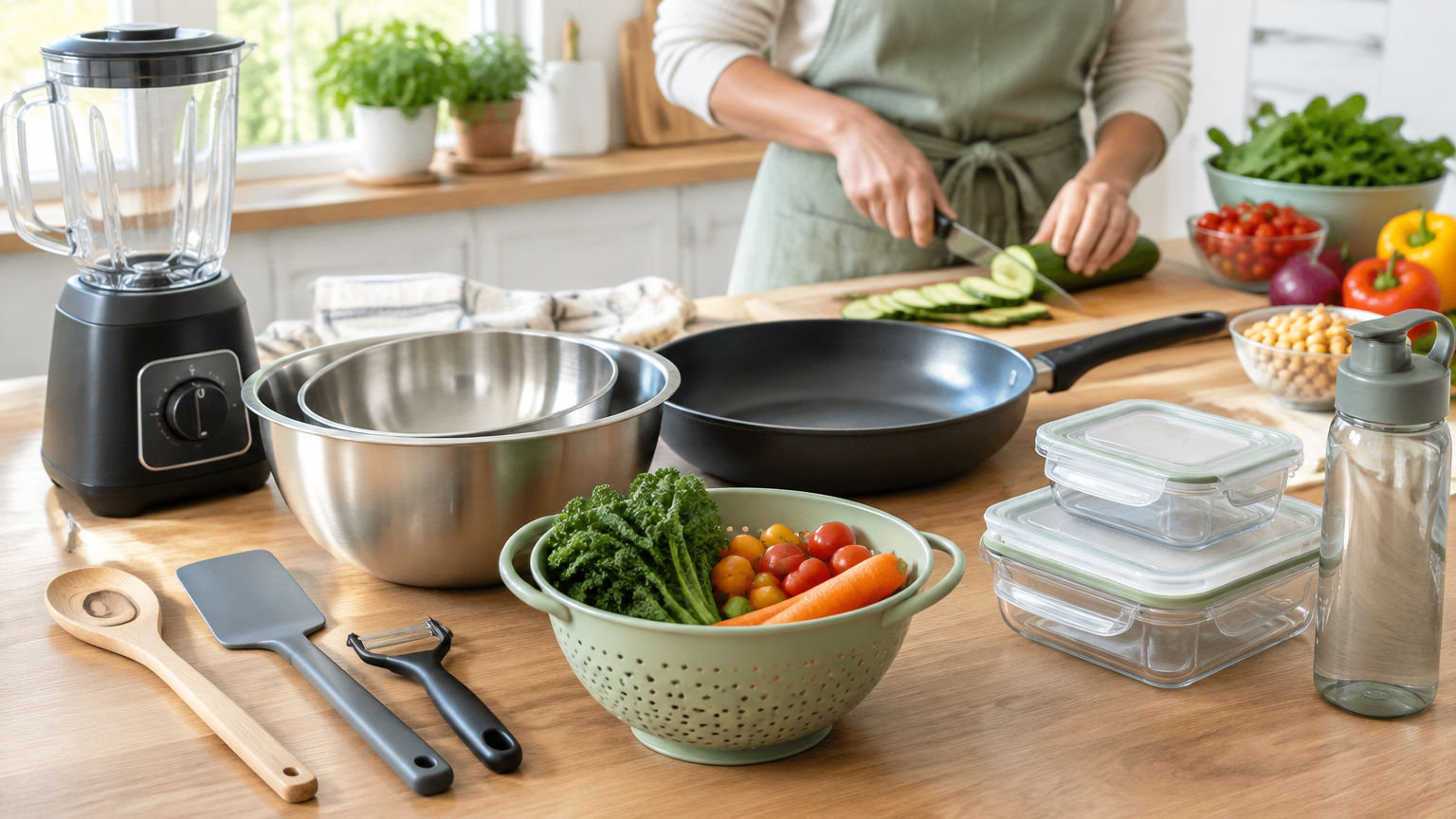
The best kitchen tools for plant-based cooking on a budget are a good chef's or utility knife, a large skillet, a medium-to-large pot, and a rimmed sheet pan. A rice cooker and a blender are useful extras, not requirements.
Key Takeaways
- Four tools (knife, skillet, pot, sheet pan) cover most beginner plant-based dinners.
- One versatile knife and a cutting board are worth more than a large set.
- Buy optional items like a rice cooker or blender only after you notice a recurring need.
- Check what you already own before buying anything.
Quick-Reference Table
| Tool | Role in plant-based dinners | Tier |
|---|---|---|
| Chef's or utility knife (plus cutting board) | Prep for vegetables, greens, tofu | Must-have |
| Large skillet | Sautéing, searing, stir-fries, one-pan meals | Must-have |
| Medium-to-large pot | Soups, stews, beans, lentils, grains, pasta | Must-have |
| Rimmed sheet pan | Roasting vegetables, chickpeas, tofu, potatoes | Must-have |
| Rice cooker | Hands-off rice and other grains | Nice-to-have |
| Blender | Sauces, soups, dressings, smoothies, nut-based creams | Nice-to-have |
| Colander, measuring tools, peeler, tofu press | Small conveniences | Optional |
Must-Have Tools (Start Here)
These four tools handle the core techniques of vegetable-forward cooking: cutting, browning, simmering, and roasting.
1. A Good Knife
What it does: Plant-based cooking involves a lot of prep. Onions, squash, cabbage, carrots, leafy greens, and blocks of tofu all need cutting, and you'll do it often.
Why it matters: A sharp, comfortable knife makes prep faster and safer than a dull one. A dull blade needs more force and can slip, which makes it harder to control.
What to look for:
- A comfortable grip that suits your hand
- A manageable weight, since a knife that feels too heavy or too light is tiring to use
- A blade length you can control, typically a chef's knife or a shorter utility knife
- A blade that is easy to sharpen or maintain
Budget tip: One versatile knife beats a large set. Many sets include pieces beginners rarely pick up. Pair your knife with a stable cutting board, which is a necessary companion rather than an accessory. A board that slides around makes any knife less safe. If you want to compare options, this chef's knife comparison is a place to start browsing against the criteria above.
2. A Large Skillet
What it does: A large skillet is the workhorse for sautéing vegetables, searing tofu or tempeh, toasting whole or ground spices, making stir-fries, and cooking one-pan meals.
What to look for:
- A wide cooking surface. Food browns when it has room. Crowded food tends to steam instead.
- A lid, if possible. It helps with wilting greens or gently cooking denser vegetables.
- A surface suited to your stove. Check your stove type (gas, electric coil, glass-top, or induction) against the skillet's specifications. [VERIFY compatibility on each product page before buying.]
Material considerations (general):
- Nonstick is forgiving for tofu and eggless scrambles, where sticking is a common frustration. Follow the manufacturer's care guidance to protect the coating.
- Stainless steel or cast iron suit stronger browning but take more technique and care. They can be a good second skillet once you're comfortable.
If you can buy only one, choose the material that matches how you expect to cook most often and how much upkeep you're willing to do.
3. A Pot
What it does: A pot handles soups, stews, chili, curries, beans, lentils, pasta, and grains. Many plant-based staples start in a pot.
What to look for:
- Enough capacity for batch cooking. Making a larger quantity gives you leftovers.
- A lid that fits well. It helps with simmering and keeps liquid from evaporating too quickly.
- A sturdy base. A solid base makes it easier to cook sauces and thick stews without scorching, though you'll still need to stir.
Why it matters: Batch-cooked beans and grains support easy weeknight meals. Cook a pot of lentils or a big batch of chili once, and you have the base for several dinners.
4. A Sheet Pan
What it does: A sheet pan roasts vegetables, chickpeas, tofu, and potatoes with minimal effort. Toss ingredients with oil and seasoning, spread them out, and let the oven do most of the work.
What to look for:
- Rimmed edges to keep juices and small pieces from sliding off
- Solid construction that resists warping at oven temperatures
- A size that fits your oven. Measure the interior before you buy.
Tip: Avoid overcrowding. Vegetables piled on top of each other trap moisture and steam instead of roasting. Use two pans if needed, or roast in batches. If you're shopping, this selection of rimmed sheet pans lets you compare sizes and construction against the checklist above.
Nice-to-Have Tools (Add When Your Budget Allows)
These tools add convenience or expand your repertoire, but none is required to cook good plant-based meals.
Rice Cooker
Best for: Hands-off rice and other grains, which frees up stove space.
Who benefits: People who eat grain bowls often or who like to cook a grain while preparing other parts of the meal.
Who can skip it: Anyone comfortable cooking grains in a pot. A pot with a tight-fitting lid does the same job with a bit more attention.
Blender
Best for: Sauces, soups, dressings, smoothies, and nut-based creams.
Who benefits: People who want creamy sauces without dairy, or who enjoy smooth soups and dressings.
Who can skip it: Anyone who mostly roasts and sautés. You can mash beans or vegetables by hand, chop ingredients finely, or choose recipes that don't need a smooth texture. If you're curious how a blender fits into plant-based cooking before buying, this guide to blender uses and features can help you decide.
Other Optional Add-Ons
Keep these small items in mind, but none is essential at the start:
- Colander: Handy for draining pasta, rinsing canned beans, or washing produce. A large spoon or the pot lid can work in a pinch for some tasks.
- Measuring cups and spoons: Useful for following recipes, especially grains, spices, and sauces.
- Vegetable peeler: Speeds up prep for carrots, potatoes, and squash, though a knife can do the job.
- Tofu press: Optional for pressing water from firm tofu. Some cooks simply wrap tofu in a clean towel and set something heavy on top.
How to Choose on a Budget
Work through these steps before you shop:
1. List the meals you plan to cook in the next two weeks. Be realistic about how often you'll cook. 2. Match each meal to a tool. For example, roasted vegetables need a sheet pan, and soup needs a pot. 3. Buy the must-haves first, starting with the knife. Prep affects every recipe. 4. Check what you already own. You may have a usable pot, pan, or baking sheet. 5. Add one nice-to-have only after you notice a recurring need. If you keep wishing for smooth sauces, a blender may be worth it. If not, wait. 6. Consider secondhand or basic versions where safe and practical. Inspect items for damage, warping, or worn coatings. Be cautious with used nonstick pans and knives that can't be sharpened.
Quick Checklist
- [ ] I've listed my planned meals.
- [ ] I've checked my kitchen for tools I already have.
- [ ] I've confirmed my oven size and stove type.
- [ ] I've chosen a knife that feels comfortable and a stable cutting board.
- [ ] I'm buying only what my planned meals require.
Sample Plant-Based Dinners Using Only the Must-Haves
You don't need extras to get started. These ideas use only the four core tools:
- Sheet pan roasted vegetables and chickpeas (sheet pan, knife): Chop vegetables, toss with chickpeas, oil, and seasoning, then roast.
- Tofu and vegetable stir-fry (skillet, knife): Sear tofu, add chopped vegetables, and finish with a sauce.
- Lentil or bean soup (pot, knife): Sauté onions and aromatics, add lentils or beans and liquid, and simmer.
- Pasta with sautéed greens (pot, skillet): Boil pasta in the pot while greens wilt in the skillet with garlic and oil.
Mistakes to Avoid
- Buying large sets with tools you won't use. Start with individual pieces that match your meals.
- Skipping knife care. Dull knives are harder to control. Learn how to hone and sharpen, or find a sharpening option you trust.
- Overcrowding pans. Whether in the skillet or on the sheet pan, give food space to brown and roast.
- Buying specialty gadgets before learning your cooking habits. Cook for a few weeks first, and let real frustrations guide your next purchase.
Frequently Asked Questions
What are the most essential tools for a plant-based kitchen?
A good knife, a large skillet, a pot, and a sheet pan cover most beginner plant-based dinners. Add a stable cutting board with your knife.
Do I need a blender or rice cooker to cook plant-based meals?
No. Both are convenient but optional. A blender helps with smooth sauces and soups, and a rice cooker simplifies grains. Most recipes can be made without them.
How can I build a plant-based kitchen on a budget?
Prioritize the four must-have tools, buy only what your planned meals require, and add optional items over time. Check what you already own first.
Conclusion
Start with the four must-haves (knife, skillet, pot, and sheet pan), which handle chopping, browning, simmering, and roasting. Treat a rice cooker, blender, and small gadgets as nice-to-haves to add once your cooking habits show a real need.
Pick the one must-have you're missing and plan a first meal around it. A sheet pan of roasted vegetables or a pot of lentil soup is an easy place to begin.