This article contains affiliate links. We may earn a commission if you buy through them, at no extra cost to you.
META DESCRIPTION: Learn how to start a plant-based diet for beginners with a gradual approach, a pantry checklist, common mistakes to avoid, and a simple 7-day meal plan with quick recipes.
How to Start a Plant-Based Diet for Beginners (A Simple 7-Day Plan)
Disclosure: This article may contain affiliate links. They don't change our recommendations.
Busy and unsure where to begin? Start small. If you're wondering how to start a plant based diet for beginners, begin by adding more vegetables, fruits, whole grains, beans, nuts, and seeds to meals you already eat. Then swap animal-based items gradually, stock a simple pantry, and use a basic weekly plan to build routine. Go at a pace that fits your schedule, budget, and preferences.
What "Plant-Based" Means
Plant-based vs. vegan vs. vegetarian
- Plant-based: A flexible term for eating mostly or entirely foods that come from plants. People define it differently.
- Vegetarian: No meat or fish. Some vegetarians still eat dairy and eggs.
- Vegan: No animal products at all, including dairy, eggs, and honey. Veganism is often also an ethical or lifestyle choice, not just a way of eating.
Choose your starting style
| Style | What it looks like |
|---|---|
| Mostly plants | Plants fill most of your plate; some animal foods stay |
| One meal a day | One plant-based meal daily, such as breakfast |
| A few days a week | Two or three fully plant-based days |
| Fully plant-based | No animal products |
Pick the approach that is realistic for you. There is no single "right" version.
How to Switch Gradually (Step-by-Step)
Step 1: Set a simple goal
Choose something small and measurable, like "one plant-based meal a day" or "plant-based lunches on weekdays." A goal you can keep beats an ambitious one you abandon.
Step 2: Start with meals you already like
Look at what you already eat that is plant-based or close to it: veggie chili, pasta with vegetables, stir-fries, bean burritos, peanut butter sandwiches. Make those your first rotation.
Step 3: Swap, don't overhaul
Make one-for-one changes:
- Plant milk in place of dairy milk
- Beans or lentils in place of some or all ground meat
- Olive oil in place of butter
Step 4: Build balanced plates
Aim for each meal to include:
- Vegetables (fresh or frozen)
- Whole grains or starches (rice, oats, potatoes, whole-grain bread)
- A protein source (beans, lentils, tofu, or tempeh)
- A fat source (nuts, seeds, avocado, olive oil)
Step 5: Plan ahead for busy days
Cook a pot of grains and a pot of beans once, then mix and match through the week. Our [Link: Plant-Based Meal Prep Guide] walks through the process. If you'd rather not cook every night, you can also look at plant-based dinner options for evenings when time is short.
Plant-Based Pantry Starter List
Start with a handful of items from each group rather than buying everything at once.
Staples
- Rice, oats, pasta, quinoa
- Canned or dried beans and lentils
- Whole-grain bread or tortillas
Flavor builders
- Garlic and onions
- Spices (cumin, paprika, chili powder, curry powder)
- Soy sauce, nutritional yeast, vinegar
- Canned tomatoes
Frozen and fresh basics
- Frozen vegetables and fruit
- Leafy greens
- Bananas
- Potatoes
Nuts, seeds, and spreads
- Peanut butter
- Tahini
- Chia seeds and ground flax
For a printable version organized by store section, see our [Link: Plant-Based Grocery List for Beginners].
Common Beginner Mistakes (and Easy Fixes)
- Changing everything at once. Start with one or two swaps and add more when those feel automatic.
- Relying only on processed substitutes. Plant-based meats and cheeses can be convenient, but mix them with whole foods like beans, vegetables, and grains.
- Not eating enough variety or enough food overall. Plant-based meals can feel lighter at first. Build filling plates with starches, protein, and fat.
- Overlooking nutrients. If you plan to be fully plant-based, ask a doctor or registered dietitian about nutrients such as vitamin B12.
- Skipping planning. Keep a short list of go-to meals so you aren't deciding from scratch at 6 p.m.
- Expecting perfection. Progress matters more than rules. An off day doesn't cancel your effort.
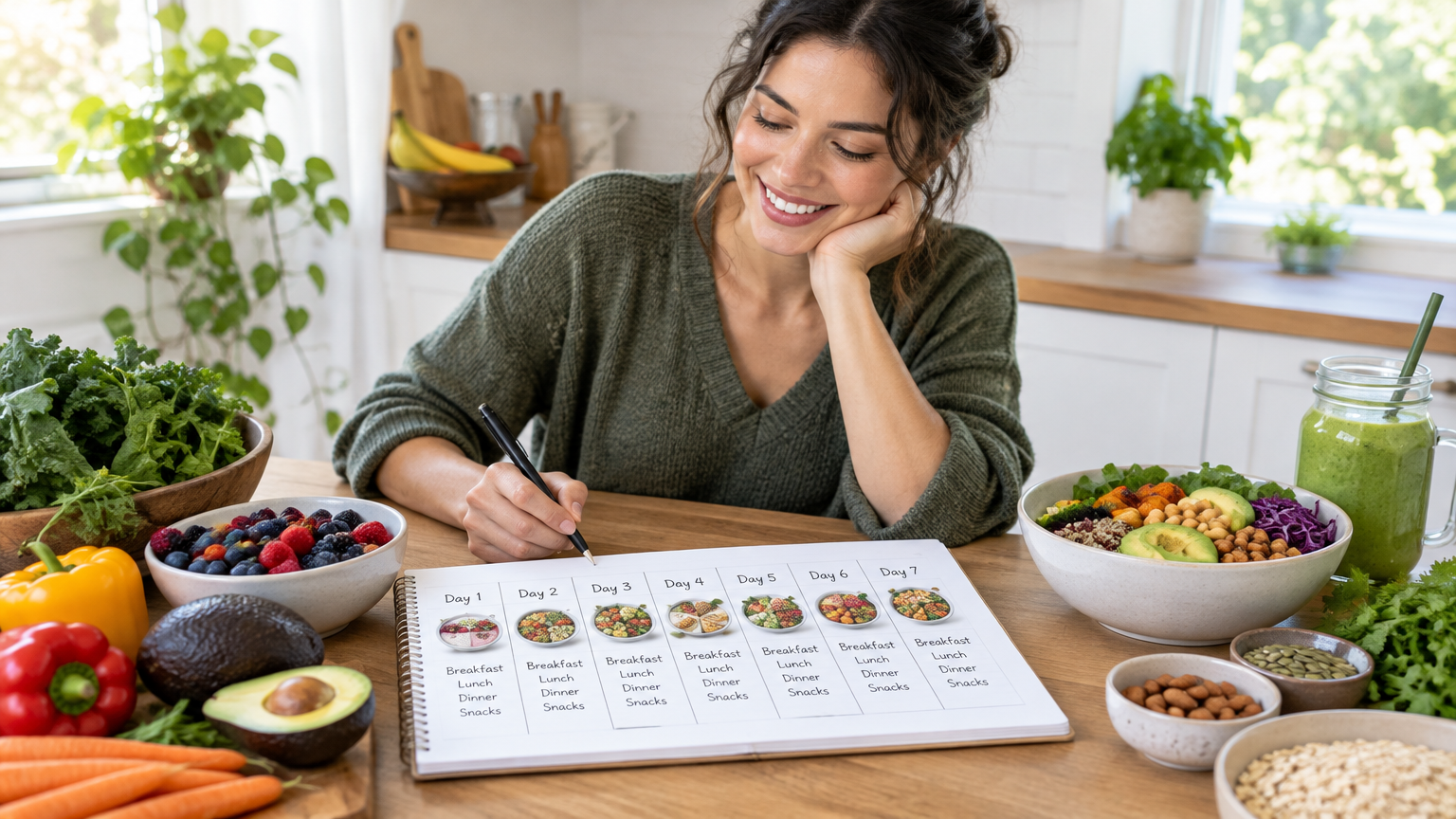
Simple 7-Day Plant-Based Meal Plan
This is a flexible template. Swap meals freely and adjust portions to your needs. Leftovers are built in to save time.
Day 1
- Breakfast: Overnight oats
- Lunch: Hummus and veggie wrap
- Dinner: Veggie stir-fry with tofu and rice
Day 2
- Breakfast: Peanut butter banana toast
- Lunch: Leftover stir-fry bowl
- Dinner: Pasta with marinara and white beans
Day 3
- Breakfast: Fruit and oat smoothie
- Lunch: Lentil soup (canned or batch-cooked)
- Dinner: Sheet-pan roasted vegetables and chickpeas
Day 4
- Breakfast: Tofu scramble
- Lunch: Grain bowl with beans and greens
- Dinner: Veggie tacos with black beans
Day 5
- Breakfast: Chia pudding
- Lunch: Leftover taco bowl
- Dinner: Coconut chickpea curry with rice
Day 6
- Breakfast: Oatmeal with fruit and nuts
- Lunch: Big salad with beans, seeds, and whole-grain bread
- Dinner: Veggie fried rice
Day 7
- Breakfast: Whole-grain pancakes or toast with fruit
- Lunch: Leftover curry
- Dinner: Veggie chili with baked potatoes
Quick recipe notes
Overnight oats: Stir ½ cup rolled oats, ½ cup plant milk, and 1 tablespoon chia seeds in a jar. Refrigerate overnight and top with fruit.
Tofu scramble: Crumble firm tofu into an oiled pan with chopped onion and peppers. Season with turmeric, garlic powder, salt, and a splash of soy sauce, and cook until heated through.
Chickpea curry: Sauté onion and garlic, then stir in curry powder. Add a can of chickpeas, a can of coconut milk, and canned tomatoes. Simmer about 15 minutes and serve over rice.
Veggie chili: Cook onion, peppers, and garlic with chili powder and cumin. Add canned tomatoes, kidney and black beans, and a cup of water or broth. Simmer 25 to 30 minutes.
Tips for busy days
- Batch-cook grains and beans once, then use them all week.
- Keep frozen vegetables on hand for fast stir-fries, soups, and curries.
- Repeat meals. Eating the same breakfast most days is a perfectly good strategy.
For more morning options, see [Link: Plant-Based Breakfast Ideas]. For prep routines, see the [Link: Plant-Based Meal Prep Guide].
FAQ
Do I have to give up animal products completely to start a plant-based diet?
No. Many people start by increasing plant foods and reducing animal products gradually. Choose what suits you.
How do I get enough protein on a plant-based diet?
Include foods like beans, lentils, tofu, tempeh, edamame, whole grains, nuts, and seeds across your meals. For individual needs, consult a healthcare professional or registered dietitian.
Is a plant-based diet expensive for beginners?
It can be affordable when built around staples like beans, rice, oats, and frozen vegetables. Specialty products usually cost more. Our [Link: Plant-Based Grocery List for Beginners] focuses on basics.
Key Takeaways / Next Steps
- Start with one change this week, such as one plant-based meal a day.
- Build on meals you already enjoy, and swap rather than overhaul.
- Stock a small pantry of staples, flavor builders, and frozen basics.
- Use the 7-day plan as a template, and repeat what works.
Ready for the next step? Grab the [Link: Grocery List], explore [Link: Breakfast Ideas], or set up your week with the [Link: Meal Prep Guide].
Note: This article is general information only, not medical advice. Consult a healthcare professional before making major dietary changes, especially if you have health conditions, are pregnant, or have special nutrition needs.