
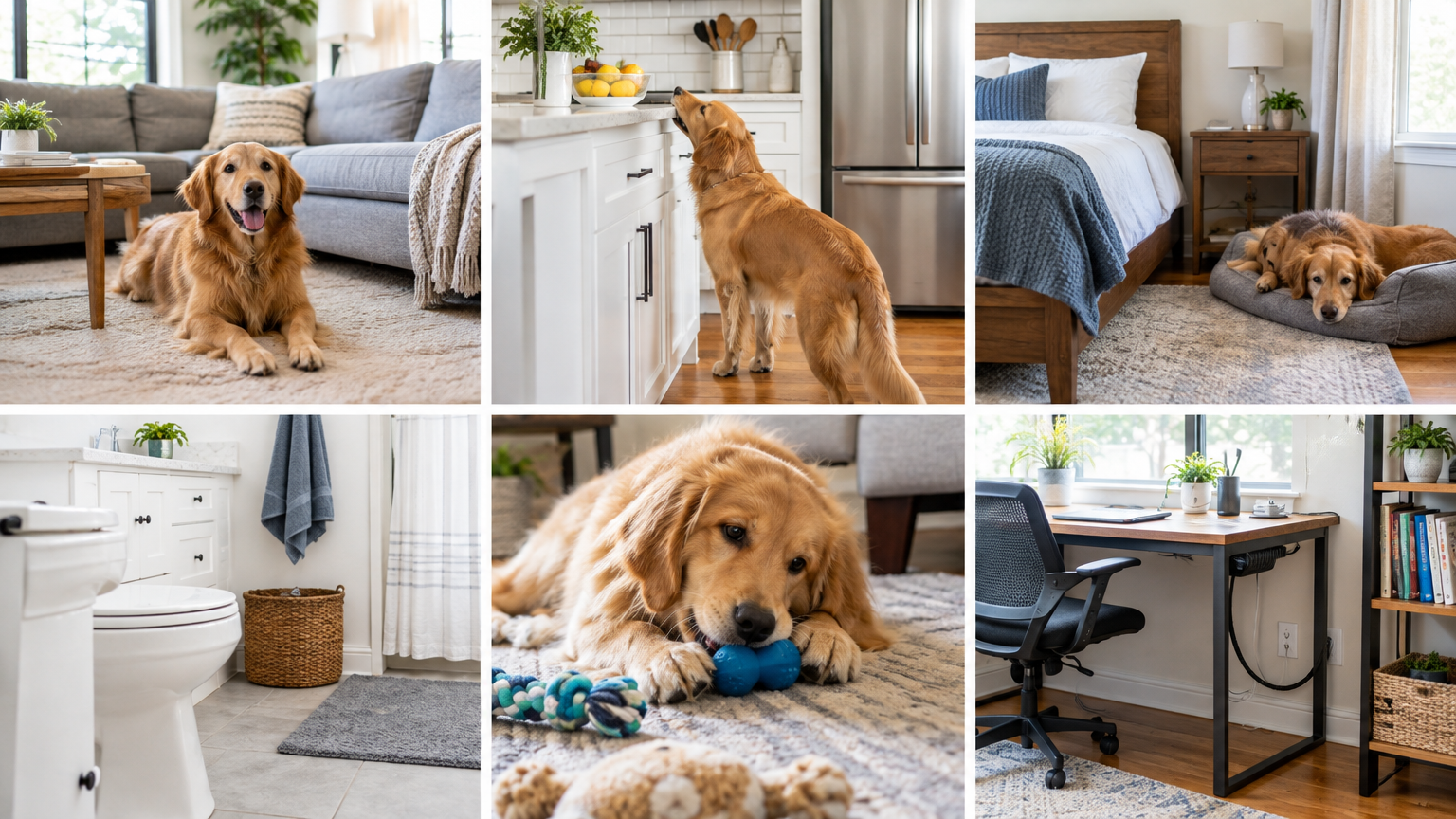
This article contains affiliate links. We may earn a commission if you buy through them, at no extra cost to you.
Dog-Proofing Your Home: A Room-by-Room Checklist for Chewers
Title tag: Dog Proof Home for Chewers: Room-by-Room Checklist Meta description: Use this room-by-room checklist to dog proof your home for chewers. Cover cords, shoes, trash, plants, and garden items in every space.
Chewing is normal dog behavior, but it can wreck your belongings and put your dog at risk. This guide shows you how to dog proof your home for chewers, room by room, with a focus on cords, shoes, trash, plants, and garden items.
Quick Answer: How to Dog Proof a Home for Chewers
Remove or block access to anything chewable and risky. Secure cords, store shoes, use lidded or hidden trash, and keep plants and garden supplies out of reach. Offer approved chew toys, supervise or confine your dog when you can't watch, and confirm the safety of any plant or product with your vet or a poison-control resource.
Key takeaways: the five priorities
- Cords: cover, hide, or unplug them
- Shoes: closed storage, closed doors
- Trash: latched or hidden
- Plants: out of reach and verified by a professional
- Garden items: locked away or sealed
Before You Start: Think Like a Chewer
Get down to dog level
Walk each room at your dog's eye level and reach height. Include what your dog can reach by jumping, stretching, or counter-surfing. Dangling cords, low shelves, and open bins show up fast from down there.
Sort items into three groups
- Remove: anything not worth the risk, such as small items your dog keeps stealing.
- Block or secure: cords, trash, and cabinets.
- Replace: swap in appropriate chews where your dog usually chews.
Set up a safe space
Pick a crate, pen, or gated room for times you can't supervise. Introduce it gradually so your dog sees it as a comfortable spot, not a punishment.
Room-by-Room Checklist
Living Room
- Cords and cables: Tuck them behind furniture, use cord covers or channels, and unplug devices when not in use.
- Remotes, controllers, and small electronics: Store them out of reach.
- Shoes, socks, and kids' toys: Use a closed shoe cabinet or a high shelf.
- Houseplants: Move them out of reach and verify each one with your vet or poison control.
- Furniture and décor: Block access to table legs, pillows, and throws if your dog targets them.
Kitchen
- Trash and recycling: Use a lidded can inside a closed cabinet, or a latch-secured bin.
- Countertops: Clear off food, wrappers, and utensils.
- Cabinets: Add child-proof latches for cleaning supplies and food storage.
- Pantry: Keep the door closed or latched.
- Reminder: Check unfamiliar foods and household products with your vet before assuming they're safe.
Bedroom
- Shoes and clothing: Keep closets closed and use a hamper with a secure lid.
- Cords: Manage charger cables and bedside lamp cords.
- Small items: Store jewelry, hair ties, medications, and cosmetics in closed drawers or cabinets.
- Bedding: Monitor chewing, and remove bedding if your dog tears it up.
- Plants: Keep them out of reach and verify with a vet or poison-control resource.
Garage
- Chemicals and tools: Store them in closed, latched cabinets or on high shelves.
- Cords, hoses, and small hardware: Keep them off the floor.
- Garden supplies: Store fertilizers, pest products, and soil amendments in sealed containers out of reach. Read the labels, and ask your vet or poison control about risks.
- Access: Keep the door closed or gate the area.
Yard and Garden
- Fencing: Inspect for gaps, loose boards, and chewed spots.
- Plants: Review every plant, including shrubs, bulbs, and mulch, with your vet or a poison-control resource before allowing access.
- Garden items: Secure tools, hoses, sprinkler parts, plant ties, stakes, and pots.
- Compost and trash bins: Use tightly closed lids or a locked area.
- Supervision: Check the yard for hazards before each outing and watch your dog while outside.
Cords, Shoes, Trash, Plants, and Garden Items: Fast Fixes
| Problem area | Fast fixes |
|---|---|
| Cords | Cord covers, cord organizers, furniture placement, unplugging when not in use |
| Shoes | Closed storage, closed bedroom and closet doors, a designated chew toy as a swap |
| Trash | Latching bins, cabinet storage, taking trash out promptly |
| Plants | Hanging planters, closed rooms, a vet-verified plant list |
| Garden items | Locked shed, sealed containers, raised storage |
Practical example: If your dog goes for the shoes by the front door, move them into a closed cabinet. Then put an approved chew toy where the shoes used to be. When your dog picks up the toy, praise them. That teaches your dog where chewing is welcome.
Give Chewers Better Options
Choose appropriate chew toys
Match size and durability to your dog. Inspect toys often and replace any that are cracked, shredded, or breaking apart. If your dog is a heavy chewer, ask your vet for recommendations.
Rotate toys and provide exercise
Rotating toys keeps them interesting. Physical and mental activity can also help reduce boredom chewing. If you want structured mental-enrichment ideas, you could look into a training program such as Brain Training for Dogs and review the details yourself to see whether it suits your dog and routine.
Redirect, don't punish
Trade the forbidden item for an approved chew, then reward the switch. Punishment after the fact rarely teaches a dog what to do instead.
How to Check Plant and Household-Item Safety
This guide does not list toxic or safe items. Lists online can be incomplete, outdated, or wrong, so verify each plant and product with a professional.
- Contact your veterinarian for guidance on specific plants and products.
- Use a reputable animal poison-control resource, such as the ASPCA Animal Poison Control Center or Pet Poison Helpline. Confirm current contact details and any fees on their official sites.
- Keep product labels and plant names handy. Photos of plant tags and product packaging work well.
- Treat unknowns as off-limits until a professional confirms otherwise.
What to Do If Your Dog Chews Something Risky
1. Remove your dog from the item. Keep the packaging or a sample of the plant. 2. Call right away. Contact your vet, an emergency clinic, or a poison-control hotline. 3. Follow professional instructions. Do not give home remedies unless a professional advises it.
Save your vet's number, the nearest emergency clinic's number, and your chosen poison-control contact in your phone before you need them.
Printable Checklist Summary
- ☐ Living room: Cords covered or hidden, electronics and shoes stored, plants moved and verified, chew targets blocked
- ☐ Kitchen: Trash latched or in a cabinet, counters cleared, cabinets and pantry latched
- ☐ Bedroom: Closet and hamper closed, chargers managed, small items and medications in drawers, bedding monitored
- ☐ Garage: Chemicals and tools latched away, garden supplies sealed, cords and hardware off the floor, door closed or gated
- ☐ Yard: Fence inspected, plants reviewed with a professional, tools and pots secured, bins closed, outings supervised
Re-check your home regularly, especially after rearranging furniture, hosting guests, or seasonal changes.
Frequently Asked Questions
1. What is the best way to dog proof a home for chewers?
Remove or secure tempting items, manage cords, and store shoes and trash. Limit access to plants and garden supplies, and provide appropriate chews. Supervise your dog or confine them to a safe space when you can't watch.
2. How do I know if a plant or household item is safe for my dog?
Don't rely on unverified lists. Check with your veterinarian or a poison-control resource, and keep unknown items out of reach until a professional confirms them.
3. How can I stop my dog from chewing cords and shoes?
Make them inaccessible with cord covers and closed storage. Offer approved chew toys, and redirect and reward your dog for choosing them. If chewing is persistent or suddenly gets worse, talk with your vet or a qualified trainer.
Conclusion
To dog proof your home for chewers, focus on prevention, supervision, and giving your dog better things to chew. Start with the five priorities (cords, shoes, trash, plants, and garden items), then work through each room and the yard. Walk through your home with this checklist today, and schedule a vet check-in for any questions about plants and products.
Related reading ideas: best chew toys for heavy chewers, puppy-proofing basics, a crate training guide, and safe gardening with pets.
Editor notes: Add FAQ schema for the three questions. Add internal link URLs once the pages are confirmed. the current ASPCA and Pet Poison Helpline contact details and fees before publishing. No details were supplied for Brain Training for Dogs, so the article makes no claims about its features or results.