Category: Puppy Teething

Learn what teething looks like in puppies, how long chewing phases tend to last, and gentle ways to guide young dogs toward appropriate things to chew.

  • Choosing Training Treats for Chew Redirection: Size, Texture, and Ingredient Considerations

    Choosing Training Treats for Chew Redirection: Size, Texture, and Ingredient Considerations

    This article contains affiliate links. We may earn a commission if you buy through them, at no extra cost to you.

    Choosing Training Treats for Chew Redirection: Size, Texture, and Ingredient Considerations

    Disclosure: This article contains affiliate links. This guide does not rank brands, and no products were tested for it.

    The best training treats for dogs used in chew redirection are small, soft or easily swallowed, highly appealing to your dog, and low enough in calories to use many times a day. Check the label for ingredients your dog can't have, and ask your vet how treats fit into your dog's overall diet.

    Key Takeaways

    • Pick treats your dog eats in one or two seconds so sessions keep moving.
    • Cut treats into tiny pieces to control calories and speed up repetition.
    • Read both the calorie information and the ingredient list before buying.
    • Keep more than one value level on hand: everyday treats and a higher-value option for tough trades.
    • Ask your vet about treat allowances, especially with allergies, weight concerns, or medical diets.

    Why Treat Choice Matters for Chew Redirection

    What redirection and trading look like

    Redirection means swapping something off-limits for something allowed. Your dog grabs a sock, you offer a treat or an approved chew, and your dog gives up the sock. The treat is the payment, so it needs to be worth the deal.

    Why "drop it" practice needs a treat your dog values more than the item

    If the treat is less interesting than the object, your dog has little reason to let go. A dry, bland biscuit may work for trading a paper towel but fail against a stolen chicken bone. Practice with items of different value, and match your treat to the challenge.

    Why short sessions favor quick-to-eat treats

    Short sessions of a few minutes depend on rhythm: ask, reward, repeat. If your dog spends 15 seconds crunching each reward, the rhythm breaks and focus drifts. Treats that disappear quickly keep your dog engaged.

    Soft vs. Crunchy Treats

    Soft treats

    Soft treats are quick to swallow and easy to break apart, so there is less pausing between repetitions. They tend to suit trading and "drop it" drills, where timing matters.

    Crunchy treats

    Crunchy treats may last longer in a pouch and can feel less messy. But they can be slow to eat, leave crumbs your dog stops to search for, and make noise that may distract some dogs. Some are also hard to break into small pieces.

    Which to choose by situation

    Situation Often a good fit Why
    Trading a household item Soft, small, appealing Fast swap, minimal pause
    "Drop it" drills Soft, easily divided Many quick repetitions
    Distracting environments Soft, higher-value Competes with smells and sights
    Easy, calm practice at home Small crunchy pieces or kibble Lower value is often enough

    Every dog differs. Your dog's own response is the best guide.

    Size Considerations

    Why tiny pieces work

    Tiny pieces allow faster repetition, fill your dog less, and add fewer calories per reward. A dog who gets 20 small rewards stays interested longer than one who gets two large ones and feels done.

    How to cut or break treats down

    For many dogs, pea-sized or smaller works well. Soft treats can be pinched or cut with kitchen scissors. Do it before the session so you aren't fumbling mid-training. Treats that crumble unpredictably are harder to portion.

    Matching size to your dog

    A pea-sized piece may be generous for a toy breed, so go smaller, closer to a grain of rice or a lentil. A large breed may be fine with a slightly bigger piece, but keeping it small still helps with speed and calories. Adjust to your dog.

    Practical example: You're practicing "drop it" with a small rope toy. You hold six pea-sized soft pieces in a pouch. Your dog releases the toy, you reward, then often hand the toy back. That keeps the game fair and the sessions short.

    Calorie Awareness

    Why treat calories add up

    Ten rewards in one session, three sessions a day, equals thirty treats. Even small calories compound, particularly for small dogs.

    Reading the calorie information

    Check whether the package lists calories per treat or per serving, and check what a "serving" is. If calories are listed per serving, you may need to estimate per piece after cutting. If the package doesn't state calories clearly, that is worth noting when comparing products [VERIFY: calorie statement requirements vary by product type and region].

    Planning treats as part of the daily total

    Treats count toward your dog's daily intake. On heavy training days, you may need to reduce meal portions slightly. Ask your vet before changing amounts.

    Asking your vet what allowance suits your dog

    A sensible treat allowance depends on size, age, activity, and health. Your vet can give a personalized number rather than a general rule.

    Ingredient, Allergy, and Sensitivity Label Checks

    Reading the ingredient list

    Ingredients are generally listed in order of weight, so the first few tell you the most. Note the protein sources and any additives, colors, or flavorings you don't recognize. A shorter, understandable list makes it easier to spot problems.

    Avoiding known triggers

    If your dog has reacted to certain proteins or grains, scan every label for them, including less obvious forms such as "meal," "by-product," or "flavor." Also check for allergen statements. Don't assume a flavor name tells you everything.

    Limited-ingredient options

    For dogs with sensitivities, limited-ingredient treats can make label checking simpler. Confirm with your vet before switching, especially if your dog is on a prescribed or elimination diet.

    Checking for unsafe ingredients

    Look for xylitol, a known toxin to dogs, particularly in human foods or specialty products. If you see it, don't use the product for your dog. Other foods are also unsafe for dogs, so if you use human food as treats, verify each one with your vet or a reliable veterinary source.

    Introducing a new treat gradually

    Start with a small amount and watch for digestive changes (loose stools, vomiting) or skin changes (itching, redness). Introduce one new item at a time so you can identify the cause of any problem.

    Practical Steps to Choose and Use Treats

    1. List your goals: trading, "drop it," short sessions. 2. Note your dog's profile: size, age, health needs, known sensitivities. 3. Pick a soft, small treat with a simple, understandable ingredient list. 4. Check calories and plan the daily treat amount. 5. Test a small amount and watch your dog's reaction. 6. Keep a few treat types for different value levels, everyday versus higher-value for harder trades. 7. Store treats properly and keep them handy in a pouch. 8. Review with your vet if your dog has health issues, weight concerns, or a special diet.

    If you're ready to compare options, you can browse soft, small-piece training treats and apply the checklist below to each label.

    If you also want a structured training program to pair with your treat plan, Brain Training for Dogs is one resource to look at. Review the details on the page yourself to decide whether it suits you.

    What to Look for When Comparing Products

    Checklist

    Factor What to check
    Size/breakability Can you easily make pea-sized or smaller pieces?
    Texture Soft and quick to eat, or crunchy and slow?
    Calories Per treat or per serving? Is it clear?
    Ingredient clarity Understandable list, identifiable protein sources
    Allergen info Does it avoid your dog's known triggers?
    Packaging Resealable? Easy to portion?

    Evaluating claims without relying on marketing language

    Phrases like "premium," "natural," or "irresistible" aren't a substitute for the ingredient list and calorie information. Focus on what the label specifically states, and be cautious about health claims you can't verify. If a claim matters to your dog's health, ask your vet.

    Why this guide offers no brand rankings or testing claims

    This guide doesn't rank brands or claim to have tested any product. Your dog's size, tastes, and sensitivities make a universal "best" unreliable, so the checklist is meant to help you judge products yourself.

    When to Talk to Your Vet

    Check in with your vet if your dog has:

    • Diet restrictions or a prescribed food
    • Weight management needs
    • Suspected allergies
    • Digestive issues
    • Medications that interact with diet or affect appetite

    FAQ

    What are the best training treats for dogs during "drop it" practice?

    Small, soft, appealing treats that your dog eats quickly. Vary the value as needed: use everyday treats for easy items and higher-value ones for harder trades.

    How many training treats can my dog have per day?

    It depends on your dog's size, activity level, and overall diet. Ask your vet for a personalized treat allowance, and count training treats toward the daily total.

    Can I use regular food or kibble instead of treats?

    Often, yes, for easy tasks. Save higher-value treats for harder trades, and count all calories either way.

    Conclusion

    Choosing the best training treats for dogs in chew redirection comes down to a few practical filters: small pieces, a texture your dog eats quickly, calories you've accounted for, and a label you've read closely. Use the checklist to compare products, introduce new treats gradually, and keep a mix of everyday and higher-value options. Before you change your dog's diet or treat plan, consult your vet.
  • The Adolescent Chewing Phase: What to Expect From Teenage Dogs and How to Manage It

    The Adolescent Chewing Phase: What to Expect From Teenage Dogs and How to Manage It

    This article contains affiliate links. We may earn a commission if you buy through them, at no extra cost to you.

    The Adolescent Chewing Phase: What to Expect From Teenage Dogs and How to Manage It

    Meta description: The adolescent dog chewing phase can start after teething ends. Learn why teenage dogs chew again and how to manage it with consistent rules, supervised freedom, and training.

    Disclosure: This article contains affiliate links. If you use them, the site may earn a commission.

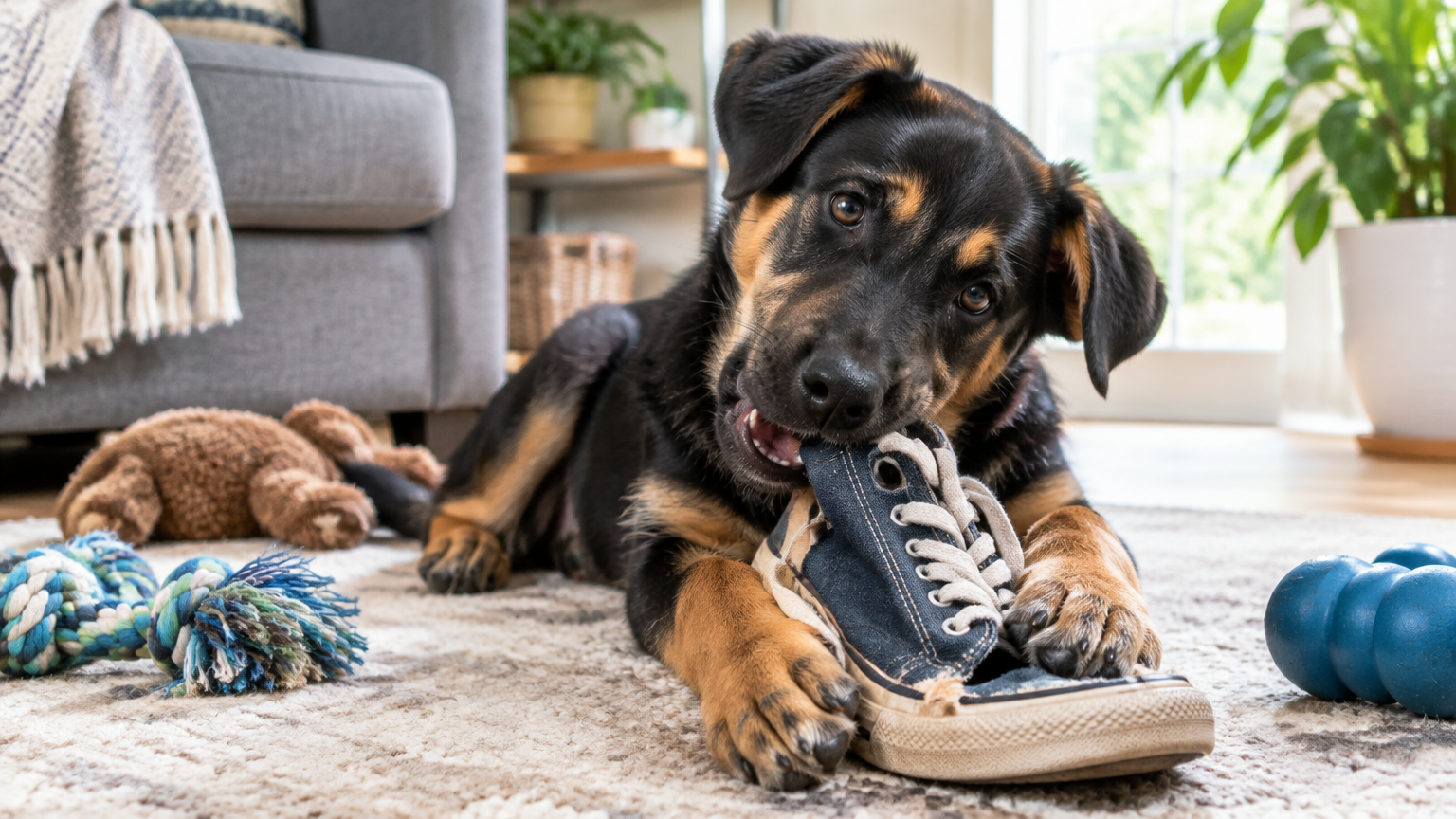
    The puppy teeth are gone, yet your dog is chewing again, sometimes more destructively than before. Table legs, shoes, and remote controls are suddenly fair game. This is common during adolescence, which runs roughly from 6 to 18 months, though timing varies by dog and breed. This article explains why the adolescent dog chewing phase happens, what to expect, and how to manage it with a practical plan.

    Key takeaways

    • Adolescent chewing is separate from teething and is driven more by behavior, energy, and environment.
    • Timing and intensity vary by individual dog and breed.
    • Consistent rules, supervised freedom, and ongoing training are the foundation of management.
    • Sudden, extreme chewing or swallowing non-food items warrants a call to your veterinarian.

    Quick Answer: What Is the Adolescent Dog Chewing Phase?

    The adolescent dog chewing phase is a period, roughly 6 to 18 months, when a dog that is past teething chews new or more items. It is driven by maturing behavior, more energy, curiosity, and greater freedom. It is manageable with consistent rules, supervision, and ongoing training.

    Timing and intensity vary by individual dog and breed. Some dogs barely show it, while others have clear peaks.

    Adolescent Chewing vs. Teething: Key Differences

    Teething chewing (puppy stage)

    Teething is linked to losing baby teeth and the arrival of adult teeth. It typically ends within the first several months of life. Chewing during this time often helps soothe sore gums.

    Adolescent chewing

    Adolescent chewing is not primarily about mouth discomfort. It is more about behavior, energy, and the environment your dog lives in. A dog with a full set of adult teeth may chew because it is bored, curious, or has simply learned that chewing the couch is rewarding.

    Quick comparison

    Teething Adolescent chewing
    Main cause Baby teeth falling out, adult teeth emerging Maturing behavior, energy, curiosity, freedom
    Typical timing First several months Roughly 6 to 18 months (varies)
    What helps Safe, appropriate chew items; patience Consistent rules, supervision, outlets, training

    Why Teenage Dogs Chew More (or Start Again)

    Exploration and mouth-based curiosity

    Dogs investigate the world with their mouths. As adolescents grow more confident and mobile, they find more things to explore, and they can reach more of them.

    Excess energy and boredom

    A growing body with plenty of energy and too little to do is a recipe for chewing. If exercise and mental work do not match the dog's needs, the dog will often invent its own entertainment.

    Increased independence and testing of boundaries

    Teenage dogs often seem to "forget" what they learned as puppies. They are more independent and may test the rules, including what is and isn't okay to chew.

    Too much freedom too soon

    Owners often relax rules once the dog looks grown. A dog that was reliable in a gated kitchen may suddenly have the run of the house. Physical size may be adult-like while judgment is still developing. This is one of the most common reasons chewing flares up.

    Stress, frustration, or changes in routine

    A new schedule, a move, a houseguest, or long stretches alone can all push a dog to chew as a way of coping or releasing tension.

    When chewing may signal something else

    Check with a veterinarian if you notice:

    • Sudden or extreme chewing that is out of character
    • Swallowing non-food items
    • Signs of mouth pain, such as drooling, dropping food, or pulling away when touched near the face

    What to Expect: Timing Varies by Dog and Breed

    The 6-to-18-month window is a rough guide, not a fixed schedule. Several factors shape what you will see:

    • Breed and size: Breeds and sizes mature at different rates, and chewing habits can differ.
    • Individual temperament: Some dogs are naturally more mouthy.
    • Exercise and mental stimulation: Unmet needs often show up as chewing.
    • Past training: Dogs with solid foundations often recover more quickly from adolescent regression.

    Some dogs sail through with only a chewed sock or two. Others have noticeable peaks and quiet stretches. Avoid expecting an exact end date. Focus on progress and consistency instead.

    How to Manage the Adolescent Chewing Phase

    Step 1: Set consistent rules

    • Make sure every household member follows the same expectations. Mixed messages slow learning.
    • Create clear "yours vs. not yours" categories. Keep dog items in one place and reward your dog for chewing them.
    • When your dog grabs something off-limits, calmly trade for an appropriate item rather than chasing or scolding.

    Example: Your dog picks up a slipper. Instead of chasing, you offer a chew toy, say "good," and put the slipper away.

    Step 2: Use supervised freedom

    Give access to space gradually, and let your dog earn more freedom as reliability grows.

    • Use baby gates, closed doors, or a tether while you are watching.
    • Provide a crate or pen for safe downtime. See our crate training basics guide if your dog is new to this.
    • Remove temptations such as shoes, remotes, and laundry.

    Example: Start with one dog-proofed room. After a few weeks without incidents, add a second room while you are home.

    Step 3: Provide appropriate outlets

    • Rotate several safe chew items with different textures so they stay interesting.
    • Offer food puzzles, sniff walks, and structured play.
    • Match exercise and mental work to your dog's age, breed, and health. If you are unsure what suits your dog, ask your veterinarian.

    Step 4: Reinforce training

    • Practice "drop it," "leave it," and "trade" in calm moments, not only when your dog has something forbidden.
    • Reward good choices, such as picking up a chew toy on their own.
    • Keep sessions short and frequent, and expect some regression during adolescence.

    If you want structured guidance for daily practice, a program such as Brain Training for Dogs is one option to explore. [VERIFY: confirm program details before adding any claims about content or results.]

    Step 5: Manage the environment

    • Dog-proof high-risk areas such as cords, trash cans, and shoe racks.
    • Use taste deterrents only if they are safe for your dog, and treat them as a supplement, not a fix.

    What to avoid

    • Punishment after the fact. Dogs may not connect it to the chewing, and it can increase stress and confusion.
    • Giving old shoes or household items as toys. Dogs cannot tell the difference between "old" and "new."
    • Unsafe chews. Choose items suited to your dog's size and chewing style, and supervise.

    When to Call a Professional

    Veterinarian: Contact your vet for a sudden change in behavior, signs of pain, ingesting non-food items, or any suspected medical issue.

    Trainer or behaviorist: Consider help if chewing is paired with anxiety, if the dog is destructive when left alone, or if there is no improvement despite consistent management.

    Quick Checklist

    • [ ] Everyone in the home uses the same rules
    • [ ] Dog-proofed shoes, laundry, and small items out of reach
    • [ ] Freedom increases gradually and only with supervision
    • [ ] Several safe chews rotated regularly
    • [ ] Daily exercise, sniffing, and mental work
    • [ ] "Drop it," "leave it," and "trade" practiced often
    • [ ] Good choices rewarded
    • [ ] No punishment after the fact
    • [ ] Vet or trainer contacted if chewing seems extreme

    FAQs

    How long does the adolescent dog chewing phase last?

    It is often tied to the roughly 6-to-18-month stage, but it varies by dog and breed. Consistent management helps it pass with fewer problems.

    Is adolescent chewing the same as teething?

    No. Teething relates to losing baby teeth and getting adult teeth. Adolescent chewing is more tied to behavior, energy, curiosity, and environment.

    Will my dog grow out of chewing on their own?

    Many dogs chew less as they mature, but habits can stick if they are rehearsed. Redirect your dog, reward appropriate chewing, and limit unsupervised access.

    Conclusion

    The adolescent dog chewing phase is a normal stage for many dogs, and it is manageable. Three pillars carry most of the work: consistent rules, supervised freedom, and training reinforcement. Build a simple daily routine with exercise, chew time, short training sessions, and safe downtime. If chewing seems extreme or you are worried about your dog's health or stress level, consult a veterinarian or qualified trainer.

    Related reading (to link internally): puppy teething guide; safe chew toys by chewing style; crate training basics; teaching "drop it" and "leave it."

  • Do Anti-Chew Sprays Work? What They Are, How to Use Them, and Their Limits

    Do Anti-Chew Sprays Work? What They Are, How to Use Them, and Their Limits

    This article contains affiliate links. We may earn a commission if you buy through them, at no extra cost to you.

    Do Anti-Chew Sprays Work? What They Are, How to Use Them, and Their Limits

    Short answer: A dog chew deterrent spray may discourage chewing on sprayed items, because most use a bitter taste dogs tend to dislike. Results vary by dog and product. Some dogs ignore the taste. Sprays work best as one part of a plan that includes supervision, appropriate chew toys, redirection, and training. They are not a standalone fix.

    Disclosure: This article contains affiliate links. If you buy through them, the publisher may earn a commission at no extra cost to you.

    Key Takeaways

    • A dog chew deterrent spray is a tool for protecting specific items, not a training method.
    • Effectiveness depends on the dog, the product, and how consistently you apply it. No outcome is guaranteed.
    • Always read the label, check the ingredients, and patch-test the surface before full use.
    • Pair any spray with redirection, supervision, exercise, and training.
    • Persistent or compulsive chewing deserves a conversation with a veterinarian or qualified behavior professional.

    What Is a Dog Chew Deterrent Spray?

    A dog chew deterrent spray is a topical product applied to objects to make them taste unpleasant. The idea is simple: if the item tastes bad, your dog may stop mouthing it.

    Common formats include spray bottles, and sometimes gels or wipes. Typical uses include:

    • Furniture legs
    • Cords and cables
    • Baseboards and trim
    • Shoes
    • Bedding edges

    What it is not: a training method, a treatment for anxiety, or a substitute for management. A spray changes how one object tastes. It does not teach your dog what to chew instead, and it does not address why the chewing happens.

    How Bitter Sprays Are Meant to Work

    The taste-aversion idea

    Bitter flavors are intended to make chewing less rewarding. When a dog mouths a treated item and gets an unpleasant taste, the dog may associate that object with the bad flavor and lose interest.

    Why results vary

    No spray works for every dog. Several factors influence the outcome:

    • Individual differences. Dogs vary in taste sensitivity and motivation.
    • Flavor tolerance. Some dogs tolerate certain bitter flavors, and a few may even seem to like them.
    • Underlying drivers. Teething, boredom, and stress can push a dog to chew regardless of taste.

    For these reasons, be skeptical of any product that promises a success rate or guaranteed results.

    How to Use a Dog Chew Deterrent Spray

    Step 1: Identify the problem and the cause

    Before you buy anything, note what is being chewed, when, and under what conditions. Is your puppy teething? Is your dog bored, under-exercised, or chewing mostly when left alone? Patterns help you choose the right combination of tools.

    Example: A dog that only chews the couch leg during the evening, after a skipped walk, may need more exercise and a designated chew. A spray on the couch leg is a supporting measure.

    Step 2: Read the label first

    Follow the manufacturer's directions for use, reapplication, and compatible surfaces. Labels differ, so do not assume one product works like another.

    Step 3: Patch-test the surface

    1. Apply a small amount to a hidden area, such as the underside of a chair or the back of a baseboard. 2. Let it dry fully. 3. Check for staining, discoloration, stickiness, or damage to the finish.

    Be especially cautious with fabrics, leather, painted wood, and other finished surfaces.

    Step 4: Apply as directed

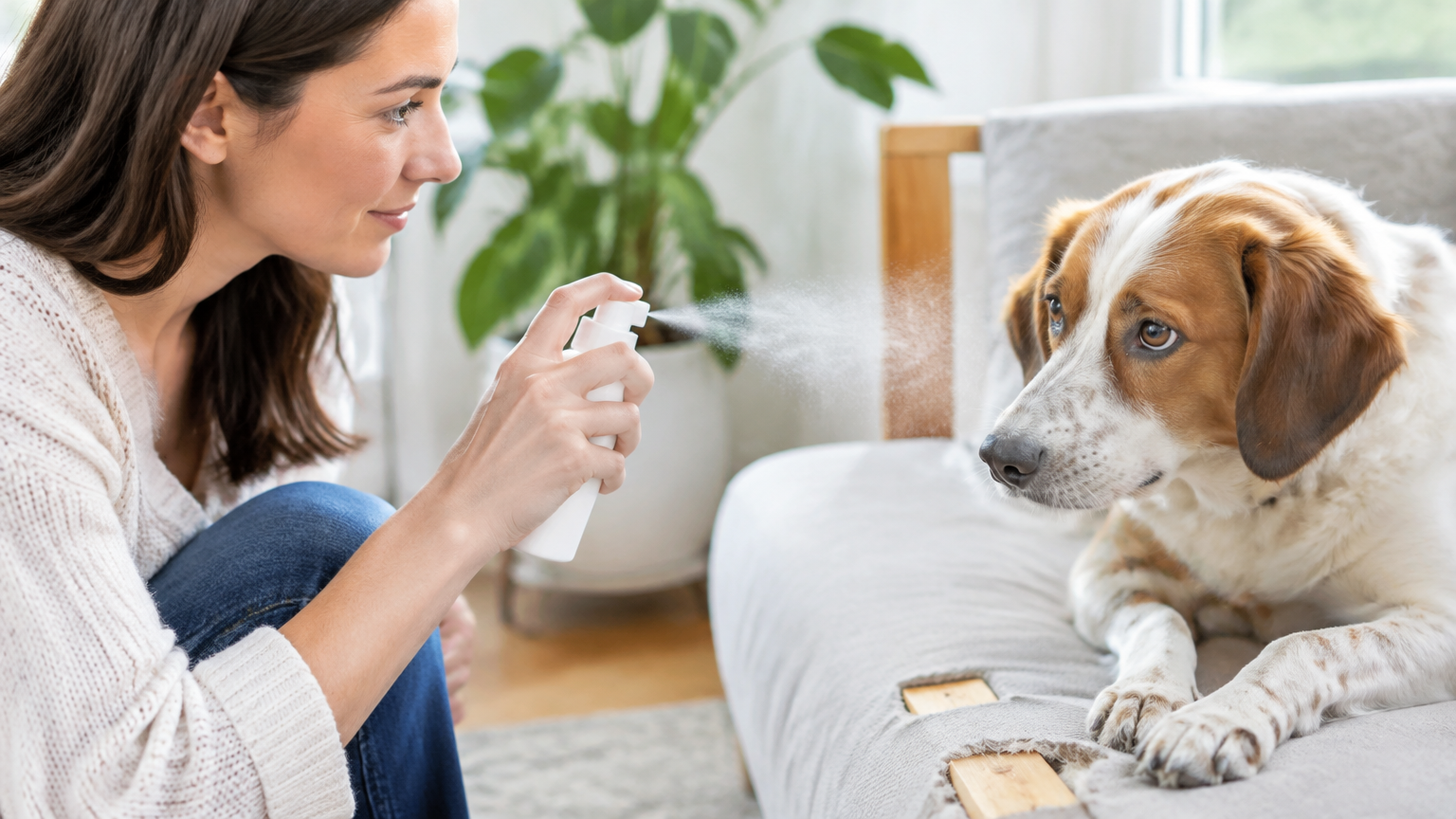
    Spray the item, not the dog, unless the label explicitly says otherwise. Ventilate the area, and keep the product away from your dog's eyes, nose, and face during application.

    Step 5: Reapply consistently

    The deterrent effect may fade as the product wears off or is cleaned away. Follow the label's schedule, and check whether the item still carries the bitter taste.

    Step 6: Pair with redirection

    When your dog approaches the sprayed object, offer an appropriate chew item. Praise or reward your dog for chewing the right thing. This is where the real learning happens.

    Safety and Ingredient Label Checks

    Safety depends on the specific formula. Use this checklist before buying or using a product:

    • Dog-use labeling: Look for clear wording that the product is intended for use around dogs.
    • Full ingredient list: Check for anything your dog is sensitive to.
    • Alcohol content: Some owners prefer to avoid alcohol-based formulas. Think about why, and talk to your vet if unsure.
    • Warnings: Note statements about ingestion, eye contact, and use on pets' skin.
    • Storage: Keep the product out of reach of children and pets.
    • Health history: Ask your veterinarian if your dog has health conditions, allergies, or a history of eating non-food items.
    • "Natural" claims: Do not rely on them alone. Verify the ingredients.

    Stop use and contact a vet if you see drooling, vomiting, irritation, or other concerning signs.

    Limits of Anti-Chew Sprays

    Know the boundaries before you spend money:

    • It may not work for dogs who are not bothered by the taste.
    • It does not address the underlying reason for chewing.
    • It needs reapplication and may be impractical for many items.
    • It can stain or damage some surfaces.
    • It is not suitable for items dogs must safely mouth, such as their own toys, or for use on skin or wounds unless the label says so.
    • It is not a solution for severe or compulsive chewing. Consult a vet or a qualified trainer or behavior professional.

    Why Training and Management Matter More

    Redirection

    Provide suitable chews and toys, and rotate them to keep your dog interested.

    Supervision and management

    Use crates, gates, or exercise pens when you cannot supervise. Remove or cover tempting items such as cords and shoes. Prevention is often more reliable than taste alone.

    Exercise and enrichment

    Meet physical and mental needs with walks, play, and puzzle feeders. A dog with an outlet is less likely to invent its own.

    Training

    Teach "leave it" and "drop it," and reward good choices. If you want structured guidance, a program such as Brain Training for Dogs is one option to explore. Review its current details yourself before deciding whether it fits your dog and your goals.

    When to get professional help

    Seek help if destructive chewing is linked to separation distress or anxiety, or if your dog swallows objects. A spray will not solve those problems.

    Buyer Criteria: How to Choose a Dog Chew Deterrent Spray

    If you are comparing products, browse current dog chew deterrent spray options with this table in mind:

    Criterion What to look for
    Safety Labeled for dogs; clear ingredient list; transparent manufacturer contact information
    Intended surfaces Compatible with your furniture, fabric, wood, or cords
    Scent and residue Consider odor, stickiness, and staining risk
    Formulation Alcohol-based versus alcohol-free, based on your preference and vet input
    Directions Clear reapplication guidance
    Size and value Price per ounce relative to how much surface you need to cover
    Return policy A satisfaction guarantee or return option, if offered
    Reviews Look for patterns about specific dog types and surfaces; treat testimonials with caution
    Red flags Guaranteed results or unsupported claims

    Practical example: If you need to protect a wooden baseboard and a few cords, prioritize a product whose label lists finished wood and cords as suitable surfaces, then patch-test in a hidden spot. If you have a large area to cover, compare price per ounce rather than bottle price.

    Alternatives and Complements

    • Durable, size-appropriate chew toys
    • Physical barriers such as cord covers and furniture guards
    • Puzzle toys and enrichment feeders
    • Training classes or a certified behavior professional

    Barriers and management often protect items more reliably than taste, especially for cords, which pose a safety risk.

    FAQ

    Do dog chew deterrent sprays really work?

    Sometimes. Effectiveness depends on the dog, the product, and consistency. Use them with redirection, supervision, and training rather than alone.

    Are anti-chew sprays safe for dogs?

    Many are made for use around dogs, but safety depends on the specific ingredients and how the product is used. Read the label, patch-test surfaces, and ask a veterinarian if your dog has health concerns or ingests the product.

    How often should I reapply a chew deterrent spray?

    Follow the manufacturer's directions. Reapplication needs vary by product, surface, and cleaning frequency, so check whether the item still tastes bitter and what the label advises.

    Bottom Line

    A dog chew deterrent spray can be a useful tool for protecting specific items, but it works best as part of a broader plan. Choose carefully using the buyer criteria, patch-test first, and combine the spray with redirection, supervision, and training. If chewing is severe, compulsive, or involves swallowing objects, involve your veterinarian or a qualified behavior professional rather than relying on a spray.

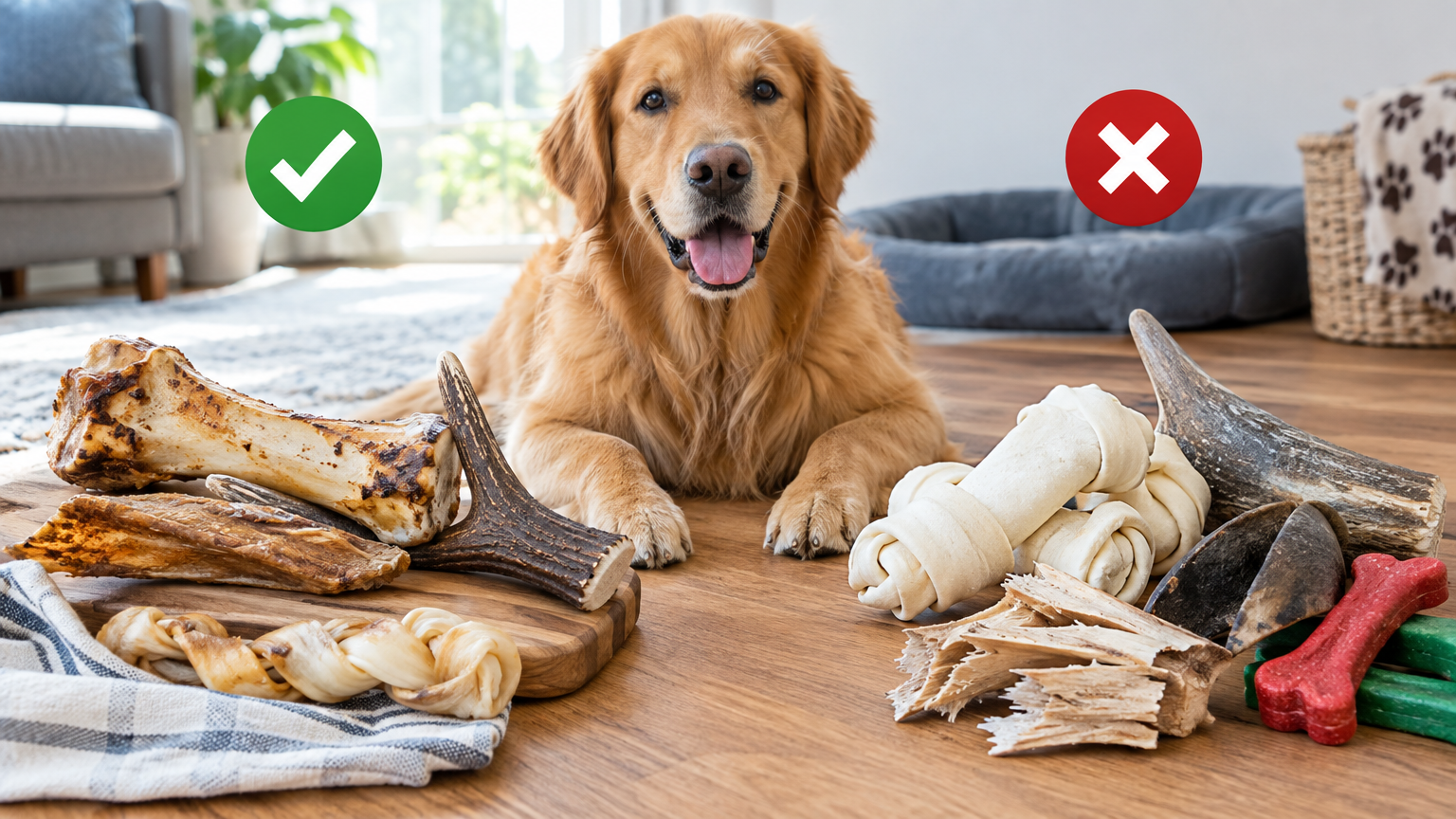
  • Safe vs. Risky Things for Dogs to Chew: A Cautious Guide to Bones, Antlers, Rawhide, and More

    Safe vs. Risky Things for Dogs to Chew: A Cautious Guide to Bones, Antlers, Rawhide, and More

    This article contains affiliate links. We may earn a commission if you buy through them, at no extra cost to you.

    Safe vs. Risky Things for Dogs to Chew: A Cautious Guide to Bones, Antlers, Rawhide, and More

    Meta description: A neutral overview of common dog chew types, the pros and cons owners weigh, and a supervision and size-matching checklist. Confirm choices with your veterinarian.

    Quick Answer: What Are Safe Things for Dogs to Chew?

    No chew is risk-free. The safest choices are generally those that suit your dog's size, age, chewing style, and health, and that you offer under supervision. Your veterinarian can help confirm what fits your dog.

    "Safe" depends on the individual dog. This guide covers general considerations, not product recommendations or health promises.

    Key takeaways

    • Every chew type has trade-offs, so weigh them for your own dog.
    • Size, chewing style, and dental and medical history matter more than the label on the package.
    • Supervise, inspect chews regularly, and discard worn or small pieces.
    • Confirm your choices with your veterinarian before starting something new.

    Why Chew Choice Matters

    Chewing is a natural behavior for dogs. Owners often offer chews to occupy their dog's time, give an outlet for that instinct, or redirect attention from furniture and shoes.

    Owners commonly weigh these concerns:

    • Choking
    • Intestinal blockages
    • Broken teeth
    • Mouth injuries
    • Digestive upset
    • Extra calories

    Individual factors change the picture. A chew that suits a gentle senior terrier may not suit a powerful young retriever. Size, age, chew intensity, dental history, and medical conditions all affect which risks matter most.

    Common Chew Categories: General Pros and Cons

    Bones (raw, cooked, and other types)

    What it is: Animal bones offered whole, in pieces, or processed in some way.

    What owners often like: Dogs tend to be very interested in them, and owners see them as a natural option.

    Common concerns: Bones can splinter or break into pieces, and hard ones may damage teeth. Pieces can be swallowed, and raw products raise handling and hygiene questions. Cooked bones are widely flagged as a concern.

    Questions for your vet: Is any bone appropriate for my dog's teeth and digestion? How should I handle and store it?

    Antlers and Hooves

    What it is: Natural hard items, sold whole or split.

    What owners often like: They're long-lasting and don't resemble household items.

    Common concerns: Their hardness is the main issue. Owners and veterinarians often raise tooth fractures, and pieces can chip off.

    Questions for your vet: Given my dog's teeth and chewing intensity, is something this hard a good idea?

    Rawhide

    What it is: Chews made from processed animal hide.

    What owners often like: They're familiar, widely available, and come in many shapes.

    Common concerns: Softened pieces can be torn off and swallowed, which raises choking and blockage concerns. Some dogs experience digestive upset. Sourcing and processing details vary, so read labels carefully.

    Questions for your vet: Is rawhide reasonable for my dog's size and habits? How should I handle a chew that gets slimy or small?

    Edible Chews (bully-style sticks, dental chews, and similar)

    What it is: Digestible chews made from animal parts or other ingredients, often marketed for particular purposes.

    What owners often like: They're consumable, so there's less to clean up, and they come in many sizes.

    Common concerns: They can add calories, and some dogs have ingredient sensitivities. Dogs may gulp the last piece whole. Marketing claims differ from product to product, so check labels.

    Questions for your vet: How do these fit into my dog's daily calories and diet? Are there ingredients to avoid?

    Rubber and Nylon Chew Toys

    What it is: Durable, non-edible toys designed for chewing.

    What owners often like: They're reusable, easy to clean, and available in many sizes and firmness levels.

    Common concerns: Aggressive chewers may break off pieces. Overly hard toys raise dental concerns, and a toy that's too small can be swallowed or lodged.

    Questions for your vet: What firmness suits my dog's teeth? When should I retire a worn toy?

    Rope, Fabric, and Plush Items

    What it is: Woven, stuffed, or fabric toys.

    What owners often like: They're soft and good for tug or carrying, and many dogs enjoy them.

    Common concerns: Dogs can swallow strings, fibers, or stuffing, and these can cause problems in the digestive tract. They're often a better fit for supervised play than for unattended chewing.

    Questions for your vet: Is supervised tug or plush play okay for my dog? What should I do if they swallow fibers?

    Household Items and Sticks (commonly flagged as risky)

    What it is: Sticks, shoes, towels, plastic bottles, and other everyday objects.

    What owners often like: They're free and always around, which is exactly why dogs find them.

    Common concerns: Sticks can splinter and injure the mouth. Household items can break apart or contain materials not meant to be swallowed. These are commonly flagged as risky.

    Questions for your vet: What should I do if my dog has already chewed or swallowed something like this?

    Supervision and Size-Matching Checklist

    Size and Fit

    • The chew should be sized so your dog can't swallow it whole or lodge it in the throat.
    • Check the manufacturer's size guidance, then confirm with your vet if unsure.

    Match to Chewing Style

    • A gentle chewer may do fine with options that would be risky for a determined, aggressive chewer.
    • Aggressive chewers may break off pieces faster, so they often need closer watching and more frequent inspection.
    • If you're not sure which type your dog is, watch a short supervised session and describe it to your vet.

    Condition and Hardness

    • Check for cracks, splintering, or small pieces coming loose.
    • Be cautious with very hard items, especially if your dog has dental issues. Ask your vet.

    Supervision Steps

    • Stay present while your dog chews.
    • Learn how to take a chew away calmly, such as by trading for a treat.
    • Discard worn or small leftover pieces.
    • Keep chews away from other pets and young children.

    Special Situations

    • Puppies: Their teeth and habits are still developing, so ask your vet what suits their age.
    • Seniors: Dental wear or sensitivity may change what's comfortable.
    • Dental or digestive conditions: Individual guidance from your vet is especially important.
    • Weight management plans: Edible chews add calories, so ask how to count them.

    Warning Signs to Call Your Vet About

    • Choking or gagging
    • Vomiting or diarrhea
    • Lethargy
    • Belly pain
    • A swallowed large piece
    • A mouth or tooth injury

    If something seems urgent, contact your veterinarian or an emergency clinic right away.

    Quick Reference Table

    Check What to look for
    Size Too large to swallow whole; won't easily lodge in the throat
    Style match Suits gentle vs. aggressive chewing
    Condition No cracks, splinters, or loose pieces
    Hardness Discussed with your vet if teeth are a concern
    Supervision You're present and can remove it calmly
    Retirement Worn or small pieces discarded

    How to Choose and Introduce a New Chew (Practical Steps)

    1. Talk with your veterinarian about your dog's health, teeth, and weight. 2. Pick a category that fits your dog's size and chewing style. 3. Read labels and ingredients, and check the sourcing information provided. 4. Introduce one new chew at a time, so you can tell what your dog tolerates. 5. Supervise the first sessions and watch how your dog chews: gnawing, tearing, or gulping. 6. Set time limits and remove chews once they're small enough to swallow. 7. Store chews properly and rotate options to keep interest up. 8. Reassess if anything changes, such as age, health, or behavior.

    Practical example: Suppose you're trying a new edible chew. Offer it when you're home and can watch, with water available. Note whether your dog nibbles or gulps, take it away at the time limit you set, and check with your vet if anything seems off afterward.

    Chewing isn't the only way to occupy a dog. Some owners also explore training and mental-enrichment resources, such as Brain Training for Dogs, alongside chews. Review any program's details yourself before deciding whether it suits you and your dog.

    FAQ

    1. Are there any chews that are completely safe for dogs?

    No option is risk-free. Risk depends on both the dog and the chew. Supervision and size-matching lower the risk but don't remove it. Ask your vet which options make sense for your dog.

    2. How do I know what size chew is right for my dog?

    Choose one too large to swallow whole and not easy to lodge in the throat. Follow the manufacturer's size guidance, and have your vet confirm if you're unsure.

    3. How often should I check in with my vet about chews?

    Check in before starting a new type, and again whenever your dog's age, health, dental status, or chewing habits change.

    Bottom Line and Veterinarian Reminder

    Safe things for dogs to chew are the ones that fit your particular dog. Weigh the pros and cons of each category, match the chew to your dog's size and chewing style, supervise every session, and discard worn or small pieces.

    Before you introduce anything new, confirm your choices with your veterinarian. They know your dog's teeth, weight, and health history.

    Disclaimer: This article is general information only and is not veterinary advice. It makes no product recommendations or health claims. Consult your veterinarian about your dog's needs.

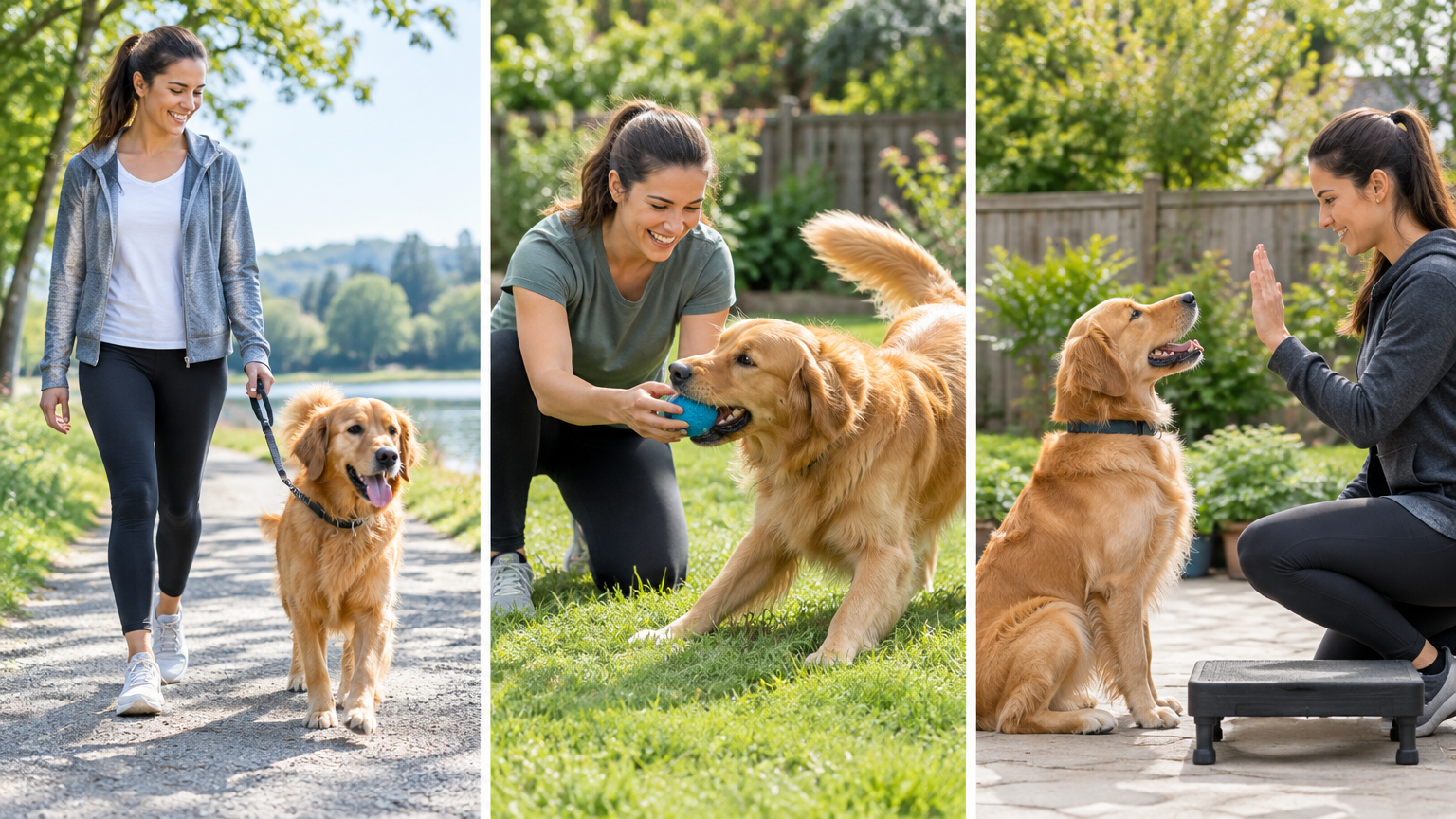
  • Daily Routine to Curb Chewing: Balancing Walks, Play, and Training

    Daily Routine to Curb Chewing: Balancing Walks, Play, and Training

    This article contains affiliate links. We may earn a commission if you buy through them, at no extra cost to you.

    Daily Routine to Curb Chewing: Balancing Walks, Play, and Training

    Direct answer: A dog daily routine to reduce chewing usually combines four things: physical exercise, sniffing time, short training sessions, and plenty of rest, plus appropriate chew items. Chewing is normal dog behavior and can stem from teething, boredom, excess energy, stress, or lack of guidance. A predictable routine can help meet these needs, but results vary by your dog's age, breed, history, and health, so treat the schedules below as adjustable templates.

    Why Routine Can Help With Chewing

    Common reasons dogs chew

    Dogs explore with their mouths. Typical drivers include:

    • Teething: Puppies chew to relieve gum discomfort.
    • Boredom or under-stimulation: A dog with nothing to do will invent a job.
    • Anxiety or stress: Chewing can be a way to self-soothe.
    • Curiosity: New textures and smells are interesting.
    • Habit: If shoe-chewing worked out well once, it may happen again.

    What a routine does and doesn't do

    A routine meets your dog's needs on a predictable schedule and reduces the number of moments when chewing the wrong thing is possible. It won't guarantee that your dog never chews a table leg again. Think of it as one tool alongside management, training, and patience.

    When to check with a vet or behavior professional

    Reach out for help if chewing starts suddenly, your dog swallows non-food items, you see signs of distress (drooling, panting, pacing, injured gums or teeth), or the chewing happens mainly when you leave and looks panicked. These can point to medical or anxiety issues that a schedule alone can't solve.

    The Four Building Blocks of a Chew-Friendly Day

    Physical exercise

    Walks, fetch, tug, and play burn energy. Adjust for age, breed, and fitness. A young retriever and a senior bulldog need very different amounts, and your vet can help you calibrate.

    Sniffing time

    Sniffing is mentally tiring in a useful way. Try slow "decompression" walks where your dog sets the pace, scatter feeding part of a meal in the grass or on a mat, or play simple hide-and-find games.

    Short training sessions

    A few minutes at a time works well. Useful skills for chewers include "leave it," "drop it," settling on a mat, and trading an item for a chew or treat.

    Rest and downtime

    Naps in a crate, pen, or quiet area matter more than many owners expect. Puppies in particular need a lot of sleep, and an overtired dog can get wound up and mouthy.

    Appropriate chew outlets

    Offer durable chews and food-stuffed toys suited to your dog's size and chew style, and supervise, especially with new items. Rotate them so they stay interesting.

    Where Short Brain-Training Sessions Fit

    Brain work doesn't need a big time block. Slot it in at these points:

    • Early morning, before work begins or before the dog is left.
    • Midday break: a 2–5 minute session.
    • Before an enforced rest period, to help settle the mind.
    • Evening, as a wind-down activity.

    Easy examples include name recognition, hand targeting, "find it" scent games, puzzle feeders, and teaching the names of toys. If you'd like a structured set of games to draw from, you could look at a program such as Brain Training for Dogs as one option among many.

    Tip: Keep sessions brief and end on a success, even if that means asking for something easy at the finish.

    Sample Daily Schedule: Work-From-Home Household

    Template (times are flexible)

    Time of day Activity
    Morning Potty, sniff-focused walk, breakfast in a puzzle feeder
    Mid-morning 3–5 minute training burst, then rest in a designated spot
    Midday Play session, chew time, nap
    Afternoon Another short brain game and potty break
    Evening Walk or play, dinner, calm chew, wind-down

    Tips for WFH pitfalls

    • Avoid constant attention. A dog who gets nonstop interaction may struggle to settle on their own.
    • Practice settling even when you're home. Use a mat, pen, or crate for planned rest periods.
    • Rotate toys. Offer a few at a time and swap them out.
    • Manage access to tempting items. Keep shoes, laundry, and remotes out of reach, and use gates or closed doors.

    Sample Daily Schedule: Away-All-Day Household

    Template (times are flexible)

    Time of day Activity
    Before work Potty, brisk walk or play, short training or sniff game, food toy
    During the day Safe confinement area; midday dog walker, sitter, neighbor, or daycare if feasible
    After work Potty, decompression walk, play, training
    Evening Dinner, chew time, calm rest

    Safety and setup notes

    • Dog-proof the space. Remove cords, shoes, and anything swallowable.
    • Leave only chew items you've already seen your dog handle safely.
    • Don't leave items that could be hazardous when unsupervised.
    • Consider age-appropriate limits on alone time. Young puppies can't wait as long between potty breaks or manage long stretches alone.

    When long absences are a problem

    Puppies and anxious dogs may struggle with long hours alone. If chewing is intense or looks panic-driven, explore breaks during the day, such as a walker or daycare, and talk with a vet or qualified behavior professional about support.

    Adjusting the Routine by Life Stage and Energy Level

    Puppies

    Expect frequent naps, very short sessions, more potty breaks, and teething support through appropriate chews. Their days are mostly sleep punctuated by brief bursts of activity.

    Adolescents

    Adolescent dogs often have high energy and test boundaries. Consistency matters most here: the same rules, the same cues, and a steady schedule. Mix exercise with mental work so you don't just build a fitter, more energetic dog.

    Adult and senior dogs

    Consider health and mobility. Older dogs may prefer shorter, gentler walks, with more emphasis on sniffing and mental enrichment. A sudden change in chewing in an adult or senior dog is worth a vet visit.

    Practical Steps to Build Your Own Routine

    1. Note when and what your dog chews. Track patterns for a week. 2. Pick consistent anchor times for meals, walks, and rest. 3. Add one sniffing activity and one short training session daily. 4. Provide approved chews and rotate them. 5. Manage the environment. Put away shoes, close doors, and use gates or pens. 6. Redirect and reward chewing on appropriate items rather than only scolding. 7. Schedule rest, since overtired dogs may chew more. 8. Review after 1–2 weeks and tweak.

    Quick daily checklist

    • [ ] Physical exercise suited to my dog
    • [ ] At least one sniffing activity
    • [ ] One or more short training sessions
    • [ ] Planned rest periods
    • [ ] Approved chews available and rotated
    • [ ] Tempting items put away

    Common Mistakes to Avoid

    • Relying only on more exercise. It can lead to an overly amped dog who needs even more to settle.
    • Skipping rest. Tired, overstimulated dogs often get mouthier.
    • Inconsistent rules. If socks are sometimes allowed, your dog can't know better.
    • Punishing after the fact. Dogs rarely connect a scolding to something chewed earlier, and it can add stress.
    • Unsupervised access to risky chews or items. Choose chews carefully and supervise.

    FAQs

    1. How much exercise does my dog need to stop chewing? It varies by age, breed, and health. Focus on a mix of activity, sniffing, mental work, and rest rather than exercise alone, and ask your vet for individual guidance.

    2. Can I leave my dog alone all day and still reduce chewing? Chewing may improve with structure, a safe setup, and breaks, but long absences are hard for some dogs. Consider midday help, and consult a professional if problems persist.

    3. How long should training sessions be for a chewing-prone dog? Short sessions of a few minutes, a few times per day, are generally easier to maintain. Adjust to your dog's focus and stop while they're still engaged.

    Conclusion: Key Takeaways and Next Steps

    A dog daily routine to reduce chewing is a flexible framework, not a guaranteed fix. Start with one of the templates above, watch how your dog responds, and adjust.

    Key takeaways:

    • Routines are flexible tools, not guarantees.
    • Combine exercise, sniffing, brief training, rest, and proper chews.
    • Place short brain-training sessions at natural transition points in the day.
    • Seek professional help for persistent, intense, or anxiety-driven chewing.

    For next steps, track your dog's chewing for a week, pick your anchor times, and review after two weeks. If you want additional brain-game ideas, Brain Training for Dogs is one resource you could explore alongside your vet's or trainer's advice.

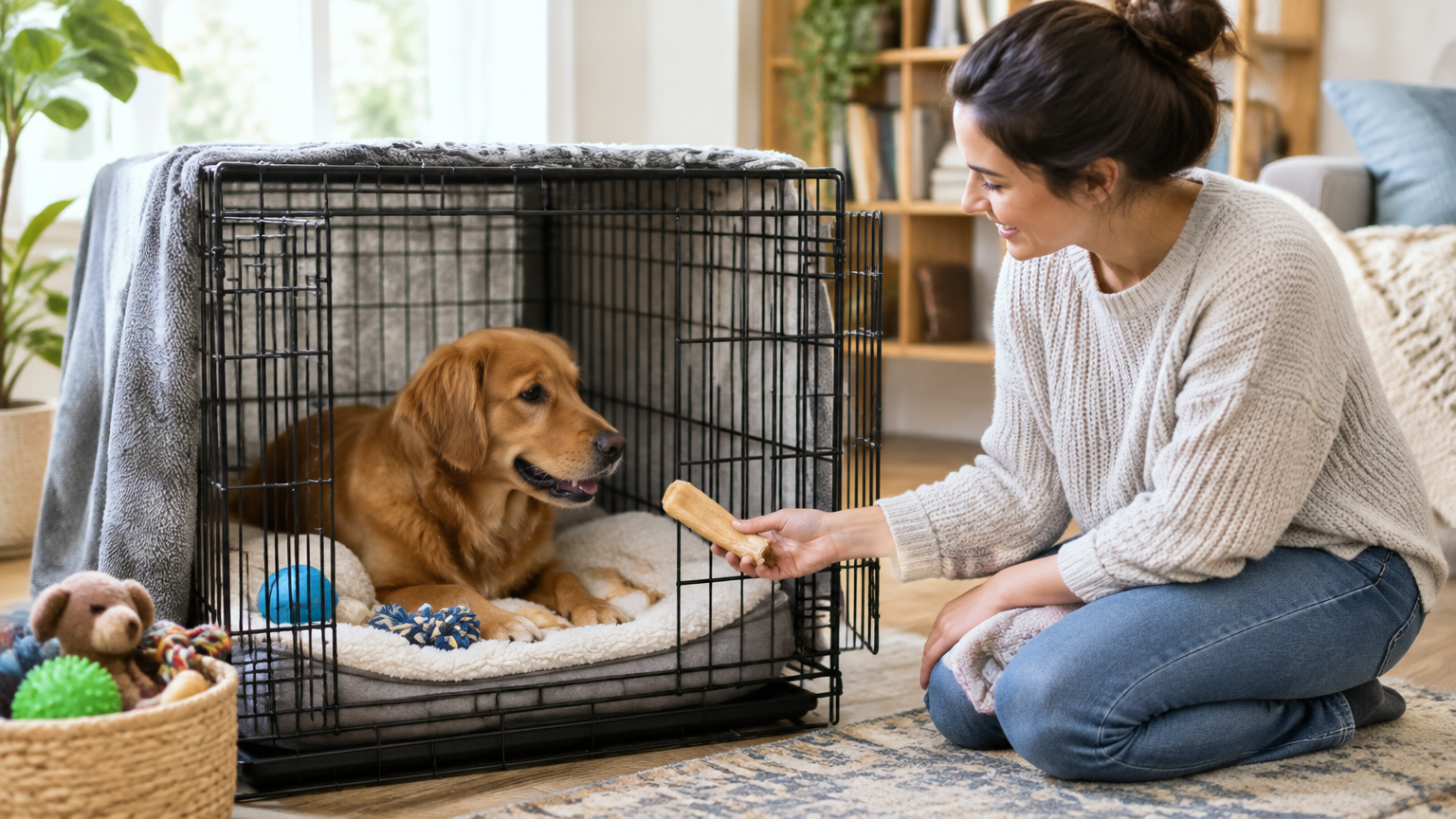
  • Crate Training a Dog Who Chews: How to Make It a Safe Space, Not a Punishment

    Crate Training a Dog Who Chews: How to Make It a Safe Space, Not a Punishment

    This article contains affiliate links. We may earn a commission if you buy through them, at no extra cost to you.

    Crate Training a Dog Who Chews: How to Make It a Safe Space, Not a Punishment

    Chewing is normal dog behavior, and a crate can help manage it when you can't supervise your dog. This guide covers sizing, setup, pacing, common mistakes, and the situations where you should skip the crate.

    Quick Answer: Can You Crate Train a Dog That Chews?

    Yes. Introduce the crate gradually and pair it with positive experiences like food, calm rest, and safe chews, so it becomes a comfortable place to settle. The crate manages chewing by limiting access to forbidden items such as shoes, cords, and furniture. It doesn't teach your dog what is okay to chew, so you'll still need appropriate chew outlets and supervision.

    A crate is a management tool. It is not a cure for chewing, and it should never be a punishment.

    Key takeaways

    • Go slowly and let your dog's comfort set the pace.
    • Make the crate a place where good things happen.
    • Provide safe, size-appropriate chews, and supervise new ones.
    • Never use the crate when you're angry.
    • Some dogs shouldn't be crated, and that's okay.

    Before You Start

    Why Dogs Chew

    Dogs chew for several common reasons: teething, boredom, excess energy, stress, and plain curiosity. If chewing is persistent, suddenly worse, or very destructive, have a veterinarian or qualified trainer check for medical or behavioral causes.

    Choosing the Right Crate Size

    Your dog should be able to stand up, turn around, and lie down comfortably.

    • Growing puppies: Use a crate with a divider, or plan to size up as your puppy grows.
    • Too large: The crate loses its cozy, den-like feel.
    • Too small: The dog will be uncomfortable, which works against everything else you're doing.

    Crate Types

    Crates come in wire, plastic, and soft-sided versions. For strong chewers, avoid soft-sided crates. They can be chewed through, and pieces of fabric or mesh can be swallowed. Check any crate regularly for damage, sharp edges, or weakened spots.

    What to Put Inside the Crate

    What goes in the crate matters as much as the crate itself.

    • Bedding or a mat: Use it only if your dog doesn't shred or swallow fabric. If it gets chewed up, remove it.
    • Chews: Offer size-appropriate, durable chew toys or food-stuffed toys recommended for your dog's size and chewing style.
    • Safety first: Avoid anything that could break into pieces or cause choking. Supervise the first few times you try a new chew.
    • Collars: Skip collars with dangling tags, and remove anything that could snag on the crate.
    Item Include? Notes
    Thin mat or bed Maybe Only if your dog doesn't shred or swallow fabric
    Durable chew toy Yes Match it to your dog's size and chewing style
    Food-stuffed toy Yes Good for early, positive sessions
    Dangling tags or loose accessories No Snag risk
    Brittle or splintering items No Choking and breakage risk

    Step-by-Step: Introducing the Crate

    Step 1: Make It Inviting

    Place the crate in a family area where your dog already spends time. Leave the door open and toss treats or part of a meal near it and inside. Let your dog explore without any pressure.

    Step 2: Feed Meals in the Crate

    Start with the bowl near the door. Over several meals, move it farther inside. Your dog should walk in willingly, without hesitation.

    Step 3: Add Short Door-Closed Sessions

    Once your dog is comfortable going in, close the door briefly while they enjoy a chew or stuffed toy. Open it before any sign of distress. For example, you might close the door for a minute or two while your dog works on a stuffed toy, then open it calmly and let them out.

    Step 4: Build Duration Gradually

    Extend the time slowly. Stay nearby at first, then step out of sight for a moment, then leave the room briefly. If your dog stays relaxed, add a little more time. If not, shorten it.

    Step 5: Practice Short Absences

    Add brief departures only after your dog is relaxed with you out of sight. Start with a quick trip to another part of the house, then work up to short errands as your dog shows they're comfortable.

    Step 6: Keep Routines Predictable

    Before crating, provide exercise and a bathroom break. When you let your dog out, keep the release calm, with no big excitement. Predictable routines help your dog understand that crate time is ordinary and safe.

    Pacing Tips

    • Follow your dog, not a calendar. A fixed schedule matters less than how your dog responds.
    • Back up when needed. If your dog whines or panics, return to an easier step.
    • Keep early expectations modest. Puppies in particular need frequent breaks.
    • Balance the day. Crate time should sit alongside exercise, play, and training.

    Quick checklist before each crate session

    • [ ] Exercise and bathroom break done
    • [ ] Safe chew or stuffed toy ready
    • [ ] Collar tags and snag hazards removed
    • [ ] Session length matches your dog's current comfort level
    • [ ] Calm tone for entry and release

    Common Mistakes to Avoid

    Using the Crate as Punishment

    Sending your dog to the crate when you're angry creates a negative association. If your dog finds a shoe, calmly trade or redirect, and save the crate for planned, positive rest.

    Leaving the Dog Crated Too Long

    A crate doesn't replace exercise, companionship, or bathroom breaks. Long stretches of confinement can undermine both your dog's comfort and your training.

    Moving Too Fast

    Long confinement before your dog is comfortable can create stress. Skipping steps often means going back to the beginning.

    Skipping Chew Alternatives

    Crating without outlets for chewing means your dog won't learn what is acceptable. Pair crate time with appropriate chews and, when you're home, supervised practice with them.

    Making Big Departures or Reunions

    Dramatic goodbyes and excited greetings can build anxiety. Keep both low-key.

    Ignoring Signs of Distress

    Heavy panting, drooling, frantic escape attempts, or any injury are signals to stop and reassess. Don't push through them.

    When a Crate Is Not the Right Tool

    A crate isn't right for every dog or every situation:

    • Separation anxiety or confinement panic: These dogs may injure themselves trying to escape.
    • Medical issues: Some dogs can't be crated safely. Follow your veterinarian's advice.
    • Long hours alone: A crate isn't a good solution for extended absences. Consider a dog-proofed room, an exercise pen, a sitter, or daycare.
    • Ongoing distress: If your dog stays distressed despite gradual training, consult a veterinarian or qualified trainer or behavior professional.

    Optional Support: Structured Training Programs

    If you'd like step-by-step guidance, a structured training program or a certified trainer can help you build a plan around your dog's needs. Some owners find programs such as Brain Training for Dogs useful as one option to explore. Results vary by dog and owner, so compare options and choose what fits your situation.

    FAQ

    How long does it take to crate train a dog that chews?

    It varies with your dog's age, temperament, and history. Progress depends on gradual steps and consistency, so let your dog's comfort guide the timeline.

    What should I do if my dog chews or destroys things in the crate?

    Check for stress or boredom, increase exercise, and reassess the bedding and toys. Offer safe chews and remove any hazardous items. If you see panic or self-injury, seek professional help.

    Should I crate my dog when I'm not home?

    It can be appropriate for dogs who are comfortable in the crate, for reasonable durations. It isn't suitable for dogs who panic, and it's not a substitute for care, exercise, and bathroom breaks.

    Conclusion

    Crate training a dog that chews works best when you go slowly, keep experiences positive, and provide safe chews. Avoid using the crate as punishment, and watch your dog for signs of stress. If the crate isn't working for your dog, try another approach, such as a dog-proofed room or an exercise pen, or ask a veterinarian or qualified trainer for guidance. The goal is a dog who rests easily in the crate and learns what is okay to chew.

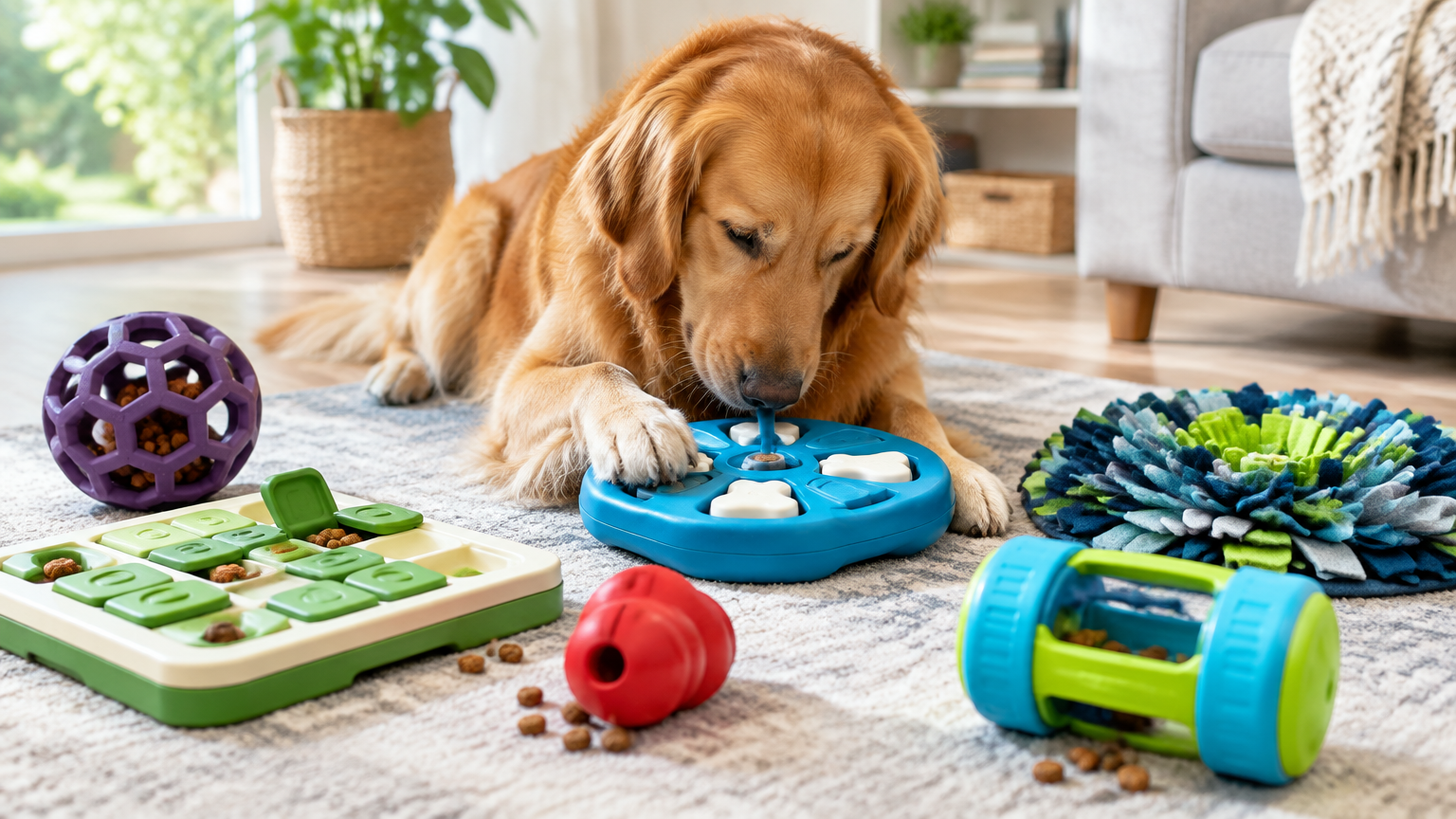
  • Puzzle Feeders and Enrichment Toys: How to Choose the Right Type for Your Dog

    Puzzle Feeders and Enrichment Toys: How to Choose the Right Type for Your Dog

    This article contains affiliate links. We may earn a commission if you buy through them, at no extra cost to you.

    Puzzle Feeders and Enrichment Toys: How to Choose the Right Type for Your Dog

    Meta description: Compare puzzle feeders for dogs, including snuffle mats, treat-dispensing toys, lick mats, and sliding puzzles, with a checklist to match the right type to your dog's experience level.

    Shopping for puzzle feeders for dogs means sorting through formats that look very different and work in different ways. This guide compares four common categories and explains how to match each to your dog's experience, chewing habits, and eating style. It also covers supervision and cleaning.

    Quick Answer: Which Type of Puzzle Feeder Fits Your Dog?

    Match the feeder to your dog's experience level, chewing habits, and eating style. Beginners often do well with simpler formats, such as snuffle mats or lick mats. Dogs already familiar with puzzles may suit treat-dispensing toys or sliding puzzles. Always supervise, and choose a size and material suited to your dog.

    Key takeaways

    • Start easy. A simple format helps you see how your dog approaches food puzzles.
    • Chewing habits matter as much as experience. A dog that tears fabric or cracks hard toys needs a different pick than a gentle eater.
    • Cleaning ease is part of the purchase decision, not an afterthought.
    • Supervision applies to every category.
    Type Best starting level Key consideration
    Snuffle mat Beginner Fabric chewing risk, washability
    Lick mat Beginner Food compatibility, hard-to-clean grooves
    Treat-dispensing toy Beginner to intermediate Size, durability, how pieces separate
    Sliding puzzle Intermediate to advanced Small removable parts, floor stability

    Puzzle Feeders for Dogs: Category Comparison

    Snuffle Mats

    What it is: A fabric mat with strips or folds where you hide food for your dog to find.

    Good fit: First-time puzzle users and dogs that eat kibble. Scattering a few pieces in the folds is an easy setup to explain to a new dog.

    Consider:

    • Fabric chewing risk. If your dog tends to chew or swallow fabric, a mat may not be a good match. Supervise closely and stop the session if your dog starts tearing pieces off.
    • Washability. Check whether the mat is machine-washable or hand-wash only, and how long it takes to dry.
    • Mat size. A larger mat gives a bigger dog room to work. A small mat can be easier to store and clean.

    Treat-Dispensing Toys

    What it is: Toys that release food as the dog rolls, nudges, or manipulates them.

    Good fit: Beginner to intermediate dogs, depending on how adjustable the opening is. A wide opening releases food readily. A narrow one asks more of the dog.

    Consider:

    • Size. The toy should be large enough that your dog can't swallow it or get it stuck on a jaw or paw.
    • Durability. Compare the material to your dog's chewing style.
    • Cleaning. Look at whether parts are dishwasher-safe or hand-wash only. Many dispensing toys have internal channels that trap residue.
    • Separable pieces. Toys that twist apart are easier to clean but can come apart in play. Check how easily the pieces separate.

    If you're comparing options, you can browse treat-dispensing toys and other puzzle feeders by category and check size and material details for each.

    Lick Mats

    What it is: A textured surface for spreading soft food, such as a thin layer of a spreadable food your dog already eats.

    Good fit: Beginners and dogs that enjoy licking. Lick mats involve little movement or problem-solving, so they suit dogs that are hesitant about more active puzzles.

    Consider:

    • Food compatibility. Lick mats work with soft or spreadable foods, not dry kibble. Confirm that the food you plan to use fits.
    • Grooves that are hard to clean. Deep patterns can hold residue. Look at the texture before buying.
    • Non-slip base. A mat that slides around the floor can frustrate a dog. Check whether it has a grip or suction base, and whether that suits your flooring.

    Sliding Puzzles

    What it is: Boards with compartments covered by sliding pieces or lids. The dog moves the covers with a paw or nose to reach the food.

    Good fit: Intermediate to advanced dogs comfortable with pawing or nosing objects.

    Consider:

    • Small removable parts. Sliders, lids, or knobs can come loose. Check them before each use.
    • Stability. A lightweight board may skid. Check whether the base has a non-slip surface.
    • Adjustable difficulty. Some puzzles let you leave compartments open or partially covered. This helps a dog that is still learning.

    Fit by Experience Level

    First-Time Puzzle Dogs

    Start with open or easy formats: a snuffle mat, a lick mat, or a toy with a wide opening. The aim is for your dog to understand that food is available in the object. Use a familiar food and an easy setup.

    Dogs With Some Experience

    If your dog handles simple formats comfortably, try treat-dispensing toys or beginner sliding puzzles. For a sliding puzzle, begin with most compartments open and cover them gradually.

    Experienced Problem-Solvers

    Look for adjustable or multi-step puzzles. These let you change the challenge without buying a new product each time. Check how easy it is to reset and clean between sessions.

    Special Considerations

    Some dogs need extra thought:

    • Puppies: Check the manufacturer's age and size guidance. Small parts and developing chewing habits both matter.
    • Seniors and dogs with mobility concerns: Choose low-effort formats that don't require much bending, pawing, or rolling.
    • Dogs with dental concerns: Hard materials may not be comfortable. Soft formats may be easier.
    • Heavy chewers: Avoid fabric and lightweight parts unless the product is labeled for your dog's chewing style.
    • Fast eaters: Some feeders slow down eating, but results vary by dog. Supervise and see how your dog handles it.

    For questions about diet, feeding amounts, or health concerns, check with your veterinarian.

    Decision Checklist

    Work through these questions before you buy:

    • [ ] Is my dog new to puzzles?
    • [ ] Does my dog chew or tear objects?
    • [ ] What food will I use (kibble, soft food, treats), and does it fit the feeder?
    • [ ] What are my dog's size and breed type, and is the product appropriately sized?
    • [ ] Does the product have small parts that could detach?
    • [ ] How will I clean it, and is it dishwasher-safe or hand-wash only?
    • [ ] Do I have space and a non-slip surface?
    • [ ] Can I supervise during use?
    • [ ] Do the product's material information and care instructions meet my needs?
    • [ ] Does the price fit my budget, and are replacement parts available?

    Practical example: Say your dog is new to puzzles, eats kibble, and doesn't chew fabric. A snuffle mat in a size that suits your dog is a reasonable starting point. If your dog tears fabric, a toy with a wide opening and durable material may fit better.

    How to Introduce a Puzzle Feeder (Practical Steps)

    1. Choose the easiest option for your dog's level. 2. Use a small amount of familiar food. 3. Let your dog watch you load it, and start with the easiest setup. 4. Supervise the first sessions. 5. Increase difficulty gradually. 6. Adjust food portions to account for what's used in the puzzle. 7. Stop and switch if your dog seems frustrated or damages the item.

    If you want background on how dogs learn new tasks, a dog enrichment and training resource can help you plan the next steps.

    Supervision and Safety Notes

    • Supervise use, especially with new products and dogs that chew.
    • Inspect for wear, loose pieces, or damage, and retire damaged items.
    • Follow the manufacturer's age, size, and use guidance.
    • Separate dogs in multi-dog homes during use.
    • Don't give feeders as unsupervised chew toys unless they're designed and labeled for that.

    Cleaning and Maintenance

    • Follow the manufacturer's care instructions.
    • Empty leftover food promptly.
    • Wash after each use, especially with wet or soft foods.
    • Dry thoroughly, particularly fabric mats.
    • Check crevices and textured areas.
    • Replace items that are cracked, frayed, or hard to clean.

    FAQs

    What are the best puzzle feeders for dogs just starting out?

    Simple formats such as snuffle mats, lick mats, or wide-opening dispensing toys are common starting points. Match the choice to your dog's habits. A dog that chews fabric may do better with a lick mat or a sturdy toy than with a snuffle mat.

    Can I use my dog's regular food in a puzzle feeder?

    Often yes, depending on the feeder type and the food's form (dry or soft). Check the product instructions and adjust meal portions to account for food used in the puzzle. Ask your veterinarian about any dietary concerns.

    How do I know when to move to a harder puzzle?

    When your dog completes the current one easily and stays interested, increase the difficulty gradually. If your dog loses interest, go back to an easier level.

    Next Step

    Ready to compare options? Shop puzzle feeders by category to look at snuffle mats, lick mats, treat-dispensing toys, and sliding puzzles side by side. Before you buy, check the size, materials, and care instructions, and make sure they fit your dog and your cleaning routine.

    Conclusion

    The right puzzle feeder depends on your dog's experience, chewing habits, and eating style, and on how easy the product is for you to clean. Start with a simple format, supervise early sessions, and raise the difficulty gradually. Use the checklist above to narrow your options, and consult your veterinarian on diet and health questions.

  • Best Chew Toys for Aggressive Chewers: What to Look For Before You Buy

    Best Chew Toys for Aggressive Chewers: What to Look For Before You Buy

    This article contains affiliate links. We may earn a commission if you buy through them, at no extra cost to you.

    Best Chew Toys for Aggressive Chewers: What to Look For Before You Buy

    Disclosure: This article contains affiliate links. If you buy through them, we may earn a commission at no extra cost to you. This content is informational and not a substitute for veterinary advice.

    Heavy chewers can get through toys fast, so how you choose matters more than any brand's claims. The best chew toys for aggressive chewers fit your dog's size and chewing style, are made from a material suited to how your dog chews, and are used under supervision. No toy is indestructible, so inspect often and replace at the first signs of wear.

    This guide covers selection criteria, not product rankings. Durability claims should be verified through the manufacturer, independent testing, or your own observation.

    Key Takeaways

    • Size matters: a toy that's too small can be a choking or swallowing hazard.
    • Every material has trade-offs, and none is risk-free for every dog.
    • Be skeptical of "indestructible" claims unless you can see how and by whom they were tested.
    • Supervise, inspect regularly, and replace worn toys promptly.
    • Toys work best alongside training and enrichment.

    What Counts as an "Aggressive Chewer"?

    In plain terms, an aggressive chewer is a dog that chews intensely and persistently. These dogs often tear or break pieces off toys and can destroy soft toys within minutes.

    Chewing intensity varies from dog to dog and isn't determined by breed alone. Two dogs of the same breed and size can chew very differently, so your own observation counts for more than a label.

    If chewing starts suddenly, becomes excessive, or comes with other behavior changes, check with your veterinarian. Dental pain, anxiety, or other issues can be involved.

    Quick Answer: Key Criteria Before You Buy

    Use this checklist while browsing:

    • [ ] Correct size for your dog's mouth and weight
    • [ ] Material suited to your dog's chewing style
    • [ ] No small parts that can detach
    • [ ] Clear manufacturer guidance on size and use
    • [ ] Easy to inspect and clean
    • [ ] A plan for supervision and replacement

    Step 1 – Match the Toy Size to Your Dog

    Why size matters

    A toy that's too small may become a choking or swallowing hazard. One that's too large may be ignored or be hard for your dog to hold and chew comfortably.

    How to check fit

    • Follow the manufacturer's size and weight guidance.
    • Consider mouth and muzzle size, not just body weight. A dog with a large frame and a narrow muzzle may need different proportions than a stocky dog of the same weight.
    • Choose a toy that cannot fit entirely in the mouth or reach the back of the throat.

    When to size up

    If your dog falls between sizes, ask the manufacturer or your vet for guidance. Puppies outgrow toys quickly, so re-evaluate fit as your dog grows.

    Practical example: If your dog's weight sits at the top of a "medium" range and the toy can be gripped fully at the back of the mouth, consider the next size up or contact the brand before buying.

    Step 2 – Compare Material Types

    Each material has trade-offs, and no material is risk-free for every dog. Here's how the common categories compare.

    Rubber and rubber-like toys

    These are often marketed for tougher chewing. Check for thickness and solid construction, and look for any manufacturer testing claims along with details on who did the testing.

    Nylon chews

    Nylon chews are designed to be gnawed rather than shredded. In some dogs, pieces may wear off or splinter, so read the labeling and watch how your dog chews.

    Rope and fabric toys

    Fibers can be swallowed. These are typically better suited to supervised tug play than unsupervised chewing.

    Plush toys

    Plush toys are usually not suited to heavy chewers. Stuffing and squeakers can be ingested.

    Edible chews and natural options

    This group includes antlers, bones, rawhide, and bully sticks. Considerations include hardness, tooth fracture concerns, digestibility, calories, and choking risk. Ask your veterinarian before offering any of them.

    Material comparison table

    This table is general and unranked.

    Material Typical use Watch-outs Questions to ask the brand
    Rubber / rubber-like Gnawing, sometimes treat stuffing Thin or hollow sections, chunks tearing off Is it solid or hollow? What testing supports durability claims?
    Nylon Long gnawing sessions Wear or splintering in some dogs Is it designed for my dog's size and chew style?
    Rope / fabric Supervised tug Swallowed fibers, fraying Is it intended for chewing or only tug play?
    Plush Gentle carrying, light play Stuffing, squeakers, quick destruction Does it have reinforced seams, and is it meant for heavy chewers?
    Edible / natural Occasional chewing Hardness, tooth fracture, digestibility, calories, choking What are the ingredients and sourcing? What does my vet advise?

    Step 3 – Evaluate Safety and Quality Signals

    Look for:

    • Clear age and size labeling
    • Material disclosure
    • Country of manufacture
    • Contact information for the company
    • A return policy

    Check the toy itself for detachable parts, hollow areas that could trap a jaw or tongue, and sharp edges.

    Treat "indestructible" or "unbreakable" claims with caution. Look for how the claim was tested and by whom. If that information isn't available, treat the claim as unverified.

    Read customer feedback critically. Focus on reviewers whose dogs are similar in size and chew style to yours, and pay attention to reports of breakage.

    If you're ready to compare options, you can browse chew toys by size and material and apply the checklist above to each listing. [VERIFY: confirm the merchant destination and the available size and material filters before publishing.]

    Step 4 – Plan for Supervision

    • Introduce any new toy while watching your dog.
    • Observe how your dog chews: gnawing, ripping, or swallowing pieces.
    • Remove the toy if chunks break off.
    • Supervise especially with new materials and edible chews.
    • Take toys away when your dog is overexcited or guarding.

    Most manufacturer guidance recommends supervision, even for toys marketed as tough.

    Step 5 – Inspect and Replace When Worn

    Inspection routine

    Check toys before and after each session, or at regular intervals if your dog has constant access to them. Run your hands over the surface and look at the seams, ends, and any hollow areas.

    Signs it's time to replace

    • Cracks, splits, or exposed inner material
    • Missing pieces or chunks
    • Frayed fibers or loose threads
    • Sharp edges
    • A size now small enough to swallow

    Safe disposal and rotation

    Discard damaged toys rather than keeping them for "light" use. Keep a small rotation of toys to reduce wear on any single one and to hold your dog's interest.

    Toys Are One Tool, Not the Whole Plan

    Training

    Teach "drop it" and "leave it," and reward your dog for trading a toy for a treat. This makes it easier to safely remove a toy when it starts to break down. If you'd like a structured approach, a program such as Brain Training for Dogs may be worth exploring. [VERIFY: no product details were supplied, so review the program's content and claims yourself before recommending it.]

    Enrichment

    Add food puzzles, sniff walks, play sessions, and appropriate exercise. A dog with other outlets for mental and physical energy may rely less on chewing for stimulation.

    Address the cause

    Boredom, teething, anxiety, or lack of exercise can all drive chewing. If destructive chewing persists, consult a veterinarian or certified trainer.

    How to Shop: Questions to Ask Before You Buy

    • What size and weight range is this toy designed for?
    • What is it made of, and is that information clear?
    • Is there any testing behind durability claims, and who performed it?
    • Is it intended for unsupervised use? (Most guidance recommends supervision.)
    • What is the return or replacement policy?
    • Does my vet have concerns about this material for my dog?

    FAQs

    How do I know what size chew toy to buy for my dog?

    Use the manufacturer's size guidance, consider your dog's mouth and muzzle, and avoid toys small enough to be swallowed. If you're between sizes, ask the brand or your vet.

    Are "indestructible" chew toys really indestructible?

    Treat such claims cautiously. Verify what testing was done and by whom, and monitor wear yourself. Any toy can break down with enough chewing.

    How often should I replace a chew toy?

    There is no universal timeline. Replace a toy when you see damage, missing pieces, or changes that create a hazard.

    Conclusion

    Choosing among the best chew toys for aggressive chewers comes down to four things: size, material, supervision, and timely replacement. Pair toys with training and enrichment so chewing isn't your dog's only outlet.

    Use the checklist when you shop, and ask your veterinarian about any specific material, especially edible chews.

    This content is informational and not a substitute for veterinary advice.

  • Dog-Proofing Your Home: A Room-by-Room Checklist for Chewers

    Dog-Proofing Your Home: A Room-by-Room Checklist for Chewers

    This article contains affiliate links. We may earn a commission if you buy through them, at no extra cost to you.

    Dog-Proofing Your Home: A Room-by-Room Checklist for Chewers

    Title tag: Dog Proof Home for Chewers: Room-by-Room Checklist Meta description: Use this room-by-room checklist to dog proof your home for chewers. Cover cords, shoes, trash, plants, and garden items in every space.

    Chewing is normal dog behavior, but it can wreck your belongings and put your dog at risk. This guide shows you how to dog proof your home for chewers, room by room, with a focus on cords, shoes, trash, plants, and garden items.

    Quick Answer: How to Dog Proof a Home for Chewers

    Remove or block access to anything chewable and risky. Secure cords, store shoes, use lidded or hidden trash, and keep plants and garden supplies out of reach. Offer approved chew toys, supervise or confine your dog when you can't watch, and confirm the safety of any plant or product with your vet or a poison-control resource.

    Key takeaways: the five priorities

    • Cords: cover, hide, or unplug them
    • Shoes: closed storage, closed doors
    • Trash: latched or hidden
    • Plants: out of reach and verified by a professional
    • Garden items: locked away or sealed

    Before You Start: Think Like a Chewer

    Get down to dog level

    Walk each room at your dog's eye level and reach height. Include what your dog can reach by jumping, stretching, or counter-surfing. Dangling cords, low shelves, and open bins show up fast from down there.

    Sort items into three groups

    • Remove: anything not worth the risk, such as small items your dog keeps stealing.
    • Block or secure: cords, trash, and cabinets.
    • Replace: swap in appropriate chews where your dog usually chews.

    Set up a safe space

    Pick a crate, pen, or gated room for times you can't supervise. Introduce it gradually so your dog sees it as a comfortable spot, not a punishment.

    Room-by-Room Checklist

    Living Room

    • Cords and cables: Tuck them behind furniture, use cord covers or channels, and unplug devices when not in use.
    • Remotes, controllers, and small electronics: Store them out of reach.
    • Shoes, socks, and kids' toys: Use a closed shoe cabinet or a high shelf.
    • Houseplants: Move them out of reach and verify each one with your vet or poison control.
    • Furniture and décor: Block access to table legs, pillows, and throws if your dog targets them.

    Kitchen

    • Trash and recycling: Use a lidded can inside a closed cabinet, or a latch-secured bin.
    • Countertops: Clear off food, wrappers, and utensils.
    • Cabinets: Add child-proof latches for cleaning supplies and food storage.
    • Pantry: Keep the door closed or latched.
    • Reminder: Check unfamiliar foods and household products with your vet before assuming they're safe.

    Bedroom

    • Shoes and clothing: Keep closets closed and use a hamper with a secure lid.
    • Cords: Manage charger cables and bedside lamp cords.
    • Small items: Store jewelry, hair ties, medications, and cosmetics in closed drawers or cabinets.
    • Bedding: Monitor chewing, and remove bedding if your dog tears it up.
    • Plants: Keep them out of reach and verify with a vet or poison-control resource.

    Garage

    • Chemicals and tools: Store them in closed, latched cabinets or on high shelves.
    • Cords, hoses, and small hardware: Keep them off the floor.
    • Garden supplies: Store fertilizers, pest products, and soil amendments in sealed containers out of reach. Read the labels, and ask your vet or poison control about risks.
    • Access: Keep the door closed or gate the area.

    Yard and Garden

    • Fencing: Inspect for gaps, loose boards, and chewed spots.
    • Plants: Review every plant, including shrubs, bulbs, and mulch, with your vet or a poison-control resource before allowing access.
    • Garden items: Secure tools, hoses, sprinkler parts, plant ties, stakes, and pots.
    • Compost and trash bins: Use tightly closed lids or a locked area.
    • Supervision: Check the yard for hazards before each outing and watch your dog while outside.

    Cords, Shoes, Trash, Plants, and Garden Items: Fast Fixes

    Problem area Fast fixes
    Cords Cord covers, cord organizers, furniture placement, unplugging when not in use
    Shoes Closed storage, closed bedroom and closet doors, a designated chew toy as a swap
    Trash Latching bins, cabinet storage, taking trash out promptly
    Plants Hanging planters, closed rooms, a vet-verified plant list
    Garden items Locked shed, sealed containers, raised storage

    Practical example: If your dog goes for the shoes by the front door, move them into a closed cabinet. Then put an approved chew toy where the shoes used to be. When your dog picks up the toy, praise them. That teaches your dog where chewing is welcome.

    Give Chewers Better Options

    Choose appropriate chew toys

    Match size and durability to your dog. Inspect toys often and replace any that are cracked, shredded, or breaking apart. If your dog is a heavy chewer, ask your vet for recommendations.

    Rotate toys and provide exercise

    Rotating toys keeps them interesting. Physical and mental activity can also help reduce boredom chewing. If you want structured mental-enrichment ideas, you could look into a training program such as Brain Training for Dogs and review the details yourself to see whether it suits your dog and routine.

    Redirect, don't punish

    Trade the forbidden item for an approved chew, then reward the switch. Punishment after the fact rarely teaches a dog what to do instead.

    How to Check Plant and Household-Item Safety

    This guide does not list toxic or safe items. Lists online can be incomplete, outdated, or wrong, so verify each plant and product with a professional.

    • Contact your veterinarian for guidance on specific plants and products.
    • Use a reputable animal poison-control resource, such as the ASPCA Animal Poison Control Center or Pet Poison Helpline. Confirm current contact details and any fees on their official sites.
    • Keep product labels and plant names handy. Photos of plant tags and product packaging work well.
    • Treat unknowns as off-limits until a professional confirms otherwise.

    What to Do If Your Dog Chews Something Risky

    1. Remove your dog from the item. Keep the packaging or a sample of the plant. 2. Call right away. Contact your vet, an emergency clinic, or a poison-control hotline. 3. Follow professional instructions. Do not give home remedies unless a professional advises it.

    Save your vet's number, the nearest emergency clinic's number, and your chosen poison-control contact in your phone before you need them.

    Printable Checklist Summary

    • ☐ Living room: Cords covered or hidden, electronics and shoes stored, plants moved and verified, chew targets blocked
    • ☐ Kitchen: Trash latched or in a cabinet, counters cleared, cabinets and pantry latched
    • ☐ Bedroom: Closet and hamper closed, chargers managed, small items and medications in drawers, bedding monitored
    • ☐ Garage: Chemicals and tools latched away, garden supplies sealed, cords and hardware off the floor, door closed or gated
    • ☐ Yard: Fence inspected, plants reviewed with a professional, tools and pots secured, bins closed, outings supervised

    Re-check your home regularly, especially after rearranging furniture, hosting guests, or seasonal changes.

    Frequently Asked Questions

    1. What is the best way to dog proof a home for chewers?

    Remove or secure tempting items, manage cords, and store shoes and trash. Limit access to plants and garden supplies, and provide appropriate chews. Supervise your dog or confine them to a safe space when you can't watch.

    2. How do I know if a plant or household item is safe for my dog?

    Don't rely on unverified lists. Check with your veterinarian or a poison-control resource, and keep unknown items out of reach until a professional confirms them.

    3. How can I stop my dog from chewing cords and shoes?

    Make them inaccessible with cord covers and closed storage. Offer approved chew toys, and redirect and reward your dog for choosing them. If chewing is persistent or suddenly gets worse, talk with your vet or a qualified trainer.

    Conclusion

    To dog proof your home for chewers, focus on prevention, supervision, and giving your dog better things to chew. Start with the five priorities (cords, shoes, trash, plants, and garden items), then work through each room and the yard. Walk through your home with this checklist today, and schedule a vet check-in for any questions about plants and products.

    Related reading ideas: best chew toys for heavy chewers, puppy-proofing basics, a crate training guide, and safe gardening with pets.

    Editor notes: Add FAQ schema for the three questions. Add internal link URLs once the pages are confirmed. the current ASPCA and Pet Poison Helpline contact details and fees before publishing. No details were supplied for Brain Training for Dogs, so the article makes no claims about its features or results.

  • How to Stop a Dog From Chewing Furniture, Shoes, and Baseboards

    How to Stop a Dog From Chewing Furniture, Shoes, and Baseboards

    This article contains affiliate links. We may earn a commission if you buy through them, at no extra cost to you.

    How to Stop a Dog From Chewing Furniture, Shoes, and Baseboards

    Meta description: Learn how to stop dog chewing furniture, shoes, and baseboards with a step-by-step plan: manage the environment, redirect to approved chews, reward well, and stay consistent.

    Chewing is normal dog behavior, so the goal is to guide it toward appropriate items rather than eliminate it. This article walks through a four-part plan: manage, redirect, reward, and stay consistent.

    Quick Answer: How to Stop a Dog From Chewing Furniture

    To stop a dog from chewing furniture, prevent access to off-limits items, offer appealing alternatives, and redirect your dog the moment the wrong chewing starts.

    Key takeaways:

    • Manage the environment so your dog can't practice the habit.
    • Provide approved chews that are more interesting than your couch.
    • Redirect, then reward the right choice within seconds.
    • Meet exercise and mental stimulation needs every day.
    • Keep everyone consistent, including guests.
    • Persistent, intense, or sudden-onset chewing may warrant a vet or qualified trainer consult.

    Why Dogs Chew (Brief)

    Puppies and Teething/Exploring

    Puppies explore with their mouths, and teething can make chewing feel good. Expect a lot of it.

    Boredom or Under-Exercise

    A dog with unmet physical or mental needs often invents entertainment. Table legs are convenient.

    Stress or Anxiety-Related Chewing

    Some dogs chew to cope with stress. If chewing happens mainly when you leave, separation-related issues may be involved, and that often needs professional help.

    Chewing Is Self-Reinforcing

    Chewing simply feels rewarding. Every successful session of gnawing a baseboard makes the next one more likely, which is why preventing rehearsal matters so much.

    Step 1 – Set Up Management First

    Management means arranging the environment so wrong choices aren't available. It's the fastest way to stop the habit from strengthening.

    Puppy-Proof and Dog-Proof the Space

    • Remove or elevate shoes, remote controls, kids' toys, and laundry.
    • Tidy cords and use cord covers.
    • Do a "dog's-eye" sweep at floor level.

    Use Closed Doors, Baby Gates, and Exercise Pens

    Limit unsupervised access to rooms with tempting items. A gated kitchen or a pen in the living room keeps your dog near you without free run of the house.

    Use a Crate or Safe Room When You Can't Supervise

    • Stock it with approved chews and build positive associations. A crate should never be a punishment.
    • Keep durations appropriate to your dog's age and ability. Young puppies need frequent breaks.

    Consider Taste Deterrents as a Supplement

    Use pet-safe products, test them on a small hidden area first, and treat them as a backup, not a stand-alone fix.

    Step 2 – Provide Approved Chew Items

    Choose Appropriate Chews

    • Offer a variety of textures: rubber, rope, and edible chews as suitable for your dog.
    • Match size and durability to your dog. Supervise, and discard damaged items.
    • Check with your vet if you're unsure about safety.

    Rotate Toys to Keep Them Interesting

    Keep a handful of items out and store the rest. Swap them every few days so old toys feel new.

    Make Approved Items More Appealing

    Stuff a hollow rubber toy with part of your dog's meal, or smear a little dog-safe filling inside. A chew that delivers food will often beat a chair leg.

    Step 3 – Redirect and Reward at the Right Time

    Interrupt Calmly and Redirect

    If you catch your dog chewing something off-limits, use a calm interrupter ("oops" or a light noise), then offer an approved item. Keep your voice neutral so the moment doesn't become exciting.

    Reward Timing

    • Reward within seconds of the desired behavior, which is chewing the approved item.
    • Mark the moment with a word like "yes" or a clicker, then deliver a treat or praise.
    • A reward that arrives a minute later may be linked to something else, like walking away.

    Why Scolding After the Fact Tends to Be Unhelpful

    In general training terms, dogs link consequences to what's happening at that moment. If you find a chewed shoe an hour later and scold, your dog probably can't connect your reaction to the chewing. Instead:

    • It can create confusion or fear around you, or around your return home.
    • It doesn't teach what to do instead.
    • Some dogs show "guilty" body language that is really a response to your tone and posture, not an understanding of the earlier act.

    A better approach is to prevent, interrupt in the moment, and teach an alternative.

    If you'd like structured help with the training side, you could explore a guided program such as Brain Training for Dogs. I haven't verified its contents, so review what it includes before deciding.

    Step 4 – Meet Exercise and Enrichment Needs

    • Provide daily walks, play, and sniffing time.
    • Add puzzle feeders, short training sessions, and scheduled chew time.
    • Tired, mentally satisfied dogs often chew less, though exact needs vary by age, breed, and individual.

    Example: Instead of serving dinner in a bowl, scatter it on a snuffle mat or pack it into a food toy. It takes minutes to set up and gives your dog a legitimate job.

    Step 5 – Stay Consistent

    • Apply the same rules for all family members and guests. If one person lets the dog chew an old slipper, the rule falls apart.
    • Keep management in place until chewing habits improve, then loosen access gradually, one room or one hour at a time.
    • Track problem times and spots, such as evenings by the sofa, and adjust the plan.
    • Expect setbacks, especially during adolescence.

    What to Do by Commonly Chewed Item

    Item Management Redirect/Teach Backup
    Furniture Gates, pens, closed doors Chew at the same spot; designated dog bed Taste deterrent
    Shoes/clothing Closets, high shelves "Trade" for a treat; approved chew Closed doors
    Baseboards/trim Block with furniture, gates, pens Redirect and reward at the spot Temporary covers or deterrents
    Cords/remotes/toys Cord covers, elevate items Offer a chew Supervision

    Furniture (Couches, Chairs, Table Legs)

    • Block access with gates or pens, and supervise in furniture-free zones.
    • When your dog starts chewing, redirect to a chew at the same spot. Consider a designated dog bed nearby.
    • Use a taste deterrent as backup.

    Shoes and Clothing

    • Store them in closets or on high shelves, and close doors.
    • Practice "trade": offer a treat, and when your dog drops the shoe, reward and return the dog's attention to a chew. Never chase.
    • Offer a chew-appropriate alternative, but not old shoes. Dogs can't easily tell old shoes from new ones.

    Baseboards and Trim

    • Block access with furniture, gates, or pens.
    • Redirect and reward at the chew location.
    • Use temporary protective covers or deterrents.
    • If chewing focuses on one area, consider boredom or stress triggers, such as a spot near the door where your dog waits for you.

    Other Household Items

    Cords, remotes, and kids' toys are common targets. Safety note: cords and small items can be hazardous if chewed or swallowed, so keep them out of reach.

    When to Get Professional Help

    Seek help if you see:

    • Chewing with signs of distress when left alone
    • Swallowing non-food items, or damage to the mouth or teeth
    • Little progress despite consistent effort

    Ask your veterinarian first to rule out medical causes, then a certified or qualified trainer or behavior professional for a tailored plan.

    FAQs

    Should I punish my dog if I find a chewed item later?

    No. Dogs usually don't connect later scolding to the earlier act. Clean up, manage better, and reward appropriate chewing going forward.

    How long does it take to stop a dog from chewing furniture?

    It varies by age, history, and consistency. Puppies and adolescents may need ongoing management for months, so avoid expecting a fixed timeline.

    Are bitter sprays enough to stop chewing?

    Often not on their own, and some dogs ignore them. Use them alongside management, redirection, and enrichment.

    Conclusion

    Learning how to stop dog chewing furniture comes down to four habits: manage the environment, redirect to approved items, reward at the right moment, and stay consistent. Expect progress to be uneven, especially in puppyhood and adolescence. Stay patient, and bring in your vet or a qualified trainer if chewing is intense, sudden, or tied to distress.