
This article contains affiliate links. We may earn a commission if you buy through them, at no extra cost to you.
Crate Training a Dog Who Chews: How to Make It a Safe Space, Not a Punishment
Chewing is normal dog behavior, and a crate can help manage it when you can't supervise your dog. This guide covers sizing, setup, pacing, common mistakes, and the situations where you should skip the crate.
Quick Answer: Can You Crate Train a Dog That Chews?
Yes. Introduce the crate gradually and pair it with positive experiences like food, calm rest, and safe chews, so it becomes a comfortable place to settle. The crate manages chewing by limiting access to forbidden items such as shoes, cords, and furniture. It doesn't teach your dog what is okay to chew, so you'll still need appropriate chew outlets and supervision.
A crate is a management tool. It is not a cure for chewing, and it should never be a punishment.
Key takeaways
- Go slowly and let your dog's comfort set the pace.
- Make the crate a place where good things happen.
- Provide safe, size-appropriate chews, and supervise new ones.
- Never use the crate when you're angry.
- Some dogs shouldn't be crated, and that's okay.
Before You Start
Why Dogs Chew
Dogs chew for several common reasons: teething, boredom, excess energy, stress, and plain curiosity. If chewing is persistent, suddenly worse, or very destructive, have a veterinarian or qualified trainer check for medical or behavioral causes.
Choosing the Right Crate Size
Your dog should be able to stand up, turn around, and lie down comfortably.
- Growing puppies: Use a crate with a divider, or plan to size up as your puppy grows.
- Too large: The crate loses its cozy, den-like feel.
- Too small: The dog will be uncomfortable, which works against everything else you're doing.
Crate Types
Crates come in wire, plastic, and soft-sided versions. For strong chewers, avoid soft-sided crates. They can be chewed through, and pieces of fabric or mesh can be swallowed. Check any crate regularly for damage, sharp edges, or weakened spots.
What to Put Inside the Crate
What goes in the crate matters as much as the crate itself.
- Bedding or a mat: Use it only if your dog doesn't shred or swallow fabric. If it gets chewed up, remove it.
- Chews: Offer size-appropriate, durable chew toys or food-stuffed toys recommended for your dog's size and chewing style.
- Safety first: Avoid anything that could break into pieces or cause choking. Supervise the first few times you try a new chew.
- Collars: Skip collars with dangling tags, and remove anything that could snag on the crate.
| Item | Include? | Notes |
|---|---|---|
| Thin mat or bed | Maybe | Only if your dog doesn't shred or swallow fabric |
| Durable chew toy | Yes | Match it to your dog's size and chewing style |
| Food-stuffed toy | Yes | Good for early, positive sessions |
| Dangling tags or loose accessories | No | Snag risk |
| Brittle or splintering items | No | Choking and breakage risk |
Step-by-Step: Introducing the Crate
Step 1: Make It Inviting
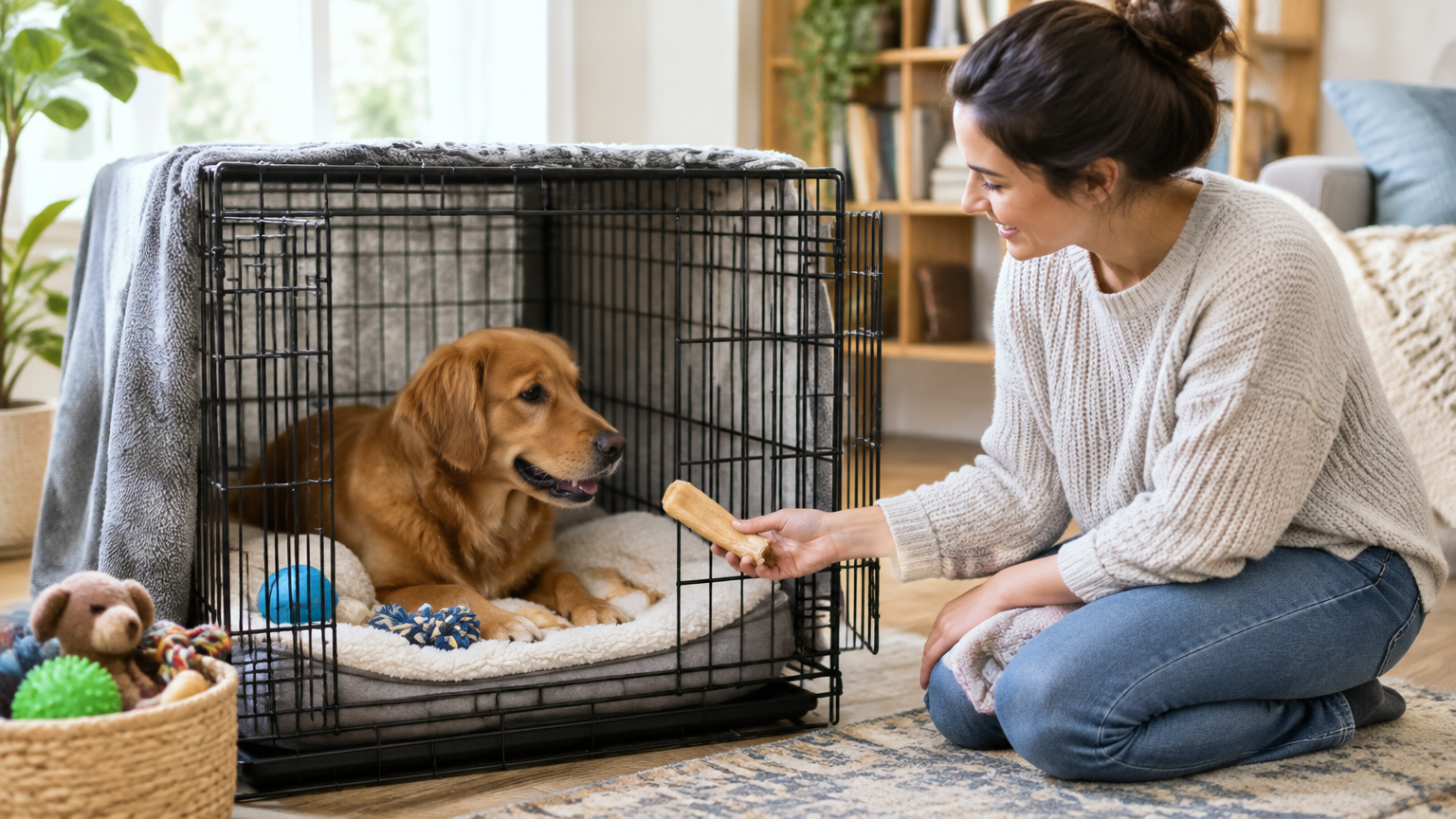
Place the crate in a family area where your dog already spends time. Leave the door open and toss treats or part of a meal near it and inside. Let your dog explore without any pressure.
Step 2: Feed Meals in the Crate
Start with the bowl near the door. Over several meals, move it farther inside. Your dog should walk in willingly, without hesitation.
Step 3: Add Short Door-Closed Sessions
Once your dog is comfortable going in, close the door briefly while they enjoy a chew or stuffed toy. Open it before any sign of distress. For example, you might close the door for a minute or two while your dog works on a stuffed toy, then open it calmly and let them out.
Step 4: Build Duration Gradually
Extend the time slowly. Stay nearby at first, then step out of sight for a moment, then leave the room briefly. If your dog stays relaxed, add a little more time. If not, shorten it.
Step 5: Practice Short Absences
Add brief departures only after your dog is relaxed with you out of sight. Start with a quick trip to another part of the house, then work up to short errands as your dog shows they're comfortable.
Step 6: Keep Routines Predictable
Before crating, provide exercise and a bathroom break. When you let your dog out, keep the release calm, with no big excitement. Predictable routines help your dog understand that crate time is ordinary and safe.
Pacing Tips
- Follow your dog, not a calendar. A fixed schedule matters less than how your dog responds.
- Back up when needed. If your dog whines or panics, return to an easier step.
- Keep early expectations modest. Puppies in particular need frequent breaks.
- Balance the day. Crate time should sit alongside exercise, play, and training.
Quick checklist before each crate session
- [ ] Exercise and bathroom break done
- [ ] Safe chew or stuffed toy ready
- [ ] Collar tags and snag hazards removed
- [ ] Session length matches your dog's current comfort level
- [ ] Calm tone for entry and release
Common Mistakes to Avoid
Using the Crate as Punishment
Sending your dog to the crate when you're angry creates a negative association. If your dog finds a shoe, calmly trade or redirect, and save the crate for planned, positive rest.
Leaving the Dog Crated Too Long
A crate doesn't replace exercise, companionship, or bathroom breaks. Long stretches of confinement can undermine both your dog's comfort and your training.
Moving Too Fast
Long confinement before your dog is comfortable can create stress. Skipping steps often means going back to the beginning.
Skipping Chew Alternatives
Crating without outlets for chewing means your dog won't learn what is acceptable. Pair crate time with appropriate chews and, when you're home, supervised practice with them.
Making Big Departures or Reunions
Dramatic goodbyes and excited greetings can build anxiety. Keep both low-key.
Ignoring Signs of Distress
Heavy panting, drooling, frantic escape attempts, or any injury are signals to stop and reassess. Don't push through them.
When a Crate Is Not the Right Tool
A crate isn't right for every dog or every situation:
- Separation anxiety or confinement panic: These dogs may injure themselves trying to escape.
- Medical issues: Some dogs can't be crated safely. Follow your veterinarian's advice.
- Long hours alone: A crate isn't a good solution for extended absences. Consider a dog-proofed room, an exercise pen, a sitter, or daycare.
- Ongoing distress: If your dog stays distressed despite gradual training, consult a veterinarian or qualified trainer or behavior professional.
Optional Support: Structured Training Programs
If you'd like step-by-step guidance, a structured training program or a certified trainer can help you build a plan around your dog's needs. Some owners find programs such as Brain Training for Dogs useful as one option to explore. Results vary by dog and owner, so compare options and choose what fits your situation.
FAQ
How long does it take to crate train a dog that chews?
It varies with your dog's age, temperament, and history. Progress depends on gradual steps and consistency, so let your dog's comfort guide the timeline.
What should I do if my dog chews or destroys things in the crate?
Check for stress or boredom, increase exercise, and reassess the bedding and toys. Offer safe chews and remove any hazardous items. If you see panic or self-injury, seek professional help.
Should I crate my dog when I'm not home?
It can be appropriate for dogs who are comfortable in the crate, for reasonable durations. It isn't suitable for dogs who panic, and it's not a substitute for care, exercise, and bathroom breaks.
Conclusion
Crate training a dog that chews works best when you go slowly, keep experiences positive, and provide safe chews. Avoid using the crate as punishment, and watch your dog for signs of stress. If the crate isn't working for your dog, try another approach, such as a dog-proofed room or an exercise pen, or ask a veterinarian or qualified trainer for guidance. The goal is a dog who rests easily in the crate and learns what is okay to chew.