
This article contains affiliate links. We may earn a commission if you buy through them, at no extra cost to you.
Daily Routine to Curb Chewing: Balancing Walks, Play, and Training
Direct answer: A dog daily routine to reduce chewing usually combines four things: physical exercise, sniffing time, short training sessions, and plenty of rest, plus appropriate chew items. Chewing is normal dog behavior and can stem from teething, boredom, excess energy, stress, or lack of guidance. A predictable routine can help meet these needs, but results vary by your dog's age, breed, history, and health, so treat the schedules below as adjustable templates.
Why Routine Can Help With Chewing
Common reasons dogs chew
Dogs explore with their mouths. Typical drivers include:
- Teething: Puppies chew to relieve gum discomfort.
- Boredom or under-stimulation: A dog with nothing to do will invent a job.
- Anxiety or stress: Chewing can be a way to self-soothe.
- Curiosity: New textures and smells are interesting.
- Habit: If shoe-chewing worked out well once, it may happen again.
What a routine does and doesn't do
A routine meets your dog's needs on a predictable schedule and reduces the number of moments when chewing the wrong thing is possible. It won't guarantee that your dog never chews a table leg again. Think of it as one tool alongside management, training, and patience.
When to check with a vet or behavior professional
Reach out for help if chewing starts suddenly, your dog swallows non-food items, you see signs of distress (drooling, panting, pacing, injured gums or teeth), or the chewing happens mainly when you leave and looks panicked. These can point to medical or anxiety issues that a schedule alone can't solve.
The Four Building Blocks of a Chew-Friendly Day
Physical exercise
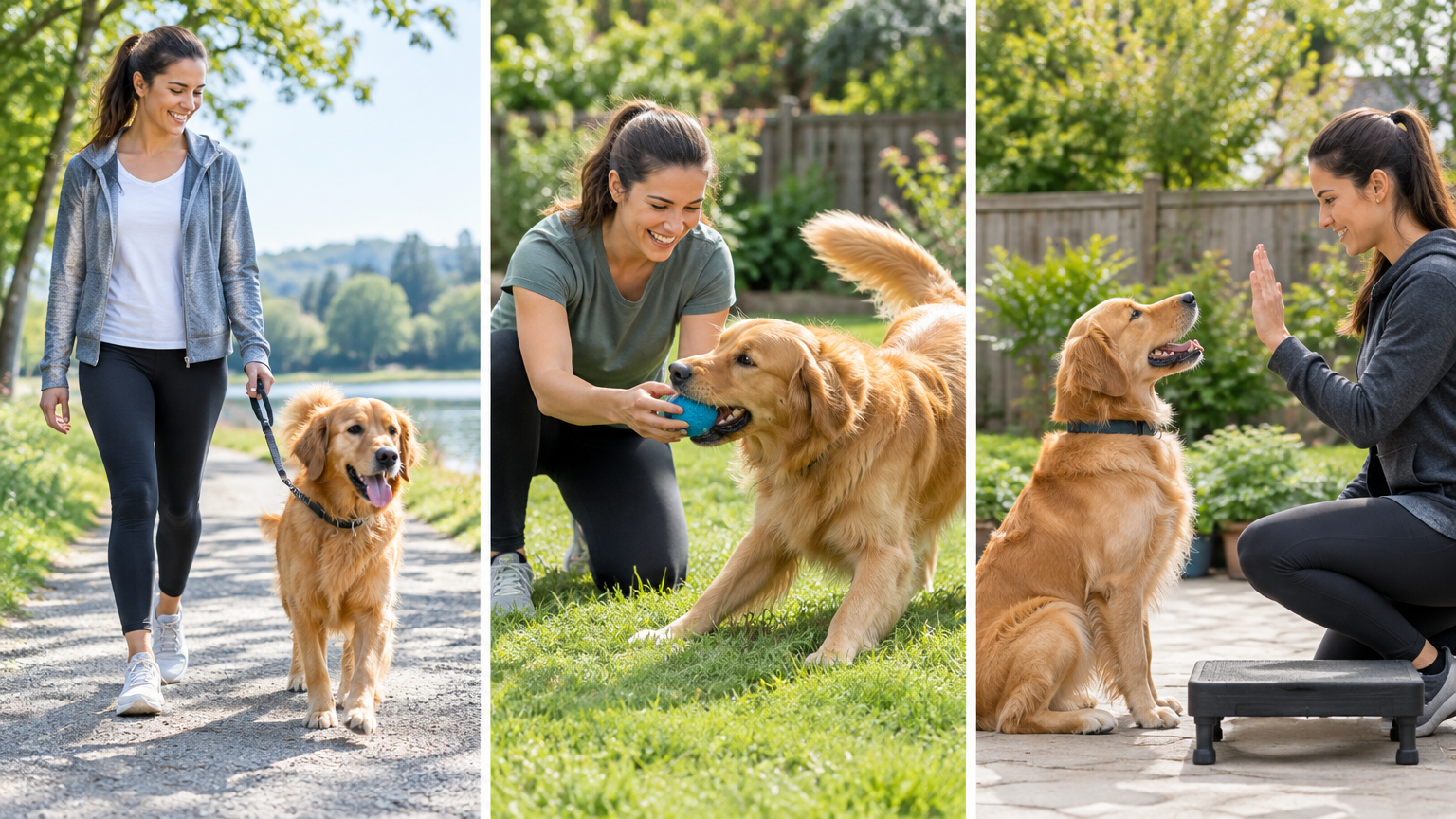
Walks, fetch, tug, and play burn energy. Adjust for age, breed, and fitness. A young retriever and a senior bulldog need very different amounts, and your vet can help you calibrate.
Sniffing time
Sniffing is mentally tiring in a useful way. Try slow "decompression" walks where your dog sets the pace, scatter feeding part of a meal in the grass or on a mat, or play simple hide-and-find games.
Short training sessions
A few minutes at a time works well. Useful skills for chewers include "leave it," "drop it," settling on a mat, and trading an item for a chew or treat.
Rest and downtime
Naps in a crate, pen, or quiet area matter more than many owners expect. Puppies in particular need a lot of sleep, and an overtired dog can get wound up and mouthy.
Appropriate chew outlets
Offer durable chews and food-stuffed toys suited to your dog's size and chew style, and supervise, especially with new items. Rotate them so they stay interesting.
Where Short Brain-Training Sessions Fit
Brain work doesn't need a big time block. Slot it in at these points:
- Early morning, before work begins or before the dog is left.
- Midday break: a 2–5 minute session.
- Before an enforced rest period, to help settle the mind.
- Evening, as a wind-down activity.
Easy examples include name recognition, hand targeting, "find it" scent games, puzzle feeders, and teaching the names of toys. If you'd like a structured set of games to draw from, you could look at a program such as Brain Training for Dogs as one option among many.
Tip: Keep sessions brief and end on a success, even if that means asking for something easy at the finish.
Sample Daily Schedule: Work-From-Home Household
Template (times are flexible)
| Time of day | Activity |
|---|---|
| Morning | Potty, sniff-focused walk, breakfast in a puzzle feeder |
| Mid-morning | 3–5 minute training burst, then rest in a designated spot |
| Midday | Play session, chew time, nap |
| Afternoon | Another short brain game and potty break |
| Evening | Walk or play, dinner, calm chew, wind-down |
Tips for WFH pitfalls
- Avoid constant attention. A dog who gets nonstop interaction may struggle to settle on their own.
- Practice settling even when you're home. Use a mat, pen, or crate for planned rest periods.
- Rotate toys. Offer a few at a time and swap them out.
- Manage access to tempting items. Keep shoes, laundry, and remotes out of reach, and use gates or closed doors.
Sample Daily Schedule: Away-All-Day Household
Template (times are flexible)
| Time of day | Activity |
|---|---|
| Before work | Potty, brisk walk or play, short training or sniff game, food toy |
| During the day | Safe confinement area; midday dog walker, sitter, neighbor, or daycare if feasible |
| After work | Potty, decompression walk, play, training |
| Evening | Dinner, chew time, calm rest |
Safety and setup notes
- Dog-proof the space. Remove cords, shoes, and anything swallowable.
- Leave only chew items you've already seen your dog handle safely.
- Don't leave items that could be hazardous when unsupervised.
- Consider age-appropriate limits on alone time. Young puppies can't wait as long between potty breaks or manage long stretches alone.
When long absences are a problem
Puppies and anxious dogs may struggle with long hours alone. If chewing is intense or looks panic-driven, explore breaks during the day, such as a walker or daycare, and talk with a vet or qualified behavior professional about support.
Adjusting the Routine by Life Stage and Energy Level
Puppies
Expect frequent naps, very short sessions, more potty breaks, and teething support through appropriate chews. Their days are mostly sleep punctuated by brief bursts of activity.
Adolescents
Adolescent dogs often have high energy and test boundaries. Consistency matters most here: the same rules, the same cues, and a steady schedule. Mix exercise with mental work so you don't just build a fitter, more energetic dog.
Adult and senior dogs
Consider health and mobility. Older dogs may prefer shorter, gentler walks, with more emphasis on sniffing and mental enrichment. A sudden change in chewing in an adult or senior dog is worth a vet visit.
Practical Steps to Build Your Own Routine
1. Note when and what your dog chews. Track patterns for a week. 2. Pick consistent anchor times for meals, walks, and rest. 3. Add one sniffing activity and one short training session daily. 4. Provide approved chews and rotate them. 5. Manage the environment. Put away shoes, close doors, and use gates or pens. 6. Redirect and reward chewing on appropriate items rather than only scolding. 7. Schedule rest, since overtired dogs may chew more. 8. Review after 1–2 weeks and tweak.
Quick daily checklist
- [ ] Physical exercise suited to my dog
- [ ] At least one sniffing activity
- [ ] One or more short training sessions
- [ ] Planned rest periods
- [ ] Approved chews available and rotated
- [ ] Tempting items put away
Common Mistakes to Avoid
- Relying only on more exercise. It can lead to an overly amped dog who needs even more to settle.
- Skipping rest. Tired, overstimulated dogs often get mouthier.
- Inconsistent rules. If socks are sometimes allowed, your dog can't know better.
- Punishing after the fact. Dogs rarely connect a scolding to something chewed earlier, and it can add stress.
- Unsupervised access to risky chews or items. Choose chews carefully and supervise.
FAQs
1. How much exercise does my dog need to stop chewing? It varies by age, breed, and health. Focus on a mix of activity, sniffing, mental work, and rest rather than exercise alone, and ask your vet for individual guidance.
2. Can I leave my dog alone all day and still reduce chewing? Chewing may improve with structure, a safe setup, and breaks, but long absences are hard for some dogs. Consider midday help, and consult a professional if problems persist.
3. How long should training sessions be for a chewing-prone dog? Short sessions of a few minutes, a few times per day, are generally easier to maintain. Adjust to your dog's focus and stop while they're still engaged.
Conclusion: Key Takeaways and Next Steps
A dog daily routine to reduce chewing is a flexible framework, not a guaranteed fix. Start with one of the templates above, watch how your dog responds, and adjust.
Key takeaways:
- Routines are flexible tools, not guarantees.
- Combine exercise, sniffing, brief training, rest, and proper chews.
- Place short brain-training sessions at natural transition points in the day.
- Seek professional help for persistent, intense, or anxiety-driven chewing.
For next steps, track your dog's chewing for a week, pick your anchor times, and review after two weeks. If you want additional brain-game ideas, Brain Training for Dogs is one resource you could explore alongside your vet's or trainer's advice.