
This article contains affiliate links. We may earn a commission if you buy through them, at no extra cost to you.
Title: Medicinal Herb Garden Care Calendar: Seasonal Tasks from Planting to Overwintering
Medicinal Herb Garden Seasonal Care: A Zone-Based Calendar
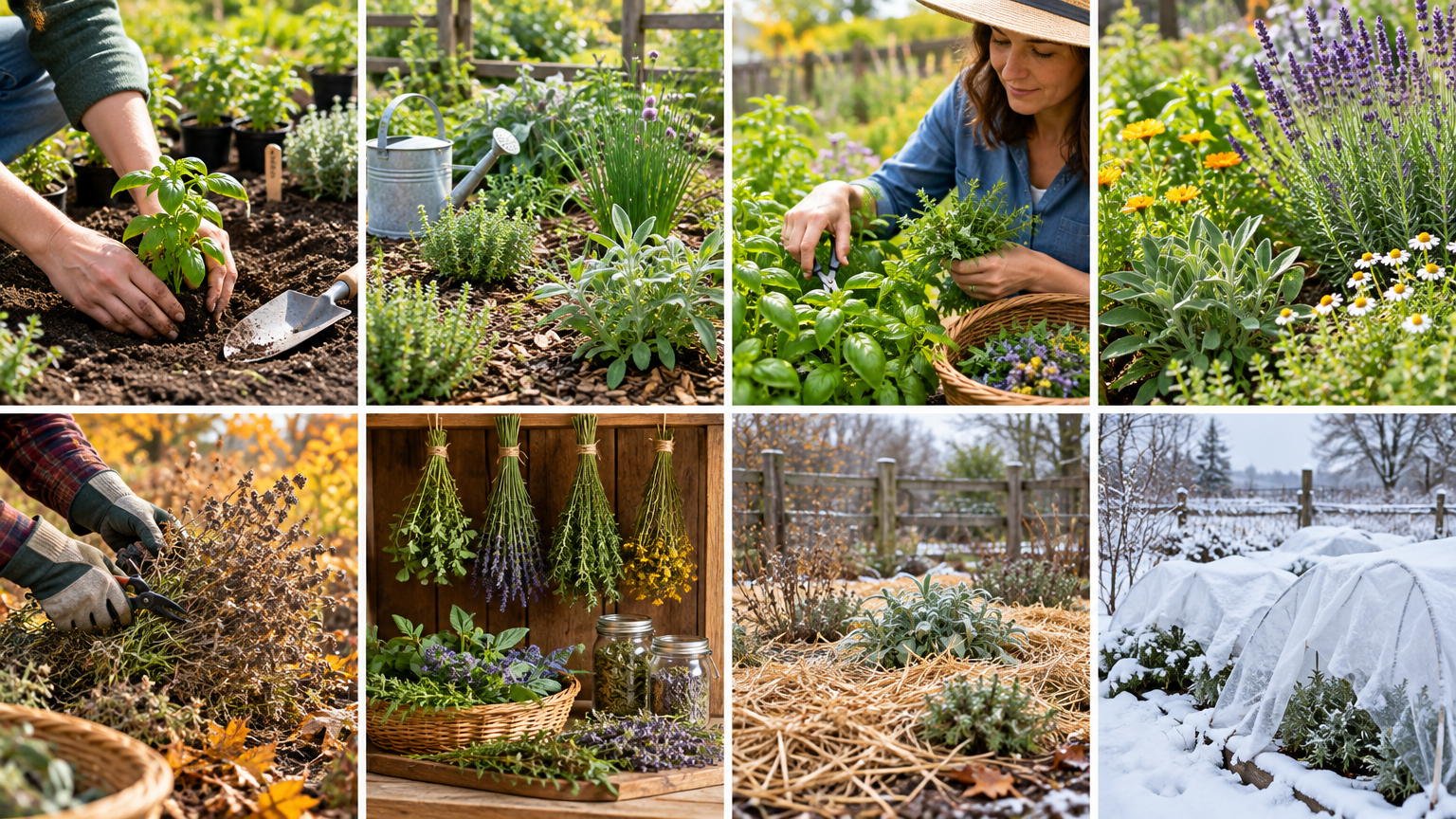
The right time for each herb task depends on your USDA hardiness zone and local frost dates, not on dates printed on a calendar. This guide walks through a season-by-season checklist covering planting, watering, weeding, mulching, pruning, and winter protection. A printable-style task list at the end lets you turn it into your own plan.
Disclosure: this article contains affiliate links. They do not change the guidance below.
Quick Answer: How Do You Plan Medicinal Herb Garden Seasonal Care?
Find your USDA zone and your average last spring and first fall frost dates. Count forward or backward from those dates to schedule planting, watering, weeding, mulching, pruning, and winter protection. Treat annuals and perennials separately, and adjust for each plant's needs.
Key Takeaways
- Build your schedule around frost dates, using "weeks before or after last frost."
- Annuals are replanted each year. Perennials need pruning, division, and a winter plan.
- Every herb has its own sun, water, soil, and hardiness needs, so check each one.
- Mulch helps in most gardens, but keep it off crowns, and go lighter on herbs prone to rot.
- Keep a garden notebook and adjust the calendar every year.
Step 1: Set Up Your Calendar Around Your Location
Find your USDA hardiness zone
Your zone reflects the average annual minimum winter temperature. It tells you which perennials are likely to survive winter in your area. It does not capture microclimate, soil drainage, or summer heat, and all three can change how a plant performs. A south-facing wall may be warmer than your zone suggests, and a low, wet corner may be harsher.
Find your local frost dates
Look up your average last spring frost and average first fall frost through a local cooperative extension office or a regional weather service. Treat these as averages, not guarantees. A frost can arrive after your "last" date, so keep an eye on the forecast in spring and fall.
Convert dates into a relative schedule
Instead of writing "plant on May 15," write "plant 2 weeks after last frost." Use phrases like "6 weeks before last frost" for indoor seed starting and "4 weeks before first frost" for fall tasks. Record the actual dates in a garden notebook each year and adjust. After a few seasons, you will have a schedule tuned to your own yard.
Annuals vs. Perennials: Why Handling Differs
Annual herbs
Annuals complete their life cycle in one season, so you replant or reseed them every year. Tender types need warm soil and frost-free conditions before they go outside. Examples to verify for your area include basil, calendula, and German chamomile. Some may self-sow, and others are treated differently depending on climate, so confirm each one's habit on the seed packet.
Perennial herbs
Perennials return for multiple years, which means they need pruning, occasional division, and winter planning. Examples include echinacea, lemon balm, sage, thyme, and lavender. Hardiness varies by species and even by variety, so check each plant's zone rating rather than assuming a herb is hardy because the species is generally considered so.
Plant-specific needs
Sun, water, soil, and spreading habits differ from herb to herb. Mint, for example, spreads aggressively and is often grown in containers. Lavender, sage, and thyme generally prefer well-drained soil. Check the plant tag, seed packet, or a reliable extension or botanical source for each herb you grow.
If you prefer starting with a ready-made set of plants or supplies, you can browse medical garden kit options. Compare what is included against your zone and each plant's needs first.
Season-by-Season Checklist
Late Winter to Early Spring (before last frost)
- Review last year's notes and map your beds.
- Order seed and plants. Start tender seeds indoors, counting back from your last frost date according to each packet.
- Clean and sharpen tools.
- Remove winter mulch gradually as hard freezes pass.
- Check perennials for heaving, where freeze-thaw cycles push roots upward, and gently resettle them.
- Test or amend soil as needed.
Spring (around and after last frost)
- Harden off seedlings by exposing them to outdoor conditions gradually before transplanting.
- Plant hardy perennials and cool-tolerant annuals first.
- Wait until frost risk has passed and soil has warmed before planting tender herbs.
- Water new plantings regularly until established.
- Begin weeding early, while weeds are small.
- Apply a light mulch once the soil has warmed.
- Prune dead or damaged growth on perennials as new growth appears.
Summer
- Water deeply rather than often, and adjust for each herb. Mediterranean types generally prefer drier, well-drained soil.
- Keep weeding, and refresh mulch where it has thinned.
- Harvest and deadhead regularly, following guidance for each plant and the part used.
- Pinch or trim to encourage bushy growth and delay bolting where appropriate.
- Watch for pests and disease, and improve airflow by spacing or thinning if needed.
- Succession-sow fast annuals if your growing season allows.
Fall (leading to first frost)
- Do final harvests before frost for frost-sensitive herbs.
- Collect seed from annuals you want to save, or let them self-sow.
- Avoid heavy pruning on perennials late in the season, which may stimulate tender new growth.
- Plant or divide hardy perennials early enough for roots to establish before the ground freezes.
- Clear spent annuals and diseased material.
- Reduce watering as growth slows, but do not let new plants dry out.
Winter (overwintering)
- Apply mulch after the ground cools or begins to freeze, to moderate temperature swings.
- Protect marginally hardy perennials with mulch, breathable covers, or windbreaks.
- Move tender perennials and container plants indoors or to a sheltered spot if they are not hardy in your zone.
- Keep drainage in mind, since wet winter soil can harm some herbs.
- Check periodically during thaws and dry spells.
Core Tasks Explained
Planting
Match each plant to your zone and sun conditions. Use your frost dates to time sowing and transplanting: hardy herbs can go in earlier, and tender herbs wait until frost risk has passed.
Watering
Water new plants more often and established plants less. Check soil moisture by hand, a couple of inches down, before watering. Many herbs fail from too much water rather than too little, especially in heavy soil.
Weeding
Weed regularly and remove weeds before they set seed. Be careful near shallow-rooted herbs, where pulling a large weed can disturb the herb's roots. Hand-weeding is often the safer choice in crowded beds.
Mulching
Mulch conserves moisture and suppresses weeds during the growing season, and it provides insulation in winter. Keep it off plant crowns, and use a lighter layer for herbs prone to rot.
Pruning
Remove dead or damaged growth. Time shaping cuts to each plant's growth habit. Avoid cutting woody herbs back hard unless you know the species tolerates it, because some do not regrow well from old wood.
Winter protection
Base protection on how marginal the herb is for your zone. A plant rated for your zone may need little, while one at the edge of its range may need mulch, covers, or a move to shelter. Remove covers and mulch gradually in spring rather than all at once.
Printable-Style Task List Outline
Copy this layout into a notebook or spreadsheet.
Header: Garden name / Zone / Last spring frost / First fall frost / Year
Layout: One section per season, with checkbox rows and four columns: Task, Target timing (weeks from frost), Done (date), and Notes.
| Section | Season | Sample task rows |
|---|---|---|
| A | Late Winter/Early Spring | Plan, order, start seeds, tool prep, mulch removal |
| B | Spring | Harden off, plant, water new plants, weed, mulch, light pruning |
| C | Summer | Water check, weed, harvest, deadhead, pest check |
| D | Fall | Final harvest, seed saving, divide/plant perennials, clean up |
| E | Winter | Mulch, cover, move containers, thaw checks |
Plant-specific table:
| Herb name | Annual or perennial | Hardiness zone | Sun | Water | Pruning notes | Winter plan |
|---|---|---|---|---|---|---|
| (example: thyme) | ||||||
Notes area: What worked, losses, and dates to adjust next year.
If you are still gathering supplies, a medical garden kit is one option to consider. Confirm the contents and plant varieties suit your zone before you buy.
Safety and Sourcing Note
Confirm plant identification and variety before use. Some plants look alike, and common names can refer to different species. This guide covers gardening care, not medical advice. Consult a qualified healthcare professional before using any herb medicinally.
FAQs
1. How do I know when to plant medicinal herbs if I don't use fixed dates?
Use your average last spring frost date. Plant hardy herbs earlier and tender herbs after frost risk passes, following seed packet or plant tag guidance.
2. Do all perennial medicinal herbs survive winter outdoors?
No. Survival depends on the species, variety, your zone, and conditions like drainage and exposure. Check each plant's hardiness rating, and protect or move marginal plants.
3. Should I mulch every herb the same way?
No. Many herbs benefit from mulch, but Mediterranean types often prefer drier conditions and good drainage. Use a lighter mulch and keep it away from the crown.
Conclusion
Good medicinal herb garden seasonal care starts with knowing where you are: your USDA zone and your local frost dates. From there, a relative schedule keeps planting, watering, weeding, mulching, pruning, and winter protection on track, whatever the year brings. Write down your zone and frost dates, fill in the printable list, and note what worked and what didn't. Update it each year, and your calendar will get more accurate with every season.