
This article contains affiliate links. We may earn a commission if you buy through them, at no extra cost to you.
Easy Plant-Based Sheet Pan Dinners: A Beginner Formula for Minimal Cleanup
Meta description: Learn a simple formula for easy plant based sheet pan dinners: pick a protein, add sturdy vegetables and a sauce, then stage everything on one pan.
One pan, one formula, and far less to wash afterward. That is the appeal of sheet pan cooking, and it works especially well without meat. This guide gives you a repeatable method rather than a single recipe, so you can swap ingredients all month without starting over.
The Quick Answer: The Basic Sheet Pan Formula
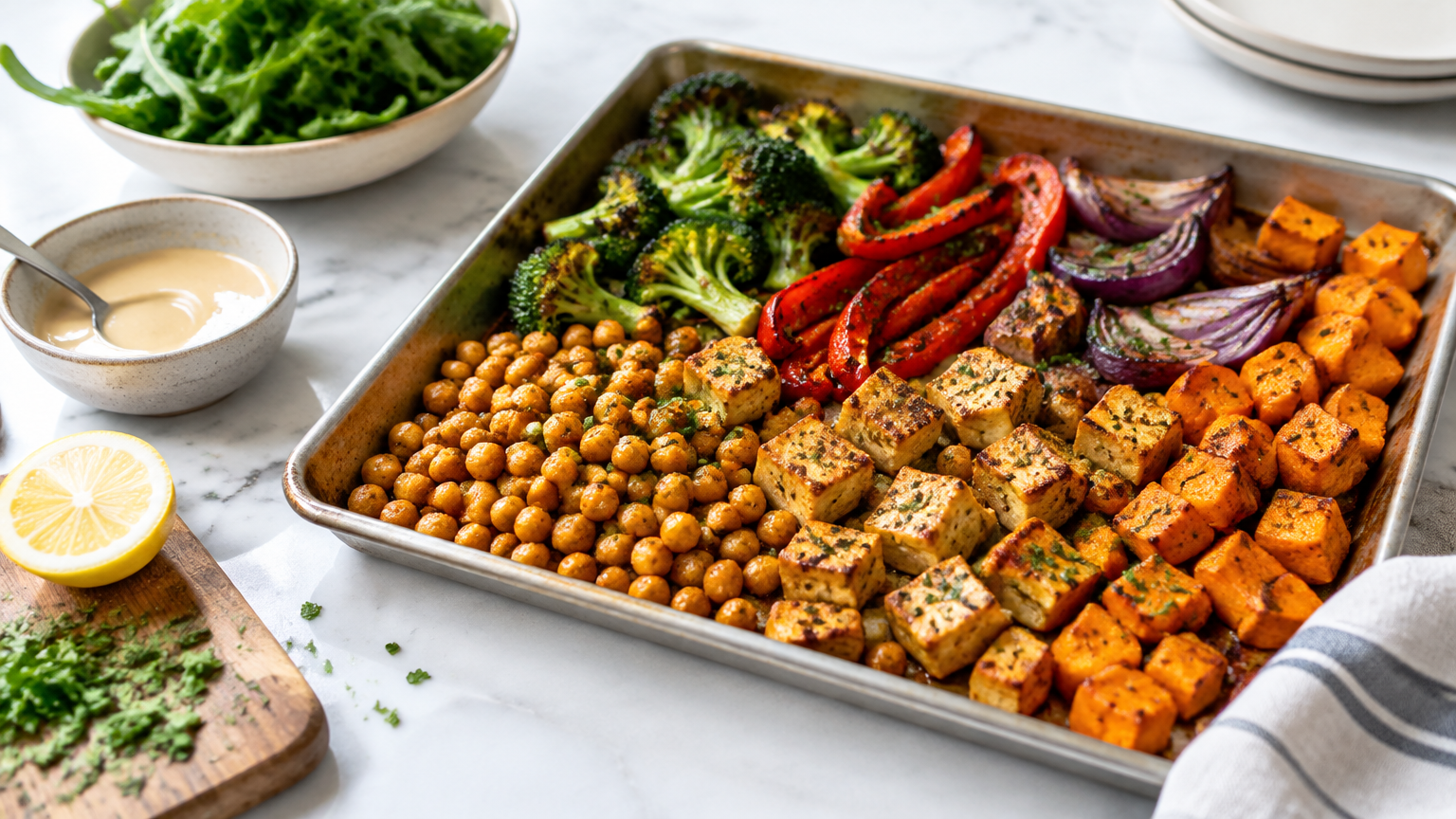
Choose one protein (chickpeas, tofu, or tempeh), one or two sturdy vegetables, and one sauce. Cut everything to suit its cook time, start the slower-cooking items first, and add quicker items later so everything finishes together.
Formula at a glance: Protein + Sturdy Veg + Sauce + Oil/Seasoning = Dinner
Key Takeaways
- Pair one protein with one or two sturdy vegetables and a sauce.
- Dry ingredients roast; wet ingredients steam. Pat everything dry.
- Denser foods get cut smaller; quicker-cooking foods get cut larger.
- Stage the pan: dense vegetables first, protein and medium vegetables next, delicate items and sugary sauces last.
- Don't crowd the pan. Use two if needed.
- Treat all temperatures and times here as starting points, not guarantees.
What You Need
Equipment
- Rimmed sheet pan. The rim keeps oil and juices from dripping into the oven. If you're shopping for one, you can compare rimmed sheet pans before choosing.
- Parchment or foil (optional), for easier cleanup.
- Spatula for flipping and stirring.
- A large bowl for tossing.
Pantry Basics
- Neutral oil
- Salt and pepper
- Spices you enjoy, such as paprika, cumin, garlic powder, or curry powder
- Acid: lemon, lime, or vinegar
- A sauce base: soy sauce, tahini, peanut butter, mustard, maple syrup, or similar
Step 1: Choose Your Protein
Each of the three proteins behaves a little differently on a hot pan.
Chickpeas
Drain, rinse, and pat them dry thoroughly. Surface moisture is the main reason chickpeas steam instead of roast. Spread them on a clean towel and blot, or let them air-dry for a few minutes before tossing with oil.
Tofu
Use firm or extra-firm tofu. Press it or blot it dry with a clean towel, then cut it into cubes or slabs. The drier the surface, the better it browns.
Tempeh
Cut tempeh into cubes, strips, or triangles. Some cooks like to steam or simmer it for a few minutes first to soften any bitterness. This step is optional and purely a matter of preference. Many people skip it and go straight to the pan.
Quick Comparison
| Prep effort | Texture when roasted | How it takes sauce | |
|---|---|---|---|
| Chickpeas | Low: drain, rinse, dry | Crisp edges, tender centers | Sauce clings lightly; best added late or drizzled after |
| Tofu | Medium: press or blot, then cut | Chewy outside, softer inside | Absorbs marinades well; thick sauces added late glaze nicely |
| Tempeh | Low to medium (optional pre-steam) | Dense, firm, nutty | Soaks up marinades readily; sturdy enough for glazes |
Step 2: Pick Sturdy Vegetables
"Sturdy" means vegetables that hold their shape in a hot oven rather than collapsing into mush. Good options include:
- Broccoli
- Cauliflower
- Carrots
- Sweet potatoes
- Brussels sprouts
- Red onion
- Bell peppers
- Cabbage wedges
Tip: Choose one dense vegetable (like sweet potato or carrot) and one quicker-cooking vegetable (like broccoli or bell pepper). The difference in cook time makes staging easy because you already have a natural "first in" and "last in."
Step 3: Cut Sizes That Cook Evenly
The principle is simple: denser food gets smaller or thinner pieces, and quicker-cooking food gets larger pieces. This narrows the gap in cook times so everything finishes around the same moment.
Starting-Point Size Guide
These sizes are approximate. Adjust for your oven and your preferences.
| Ingredient | Suggested cut |
|---|---|
| Sweet potatoes, carrots | About ½-inch pieces |
| Broccoli, cauliflower | Medium florets |
| Brussels sprouts | Halved |
| Bell peppers, onions | 1-inch pieces or wedges |
| Tofu, tempeh | About ¾- to 1-inch cubes |
| Chickpeas | Whole |
Tip: Keep pieces within each category similar in size. A mix of tiny and huge carrot chunks will always cook unevenly, no matter how well you stage the pan.
Step 4: Choose a Sauce and Decide When to Add It
Easy Sauce Ideas
- Peanut-soy-lime: peanut butter, soy sauce, lime juice, and a little warm water to thin
- Lemon-tahini: tahini, lemon juice, garlic, salt, and water
- Maple-mustard: Dijon or whole-grain mustard with maple syrup and a splash of vinegar
- Garlic-paprika: oil, garlic powder, smoked or sweet paprika, salt
- Curry-style: curry powder or paste, oil, and a squeeze of lemon
Sauce Timing
Sauces don't all behave the same way in a hot oven:
- Before roasting: Toss ingredients with oil and dry seasoning. Oil-based mixtures and spice rubs handle long roasting well.
- Last few minutes: Add sugary or thick sauces (maple glazes, peanut sauces) near the end. Sugar can scorch under extended high heat.
- After roasting: A fresh drizzle of tahini sauce, lime juice, or herbs adds brightness that long cooking can dull.
Step 5: Stage the Oven Time
General Timing Approach
Preheat the oven. Many sheet pan recipes use roughly 400–425°F, but follow your recipe and know your oven. Then work in stages:
1. Stage 1: Dense vegetables (sweet potatoes, carrots, Brussels sprouts) go in first. 2. Stage 2: Add the protein and medium-density vegetables (cauliflower, onions) partway through. 3. Stage 3: Add quick-cooking vegetables (broccoli, bell peppers) or sauce near the end. 4. Finish: Look for browned edges and tender vegetables. Cook time varies with oven and cut size, so use visual cues over the clock.
As a rough starting point, you might give dense vegetables a 10- to 15-minute head start, then add the protein for the remainder of roasting. Treat that as a guide, not a rule.
Pan-Setup Tips
- Avoid crowding. Use two pans if needed. Crowded food steams.
- Spread in a single layer with a little space between pieces.
- Flip or stir once midway. Constant stirring prevents browning, especially for tofu.
Step-by-Step Method
1. Heat the oven and prep the pan. Line with parchment or foil if you like. 2. Dry and cut the protein and vegetables. 3. Toss separately with oil and seasoning, so each group gets coated without crowding the bowl. 4. Roast dense vegetables first. 5. Add the protein and other vegetables to the pan. 6. Add sauce at the right time, with thick or sugary sauces near the end. 7. Finish with acid, herbs, or a drizzle. Serve over grains or greens if desired.
Quick Checklist Before Roasting
- [ ] Protein is dry
- [ ] Vegetables are cut to size by category
- [ ] Oil and salt are on everything
- [ ] Pan isn't crowded
- [ ] Sauce is mixed and waiting
Example Combinations
Use these as templates. Times are starting points, so adjust for your oven.
1. Chickpeas + broccoli + red onion with lemon-tahini sauce
- Cuts: whole chickpeas, medium broccoli florets, red onion in 1-inch wedges
- Stage: onion first, then chickpeas, then broccoli for the final stretch
- Sauce: whisk lemon-tahini and drizzle after roasting
2. Tofu + carrots + bell pepper with peanut-soy-lime sauce
- Cuts: carrots in ½-inch pieces, tofu in ¾- to 1-inch cubes, pepper in 1-inch pieces
- Stage: carrots first, tofu next, pepper last
- Sauce: toss with the peanut-soy-lime sauce in the last few minutes, then add extra lime at the end
3. Tempeh + sweet potato + Brussels sprouts with maple-mustard glaze
- Cuts: sweet potato in ½-inch pieces, halved sprouts, tempeh in cubes or triangles
- Stage: sweet potato and sprouts first, tempeh added partway through
- Sauce: brush on the glaze in the last few minutes to reduce burning risk
4. Chickpeas + cauliflower + sweet potato with curry-style seasoning
- Cuts: sweet potato in ½-inch pieces, medium cauliflower florets, whole chickpeas
- Stage: sweet potato first, cauliflower next, chickpeas after
- Sauce: toss with curry-style oil and spices before roasting; finish with lemon
For more ideas to rotate through your week, you can browse more plant-based dinner ideas.
Common Mistakes and Quick Fixes
| Problem | Likely cause | Fix |
|---|---|---|
| Soggy results | Crowded pan or damp ingredients | Dry everything well; use two pans |
| Burnt sauce | Sugary sauce added too early | Add it in the last few minutes |
| Uneven cooking | Inconsistent cut sizes or no staging | Cut uniformly and add items in stages |
| Bland flavor | Under-seasoning | Season generously; add acid at the end |
Minimal Cleanup Tips
- Line the pan with parchment or foil.
- Use one mixing bowl. Toss the vegetables first, then the protein, then use the same bowl for the sauce.
- Prep the sauce in the tossing bowl once you've emptied it, rather than dirtying another dish.
- Soak or wipe the pan while it's still warm. Be careful: it will be hot. Let it cool enough to handle safely first.
FAQs
Can I cook tofu, chickpeas, or tempeh and vegetables on the same pan at the same time?
Yes, if you adjust cut sizes and start times. Start slower-cooking vegetables first, then add the protein and quicker vegetables later.
How do I keep tofu from sticking or turning soggy on a sheet pan?
Blot or press it dry, use enough oil, and give it space. Avoid moving it too early, since it releases more easily once a crust forms.
Can I prep a plant-based sheet pan dinner ahead of time?
Yes. Cut the vegetables and proteins and mix the sauces in advance, storing each separately. Combine and roast when you're ready to eat.
Conclusion
The formula is simple: a protein, one or two sturdy vegetables, and a sauce, cut to size and staged in the oven. Once you've got it down, mix and match freely. Save this formula, or try one of the combinations above this week.