
This article contains affiliate links. We may earn a commission if you buy through them, at no extra cost to you.
Plant-Based Family Dinners on a Budget: How to Cook for Picky Eaters Without Making Separate Meals
One dinner, four opinions, and a grocery budget that only stretches so far. It's a familiar squeeze. Plant based family dinners on a budget get easier when you stop cooking one fixed plate and start cooking flexible parts. This guide shows a build-your-own approach using affordable staples, so everyone can choose and no one needs a separate meal.
The Short Answer
Cook one set of simple, separate components: a base, a hearty item, a vegetable or two, a sauce, and a topping. Let each person build their own plate. Include at least one familiar food, keep seasoning simple, and offer new items without pressure.
Key Takeaways
- Serve components separately and let each person assemble their own plate.
- Always include at least one "safe" food the whole table will likely eat.
- Cook plainly, then add sauces and seasoning at the table.
- Stick to five parts: base, hearty item, vegetables, sauce, topping.
- Leftover components can become lunches or tomorrow's dinner.
Why Deconstructed Dinners Work for Picky Eaters and Tight Budgets
Choice without extra cooking
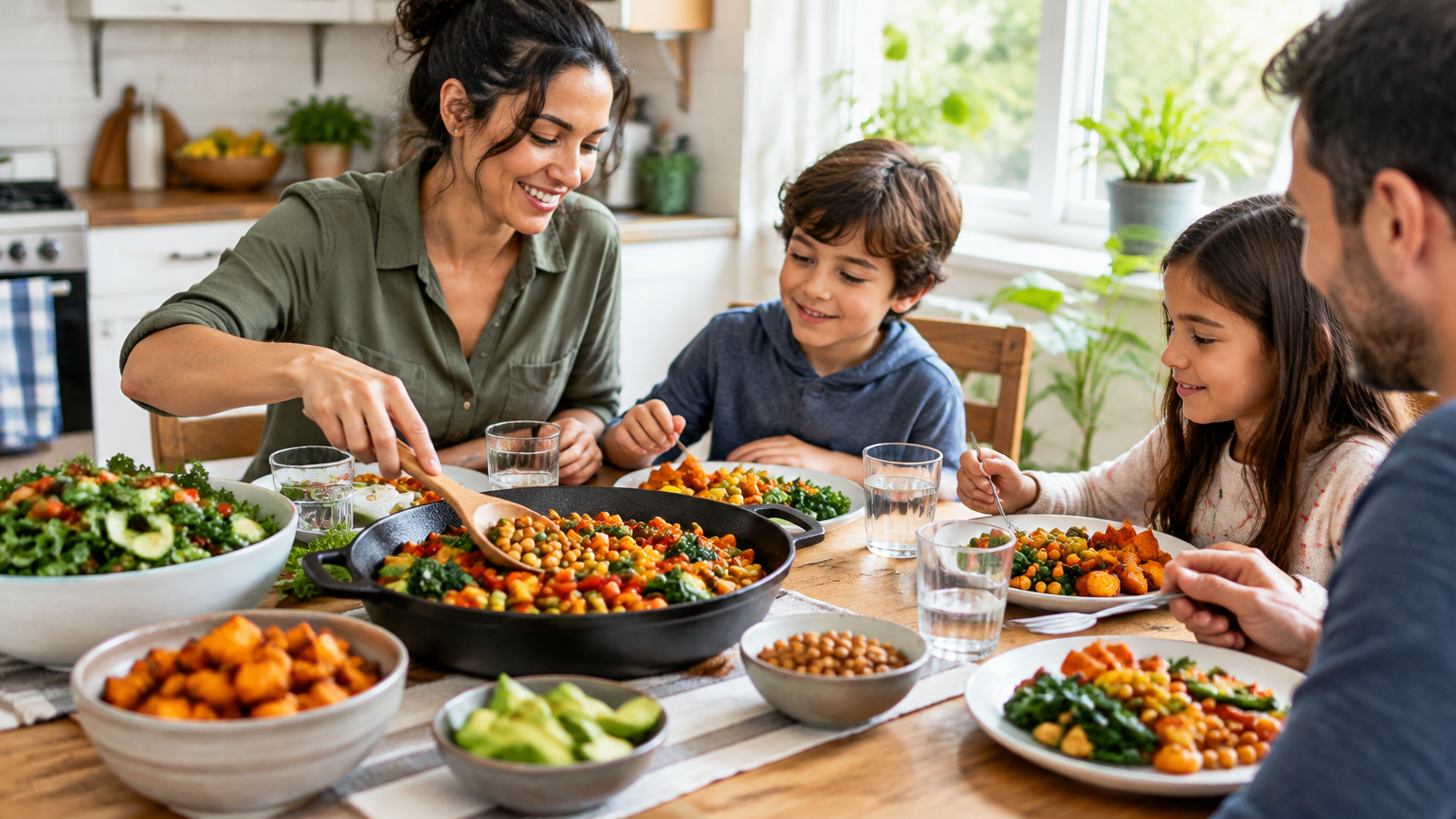
Everyone picks from the same pots. One person builds a plate of rice and beans, another adds roasted vegetables and sauce, and a third sticks to pasta and a few cucumber slices. You cook once, and the variety comes from how people assemble the parts.
Lower pressure at the table
When kids and adults control what goes on their plates, there is less to negotiate. Nobody is handed a mixed casserole and told to finish it. A visible, optional spread lets people approach new foods on their own terms.
Easy reuse
Components store better than finished casseroles. Leftover rice can become fried rice, extra beans can go into a quesadilla, and roasted vegetables can top a flatbread. Reuse is one of the biggest ways a build-your-own format saves money.
Budget-Friendly Building Blocks
Think in categories rather than recipes. Once you have a few favorites in each, you can mix them endlessly.
Bases
Rice, pasta, potatoes, tortillas, bread, noodles, and oats or polenta. These are filling, familiar, and usually inexpensive. They are also the foods most likely to be the "safe" item on the table.
Hearty items
Dried or canned beans, lentils, chickpeas, and tofu. Dried beans and lentils generally cost less per serving than canned, but they take more time. Canned beans are a fine shortcut on busy nights.
Vegetables
Use frozen, canned, and seasonal produce. Offer some raw and some cooked, since many picky eaters have strong preferences about texture. Frozen vegetables cut prep time and let you avoid buying more fresh produce than you'll use.
Toppings for crunch and flavor
Toasted seeds, breadcrumbs, crushed tortilla chips, shredded cabbage, and fresh herbs all add texture for very little money. A small amount goes a long way.
Tip: Buy dry staples in larger quantities when it suits your budget and storage space, then batch-cook them. A big pot of rice or beans on the weekend can anchor several dinners. If you cook in batches often, sturdy food storage containers make it easier to keep components separate and ready to reheat.
How to Set Up a Build-Your-Own Plant-Based Dinner (Step by Step)
1. Pick a format. Bowls, tacos, pasta, baked potatoes, or flatbreads all work. 2. Choose your components. Aim for one base, one hearty item, two vegetables, one sauce, and one topping. 3. Include a "safe" food. Choose something everyone will likely eat, such as plain pasta, rice, or warm tortillas. 4. Cook components plainly. Add seasoning or sauce at the table, not in the pot. 5. Serve family-style. Use separate dishes so foods don't touch and people can see their options. 6. Keep it low-pressure. No required bites. Just an open invitation to try. 7. Save extras. Pack leftover components separately for later meals.
Quick Component Checklist
| Component | Pick | Example |
|---|---|---|
| Base | 1 | Rice, pasta, or tortillas |
| Hearty item | 1 | Black beans, lentils, or baked tofu |
| Vegetables | 2 | One raw (shredded cabbage), one cooked (roasted carrots) |
| Sauce | 1 | Salsa or garlic-herb olive oil |
| Topping | 1 | Toasted seeds or crushed tortilla chips |
| Safe food | 1 | Plain pasta, bread, or rice |
Using Familiar Textures and Flavors
Match textures kids already like
- Crispy: oven-roasted chickpeas, toasted breadcrumbs
- Creamy: mashed potatoes, bean spreads
- Soft: pasta, rice
- Crunchy: raw vegetable sticks, shredded cabbage
If someone rejects a food, the problem is often texture rather than flavor. Offering the same ingredient in a different texture can change the response.
Borrow familiar formats
Taco night, pizza night, pasta night, noodle bowls, and "dippers and dips" are formats most people already know. Familiar structure makes unfamiliar ingredients feel less risky, because the meal still looks like something they recognize.
Offer vegetables in different forms
The same vegetable can be roasted, raw, mashed, finely chopped, or blended into a sauce. Put out a small bowl of finely chopped peppers next to a bowl of roasted pepper strips and let people choose. Blended vegetables in a tomato sauce are another option, though some families prefer to know what's in their food, so decide what works for yours.
Gradual Introductions Without Pressure
Add one new item at a time
Place a single new component next to familiar favorites. If the table has five new foods at once, it can feel overwhelming.
Start small, or just look and smell
A spoonful on the side of the plate is enough. Some people need several exposures before they try something, and looking or smelling counts as participation.
Try the same food a different way
If roasted cauliflower gets ignored, try it raw, mashed, or chopped small on another night. Changing the preparation gives the food a fresh chance without making it a battle.
Let kids help
Kids can wash vegetables, stir a sauce, sprinkle toppings, or assemble their own tacos. Handling food is a low-stakes way to get comfortable with it.
Simple, Low-Cost Sauces That Tie It Together
Sauces make plain components taste like a meal. Make one or two per dinner, not all of them.
- Tomato sauce or salsa: works on pasta, rice, potatoes, and flatbreads.
- Garlic-herb olive oil: good over noodles, bread, and roasted vegetables.
- Peanut or sunflower-seed-style sauce: great on noodle bowls. Check for allergies first, and use a seed-based option if nuts are a concern.
- Lemon-tahini dressing: works on bowls, raw vegetables, and baked potatoes.
- Blended white bean sauce: creamy and mild, useful on pasta or as a dip.
- BBQ-style or sweet-and-savory stir-fry sauce: a familiar flavor for roasted tofu, vegetables, or rice.
Tip: Serve sauces on the side so each person controls the amount. This also lets you keep the shared dishes mild.
Five Sample Dinner Formats
| Format | Base | Hearty item | Vegetables | Sauce | Topping |
|---|---|---|---|---|---|
| Taco or burrito bar | Tortillas or rice | Seasoned black or pinto beans | Corn, shredded lettuce or cabbage | Salsa | Crushed tortilla chips |
| Pasta bar | Pasta | White beans or lentils | Steamed broccoli, cherry tomatoes | Tomato sauce | Toasted breadcrumbs |
| Rice or noodle bowls | Rice or noodles | Baked tofu or edamame | Shredded carrots, cucumber | Peanut or stir-fry sauce | Toasted seeds |
| Baked potato bar | Baked potatoes | Chickpeas or chili-style beans | Frozen peas, roasted broccoli | Lemon-tahini dressing | Chopped herbs |
| Flatbread or pita pizzas | Flatbread or pita | Mashed white beans or crumbled tofu | Peppers, spinach, mushrooms | Tomato sauce | Garlic-herb olive oil drizzle |
Each of these can be adjusted to what's on sale or already in your pantry.
Planning and Saving Tips
- Plan two or three base meals per week and rotate the toppings and sauces. Taco night can look different each time without any new shopping.
- Cook extra base and bean components for reuse. Extra rice and beans make a quick bowl or burrito the next day.
- Use frozen and canned items to reduce prep and waste.
- Keep a short list of family-approved components. When you're stuck, start from that list and add one new item.
If you want help organizing meals, a beginner-friendly plant-based meal planning guide can provide extra structure and shopping list ideas.
Common Pitfalls to Avoid
- Making too many components. Five or six parts are plenty. More dishes means more cooking and more dishes to wash.
- Serving only unfamiliar foods. Always include at least one thing people will reliably eat.
- Pressuring or bargaining at the table. "Three more bites" tends to make new foods feel like a chore.
- Over-seasoning the shared dishes. Keep the base components mild and let people add flavor through sauces and toppings.
FAQs
How do I make plant-based dinners for picky eaters without cooking separate meals?
Cook shared components, then let each person assemble their own plate. Keep one familiar item available and put sauces and seasonings on the side.
What are good budget staples for deconstructed plant-based dinners?
Rice, pasta, potatoes, tortillas, dried or canned beans, lentils, frozen vegetables, and simple pantry sauces.
What if my child only eats the base and skips everything else?
That's okay. Keep offering the other components without pressure, and let them build on familiar favorites at their own pace.
Conclusion
The formula is simple: base, hearty item, vegetables, sauce, topping. Serve the parts separately and let everyone build their own plate. Try one build-your-own night this week, and consider writing down your family's go-to components as a checklist or shopping list.