
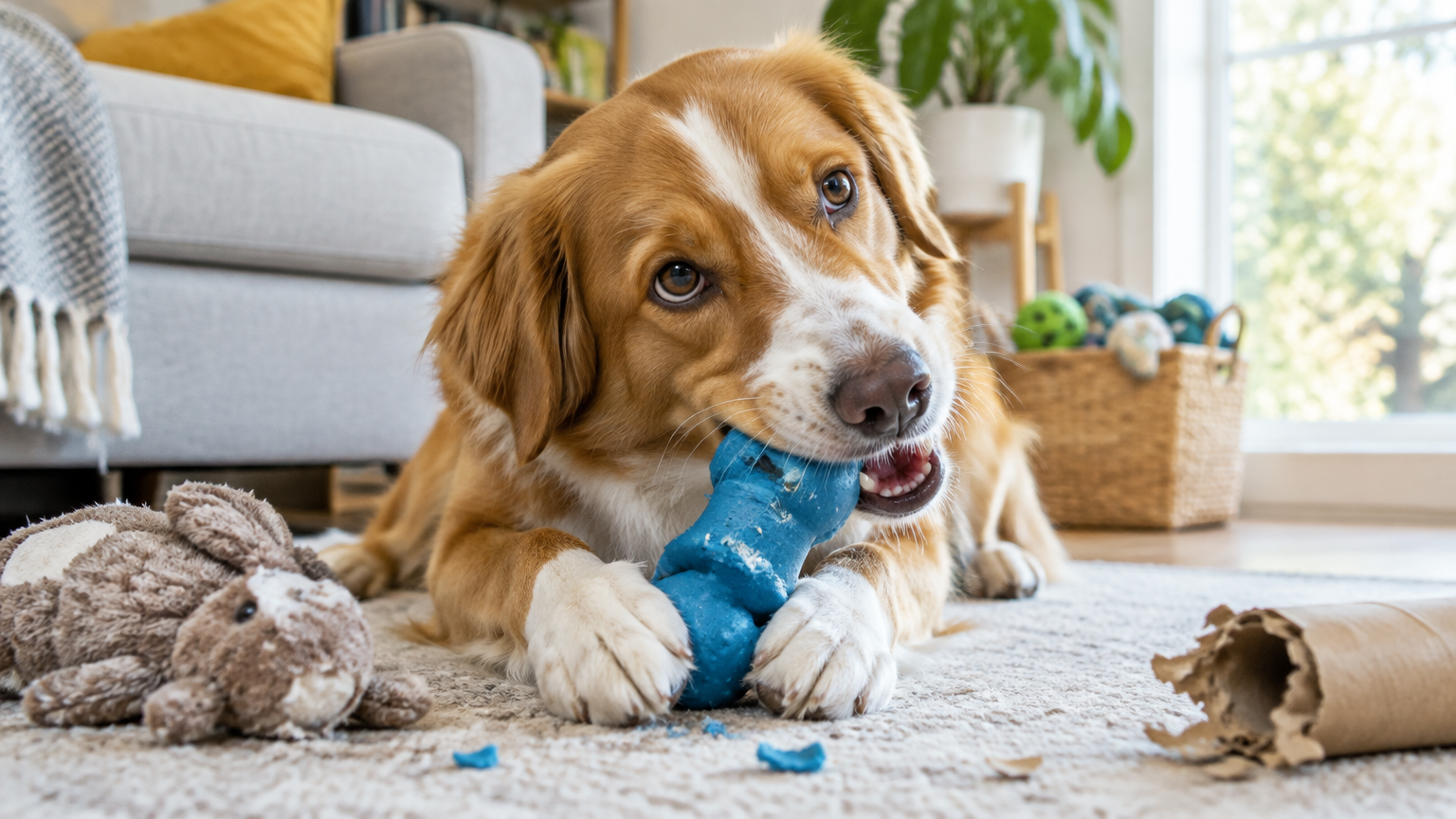
Category: Puppy Teething

Learn what teething looks like in puppies, how long chewing phases tend to last, and gentle ways to guide young dogs toward appropriate things to chew.

  • Is It Boredom or Anxiety? How to Read Your Dog’s Chewing Clues

    Is It Boredom or Anxiety? How to Read Your Dog’s Chewing Clues

    This article contains affiliate links. We may earn a commission if you buy through them, at no extra cost to you.

    Is It Boredom or Anxiety? How to Read Your Dog's Chewing Clues

    Chewing is normal dog behavior, but destructive or intense chewing can have different causes. This guide shows you how to observe context (when it happens, what gets chewed, and your dog's body language) before you decide on a next step.

    Direct Answer

    Dog chewing from boredom or anxiety can look alike, so context matters. Boredom chewing often happens when a dog is under-stimulated, with relaxed body language and a variety of targets. Anxiety-related chewing often clusters around specific triggers, such as being left alone, and comes with signs of distress. Pain, teething, or medical issues can also play a role.

    Key Takeaways

    • Look at three things: when the chewing happens, what gets chewed, and how your dog looks while doing it.
    • No single sign is conclusive. Patterns across several observations matter more.
    • Rule out physical causes with a veterinarian first.
    • Avoid punishment, which can increase stress.
    • Separation-related distress, self-injury, or swallowing non-food items calls for professional help.

    Start With the Basics: Why Dogs Chew

    Many reasons for chewing are completely ordinary:

    • Teething in puppies
    • Exploring the world with their mouths
    • Play and general enjoyment

    Other causes are less obvious. Dental discomfort, GI upset, nutritional or medical issues, or a lack of appropriate outlets can all drive chewing. A vet check helps rule out physical causes, and it's especially worthwhile if the behavior appeared suddenly.

    Clue 1: When Does the Chewing Happen?

    Timing patterns

    Start with the simplest question: does it happen only when you're gone, or also when people are home? Chewing that shows up in both situations points away from a purely separation-related cause. Chewing that appears only after you leave deserves a closer look.

    Also note the time of day. Does it follow long stretches without activity, show up in the evening, or begin shortly after a departure?

    Triggers

    Look for what happens just before the chewing starts:

    • Departure cues, such as keys, shoes, or a bag
    • Storms, fireworks, or other loud noises
    • Visitors or changes in routine
    • A day with little exercise or mental stimulation

    Example: A dog who shreds a pillow most afternoons during a quiet workday, but never when the family is home, presents a different picture than a dog who chews only during thunderstorms. The first may be under-stimulated, or it may be reacting to being alone. The second is linked to a specific trigger.

    Clue 2: What Gets Chewed?

    The target can offer hints:

    • Varied household items, toys, or furniture may fit boredom or under-stimulation.
    • Doors, windowsills, crates, or other exit points may suggest distress about confinement or separation.
    • Owner-scented items such as clothing or bedding may suggest comfort-seeking.
    • Non-food items that get swallowed are a safety concern for a vet, regardless of the cause.

    Clue 3: What Is the Body Language?

    Signs that may fit boredom

    • Loose, relaxed posture
    • A playful or investigative approach to the item
    • Settling down after chewing

    Signs that may suggest anxiety

    • Panting, pacing, trembling, or drooling
    • Whining or barking
    • Trouble settling, a tense body, or a fixed focus on exits
    • Not eating or drinking when you're gone
    • House-soiling in an otherwise house-trained dog

    Remember that no single sign is conclusive. A dog may pant because it's warm, or pace because it needs to go out. Look for clusters of signs that repeat in the same situations.

    Quick Comparison: Boredom vs. Anxiety Clues

    Factor Leans toward boredom Leans toward anxiety
    Context Low stimulation, long idle stretches Specific triggers (departures, storms, visitors)
    Targets Varied items, toys, furniture Exits, crates, or owner-scented items
    Body language Relaxed, playful, settles afterward Panting, pacing, trembling, drooling, tense
    Response to enrichment Improves Little change or continued distress

    Use this as a guide, not a diagnosis. Some dogs show a mix of both.

    Observation Log Template

    Track chewing incidents for 1–2 weeks. Copy these fields into a notebook or notes app:

    • Date / time:
    • Where in the home:
    • Owner present? (Y/N; if not, how long gone):
    • What happened just before (departure, noise, visitor, quiet period):
    • Exercise and enrichment in the prior 24 hours:
    • Item chewed:
    • Duration of chewing:
    • Body language before / during / after:
    • Other signs (barking, pacing, drooling, accidents, appetite):
    • How the dog responded to redirection:
    • Notes / video recorded? (Y/N):

    Tip: A pet camera or phone video can reveal what happens while you're away. Footage often shows stress signs you'd never see otherwise, or shows that your dog settles within minutes of your leaving.

    Practical Steps to Take

    1. Rule out medical causes with your vet, especially for sudden changes or dental concerns. 2. Review the log and identify patterns in timing, targets, and body language. 3. Provide safe, appropriate chew items and rotate them to keep them interesting. 4. Add daily physical exercise and mental enrichment, such as sniff walks, food puzzles, and training games, matched to your dog's age and health. If you'd like structured mental games to try, a program like Brain Training for Dogs is one resource to look into. 5. Manage the environment. Remove tempting or unsafe items, and use baby gates or a comfortable, familiar space as appropriate. 6. Keep departures and arrivals low-key. Avoid punishment, which can increase stress. 7. Reassess after a couple of weeks and adjust based on your log.

    Example: Suppose your log shows chewing on weekday afternoons, on a variety of items, with your dog relaxed on camera and no morning exercise. Adding a sniff walk and a food puzzle, then tracking changes for two weeks, is a reasonable first step. If the footage instead shows pacing and drooling by the door, move toward professional guidance sooner.

    When to Consult a Vet or Certified Behavior Professional

    Reach out for help if you see any of the following:

    • Signs of separation-related distress: panic, escape attempts, excessive vocalizing, drooling, or house-soiling when alone
    • Self-injury, such as broken teeth, bleeding gums, or torn nails
    • Swallowing non-food items or signs of GI upset
    • Chewing that is sudden, intense, or not improving with enrichment

    Who to seek: Start with a veterinarian. If medical causes are addressed or unlikely, consult a certified behavior professional, such as a veterinary behaviorist, a certified applied animal behaviorist, or a certified dog behavior consultant. Bring your log and any videos, since they give the professional a much clearer picture.

    FAQs

    1. How can I tell if my dog is chewing because of boredom or anxiety?

    Compare when it happens, what is chewed, and the body language. Chewing only when alone, accompanied by stress signs, points more toward anxiety. Chewing across many situations with relaxed body language fits boredom better.

    2. Will more exercise stop anxiety-related chewing?

    It may help overall, but it may not resolve anxiety triggered by specific situations. A professional can guide a tailored plan.

    3. Should I punish my dog for chewing?

    No. Punishment doesn't address the cause and may increase stress. Redirect to appropriate items and manage the environment instead.

    Conclusion

    Telling dog chewing from boredom or anxiety starts with careful observation: note the timing, the targets, and your dog's body language. Log what you see, adjust enrichment and management, and seek professional help if signs of distress appear.

    Disclosure: This article contains an affiliate link. Product details have not been verified, so check the provider's own information before purchasing.
  • Puppy Teething vs. Adult Dog Chewing: How to Tell the Difference and What to Do

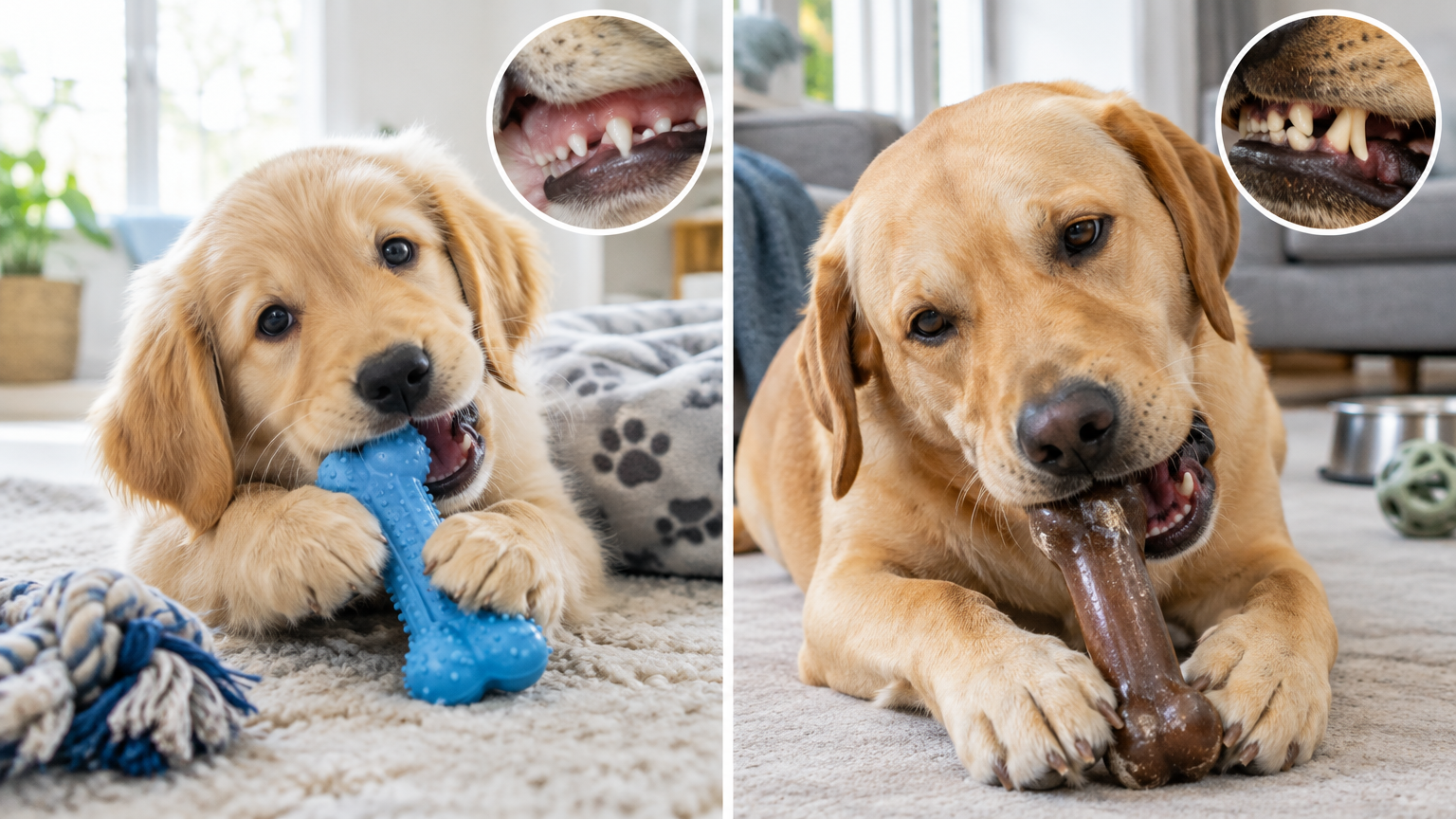
    Puppy Teething vs. Adult Dog Chewing: How to Tell the Difference and What to Do

    This article contains affiliate links. We may earn a commission if you buy through them, at no extra cost to you.

    Puppy Teething vs. Adult Dog Chewing: How to Tell the Difference and What to Do

    A chewed shoe or a gnawed table leg can come from very different causes depending on a dog's life stage. This guide explains puppy teething vs adult dog chewing, what separates the two, and how to respond to each. It is general guidance only, and your veterinarian can advise on your dog's individual timeline.

    Key Takeaways

    • Puppy chewing is often tied to teething discomfort and exploration. Adult chewing more often points to boredom, stress, habit, or dental or medical issues.
    • Puppies need safe outlets and redirection. Adults need trigger-finding and enrichment.
    • Punishment doesn't help at either stage.
    • A sudden change in chewing at any age deserves a vet check.

    Quick Answer: Puppy Teething vs. Adult Dog Chewing

    Puppy chewing is often linked to teething discomfort and exploration as baby teeth give way to adult teeth. Adult dog chewing is usually not about teething, and more often relates to boredom, excess energy, stress, habit, or dental or medical issues. Puppies need relief and redirection; adults need cause-finding and enrichment.

    Timelines vary by dog, so confirm with your vet rather than relying on a fixed age.

    How Chewing Patterns Differ by Life Stage

    Typical Puppy Teething Behavior

    Teething puppies tend to chew broadly. Hands, furniture legs, cords, shoes, and bedding can all end up in their mouths, partly because they are also exploring the world with their mouths.

    Possible signs of teething include:

    • Sore or red-looking gums
    • Increased mouthing or nibbling on people
    • Small tooth fragments or lost baby teeth found around the home (this may occur, though many are swallowed or go unnoticed)

    Teething puppies often seek out cold or textured items, which may feel soothing on tender gums.

    Typical Adult Dog Chewing Behavior

    Adult chewing is usually more targeted or repetitive. A dog might go after the same pillow, the same pair of slippers, or only chew when left alone or in the evening.

    Common contributors include:

    • Boredom or under-stimulation
    • Anxiety or stress
    • Attention-seeking
    • Learned habit (chewing that was once rewarded by attention or relief)

    Chewing for enjoyment is normal for dogs of any age. Destructive chewing is the real concern.

    Side-by-Side Comparison

    Factor Puppy Teething Adult Dog Chewing
    Likely cause Teething discomfort, exploration Boredom, stress, habit, energy, or dental/medical issues
    Pattern Broad: many items Targeted or repetitive: certain items, times, or situations
    Main goal Soothe and teach what's allowed Identify triggers and enrich
    Supervision level High; puppy-proofed space, frequent checks Moderate to high, depending on the dog's habits; secure valuables
    When to call the vet Retained baby teeth questions, painful gums, not eating Sudden onset, dental signs, vomiting, compulsive chewing

    Why Management Differs

    Puppies: Chewing is developmental. The focus is on safe outlets, prevention, and teaching what's allowed.

    Adults: Chewing is more often behavioral or medical. The focus is on finding the trigger and meeting the dog's needs, whether that means more exercise, more mental work, or treatment for a dental problem.

    Why punishment doesn't help: Scolding after the fact can increase stress, and stress can fuel more chewing. It also doesn't teach your dog what to chew instead. Redirecting to an approved item and rewarding that choice gives your dog something useful to learn.

    Dental pain can occur at any age. If your dog's chewing changes suddenly, a vet check is worthwhile before assuming it's a behavior problem.

    What to Do for a Teething Puppy

    Appropriate Chew Options

    • Puppy-appropriate rubber or nylon chew toys, sized correctly so they can't be swallowed.
    • Chilled (not frozen solid) soft toys or a damp washcloth, offered under supervision. Cool textures may feel soothing.
    • Avoid items that are too hard or that could splinter or break teeth. Ask your vet about specific products.

    Supervision and Environment

    • Puppy-proof the space: remove cords and shoes, and use gates or a crate or pen as appropriate.
    • Supervise chew sessions and remove toys that are worn down or damaged.
    • Rotate toys so they stay interesting. A toy that has been out of sight for a few days often seems new again.

    Redirecting and Teaching

    When your puppy picks up something off-limits, calmly swap it for an approved chew and praise when they take it. For example, if your puppy grabs a sandal, trade it for a rubber toy, then reward the switch. Keep sessions calm and consistent, and make sure everyone in the household responds the same way.

    What to Do for an Adult Dog Who Chews

    Identify the Trigger

    Spend a week tracking when, where, and what your dog chews. Also consider:

    • Daily exercise and mental stimulation
    • How much time your dog spends alone
    • Recent changes such as a move, a new schedule, or a new pet

    Example: If the couch only gets chewed on weekday afternoons, the trigger may be time alone rather than a love of upholstery.

    Appropriate Chew Options and Enrichment

    • Durable chews suited to your dog's size and chewing style.
    • Food puzzles, sniff games, and short training sessions to give the brain a workout. If you want structured mental-enrichment ideas, you might explore a resource like Brain Training for Dogs alongside your vet's or trainer's guidance.
    • Supervision with new chews. Discard pieces that become small enough to swallow or develop sharp edges.

    Management Tools

    • Secure valuables and keep tempting items out of reach.
    • Provide a safe confinement option, such as a pen or a dog-proofed room, when you can't supervise.
    • If anxiety is suspected, use gradual alone-time training, starting with very short absences.

    Practical Step-by-Step Plan

    1. Note your dog's life stage and any recent changes in chewing. 2. Check the mouth for visible concerns only if your dog tolerates it. Don't force it. 3. Remove access to risky items. 4. Offer two or three appropriate chews and rotate them. 5. Supervise and redirect consistently. 6. Increase exercise and mental enrichment. 7. Schedule a vet visit if red flags appear.

    When to Talk to Your Veterinarian

    Contact your vet about:

    • Teething timelines, and whether baby teeth are being retained
    • Signs of dental concern: bad breath, drooling, bleeding gums, reluctance to eat or chew, broken teeth, or pawing at the mouth
    • Sudden onset of chewing in an adult dog
    • Swallowed objects or vomiting, which need prompt veterinary attention
    • Compulsive-seeming chewing or chewing tied to anxiety. Your vet may suggest a behaviorist or trainer.

    FAQs

    How can I tell if my dog is teething or just chewing?

    Consider life stage, gum soreness, and the pattern. Teething chewing tends to be broad, while targeted or repetitive chewing suggests habit or another cause. A vet can confirm what's going on.

    Do adult dogs need chew toys too?

    Yes. Chewing is a natural behavior. Appropriate, supervised options support enrichment and can reduce destructive chewing.

    Should I be worried if my adult dog suddenly starts chewing more?

    A sudden change may reflect stress, boredom, or dental or medical discomfort. Check with your vet, especially if other symptoms appear.

    Conclusion

    Puppy teething vs adult dog chewing comes down to cause, so the response should differ too. Puppies need relief, safe outlets, and gentle teaching. Adults need detective work and enrichment. For both, provide safe chews, supervise, and consult your vet about timelines and dental concerns.

    Disclosure: This article contains an affiliate link. If you use it, we may earn a commission at no extra cost to you.

  • Why Does My Dog Chew Everything? 7 Common Reasons Behind Destructive Chewing

    Why Does My Dog Chew Everything? 7 Common Reasons Behind Destructive Chewing

    This article contains affiliate links. We may earn a commission if you buy through them, at no extra cost to you.

    Why Does My Dog Chew Everything? 7 Common Reasons Behind Destructive Chewing

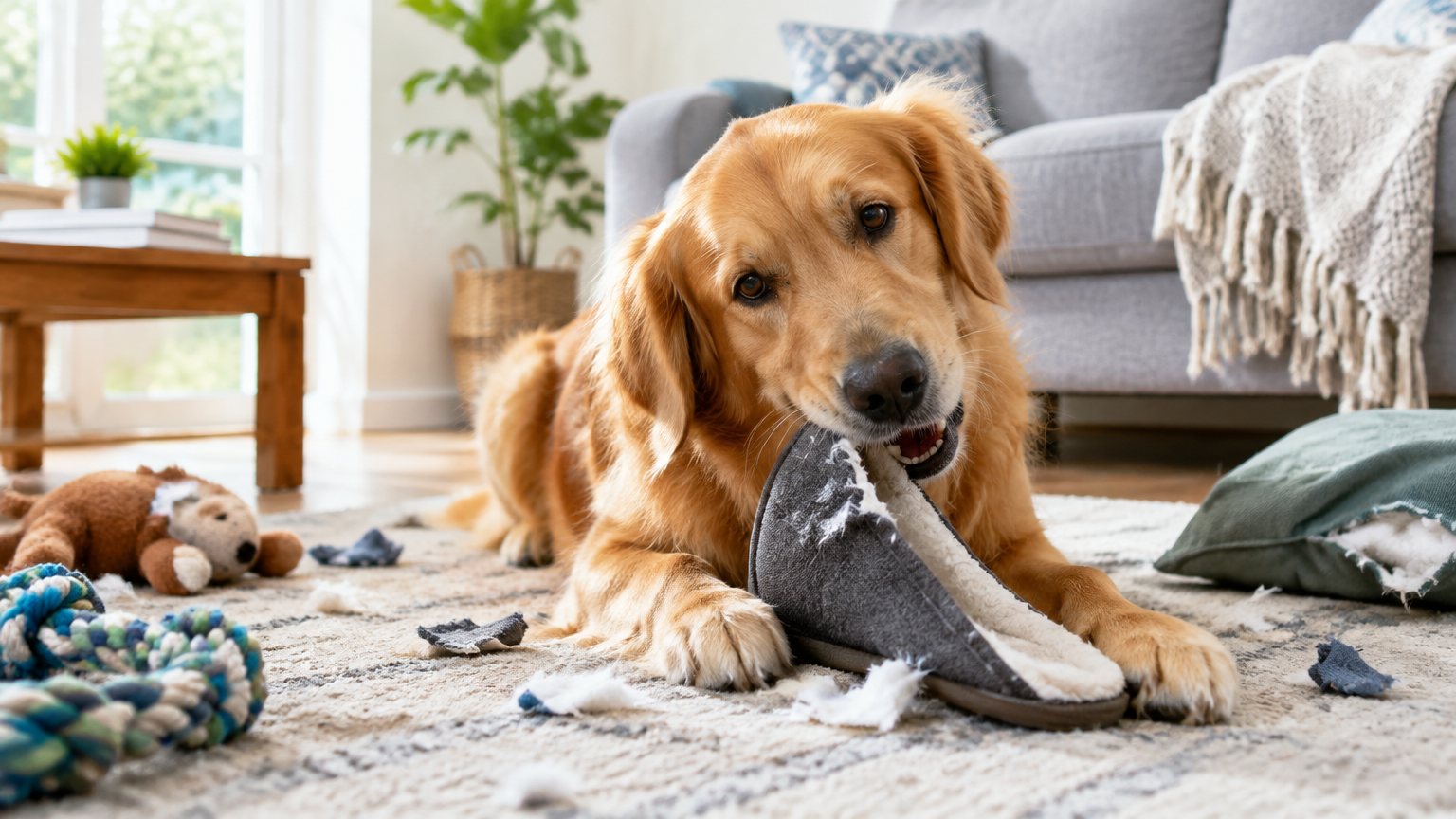
    Chewed shoes, gnawed table legs, and a remote control missing its buttons are a familiar frustration for dog owners. If you keep asking yourself "why does my dog chew everything?", the first thing to know is that chewing is normal dog behavior. The reason behind it varies from dog to dog. This guide covers seven common motivations, a self-check list to match behaviors to likely causes, and practical next steps.

    Key Takeaways

    • Chewing is natural, but the reason for it differs between dogs.
    • Seven common motivations: boredom, teething, anxiety, excess energy, curiosity, attention-seeking, and lack of appropriate outlets.
    • Tracking when and what your dog chews for 1–2 weeks reveals useful patterns.
    • Management, suitable chew items, exercise, and calm redirection are the foundation of change.
    • Persistent, sudden, or unusual chewing is worth a conversation with your vet.

    The Short Answer: Why Does My Dog Chew Everything?

    Dogs chew because it is a natural behavior that serves several purposes. Common motivations include boredom, teething, anxiety, excess energy, curiosity, attention-seeking, and a lack of appropriate outlets. Matching the pattern of chewing to its likely cause is the first step toward redirecting it.

    One note: chewing is not spite or revenge. A dog who chews your shoes while you're at work isn't "getting back at you." Dogs don't plan payback the way people do, and assuming they do can lead to frustration and ineffective responses. It's more useful to ask what need the chewing is meeting.

    Normal Chewing vs. Destructive Chewing

    What Counts as Normal

    Chewing on appropriate items, such as dog toys and chews, is healthy, normal behavior. A dog who settles down with a chew toy for a while is doing what dogs do.

    When It Becomes a Problem

    Chewing becomes a concern when it:

    • Targets household items like furniture, shoes, or cords
    • Happens frequently or seems hard to interrupt
    • Risks harm to the dog (for example, swallowing pieces) or damage to your home

    Destructive chewing in dogs is usually a sign that a need isn't being met or that the dog hasn't learned what is acceptable to chew.

    7 Common Reasons Dogs Chew Everything

    1. Boredom

    With too little mental stimulation, chewing becomes self-made entertainment. This is common when dogs spend long stretches alone or follow an unchanging routine. Example: A dog who gets the same walk and the same kibble bowl every day may start dismantling a couch cushion mid-afternoon.

    2. Teething (Puppies)

    Puppies chew while their adult teeth come in. This reason is typically relevant to young dogs, and timing varies, so ask a vet or trainer about age-specific expectations. If you're raising a puppy, a puppy teething guide can help you plan ahead.

    3. Anxiety or Stress

    Chewing may appear around departures, loud noises, or changes in routine. Look for other signs of stress alongside the chewing, such as pacing, whining, or panting. Example: A dog who chews only near the front door after you leave is giving you a different clue than one who chews all day long.

    4. Excess Energy

    Chewing may spike when exercise needs aren't met. Needs vary by age, breed, and individual dog, so a routine that suits one dog may leave another restless.

    5. Curiosity and Exploration

    Dogs, especially puppies, investigate the world with their mouths. Novel textures and objects are especially tempting, such as a new throw pillow, a houseguest's bag, or a fallen sock.

    6. Attention-Seeking

    If chewing reliably gets a reaction, even scolding, the dog may repeat it. From a dog's perspective, a chase around the living room can be rewarding. Owners often don't realize their reactions are reinforcing the habit.

    7. Lack of Appropriate Outlets

    If there aren't enough suitable chew items, or the ones available don't interest your dog, household objects become the default option. A single rope toy that's been ignored for months isn't much competition for a leather shoe.

    Self-Check List: Match the Behavior to the Likely Cause

    Use this as a rough guide, not a diagnosis. Many dogs have more than one reason for chewing.

    If you notice… Possible cause
    Chewing mostly when left alone, with other distress signs Anxiety or stress
    Chewing while you're home, especially after you react Attention-seeking
    Young puppy chewing many items, with mouth discomfort Teething
    Chewing is worst on low-activity days or in the evening Excess energy
    Chewing occurs during quiet, uneventful stretches Boredom
    Dog mouths and samples new objects Curiosity
    Few or no chew toys available, or toys are ignored Lack of outlets

    Tip: Track the behavior for 1–2 weeks. Note the time of day, what was chewed, where you were, and what happened beforehand. Patterns often emerge quickly, and they'll help if you later talk with a trainer or vet.

    Practical Steps to Reduce Destructive Chewing

    Manage the Environment

    Put tempting items out of reach. Close doors, use baby gates, and stash shoes in a closet. A crate can help if it has been introduced gradually and positively. Management prevents rehearsal of the habit while you work on the underlying cause.

    Provide Appropriate Chew Options

    Offer a variety of textures and sizes. Supervise use, and choose items suited to your dog's size and chewing style. Rotating items keeps them interesting. If your dog ignores a toy, try a different texture rather than assuming chew toys don't work.

    Meet Exercise and Enrichment Needs

    Build in walks, play, sniffing time, food puzzles, and short training sessions. Mental work tends to matter as much as physical activity. Some owners also explore structured training resources, such as Brain Training for Dogs, as one way to add mental engagement to the routine. [VERIFY: program details and suitability before relying on it.] For more ideas, look for a dog enrichment guide for at-home activities.

    Redirect and Reward

    When your dog picks up the wrong item, calmly trade it for an appropriate one. Praise when the dog chews the right thing. Stay calm and avoid punishment, which doesn't teach what to chew instead and can add stress.

    Address Anxiety-Related Chewing

    If the pattern points to stress around departures, practice alone time gradually, starting with very short absences. A trainer or qualified behavior professional can tailor a plan. A separation anxiety basics resource can also help you recognize the signs.

    Be Consistent

    Everyone in the household should follow the same rules. Habits take time to change, so patience matters. Expect progress in small steps rather than overnight.

    When to Talk to Your Vet

    Consider a vet conversation if chewing:

    • Persists despite consistent effort
    • Begins suddenly
    • Changes noticeably from your dog's usual behavior

    Also mention it if your dog swallows non-food items or seems uncomfortable. A vet can help rule out underlying factors and advise on next steps. Bring your tracking notes, since they give useful context.

    Frequently Asked Questions

    Will my dog grow out of chewing?

    Puppy chewing often lessens as dogs mature, but habits can persist if they aren't redirected. Guidance and appropriate outlets help.

    Should I punish my dog for chewing?

    Punishment generally doesn't teach a dog what to chew instead and may add stress. Redirect and reward instead.

    What are safe things for my dog to chew?

    Choose items sized and designed for your dog, supervise use, and replace worn pieces. Ask your vet or trainer for recommendations specific to your dog.

    Conclusion

    So, why does my dog chew everything? There's rarely a single answer. Boredom, teething, anxiety, excess energy, curiosity, attention-seeking, and a lack of outlets all play a role, and a pattern-based approach helps you tell them apart.

    Start with the self-check list and track your dog's habits for a week or two. Then adjust outlets, exercise, and routine based on what you find. If the behavior persists or changes suddenly, consult your vet or a qualified trainer for personalized guidance.