
This article contains affiliate links. We may earn a commission if you buy through them, at no extra cost to you.
Why Does My Dog Chew Everything? 7 Common Reasons Behind Destructive Chewing
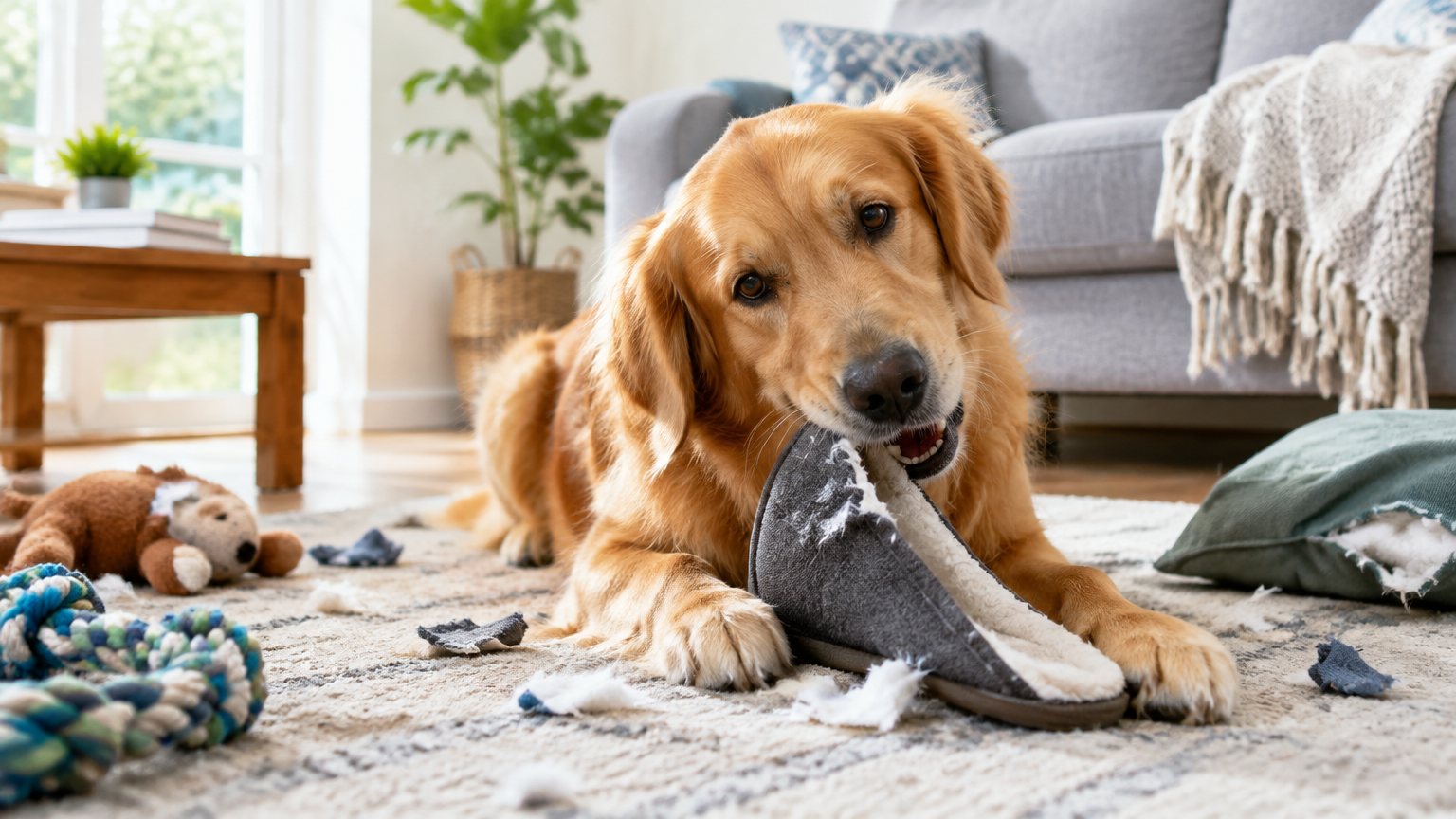
Chewed shoes, gnawed table legs, and a remote control missing its buttons are a familiar frustration for dog owners. If you keep asking yourself "why does my dog chew everything?", the first thing to know is that chewing is normal dog behavior. The reason behind it varies from dog to dog. This guide covers seven common motivations, a self-check list to match behaviors to likely causes, and practical next steps.
Key Takeaways
- Chewing is natural, but the reason for it differs between dogs.
- Seven common motivations: boredom, teething, anxiety, excess energy, curiosity, attention-seeking, and lack of appropriate outlets.
- Tracking when and what your dog chews for 1–2 weeks reveals useful patterns.
- Management, suitable chew items, exercise, and calm redirection are the foundation of change.
- Persistent, sudden, or unusual chewing is worth a conversation with your vet.
The Short Answer: Why Does My Dog Chew Everything?
Dogs chew because it is a natural behavior that serves several purposes. Common motivations include boredom, teething, anxiety, excess energy, curiosity, attention-seeking, and a lack of appropriate outlets. Matching the pattern of chewing to its likely cause is the first step toward redirecting it.
One note: chewing is not spite or revenge. A dog who chews your shoes while you're at work isn't "getting back at you." Dogs don't plan payback the way people do, and assuming they do can lead to frustration and ineffective responses. It's more useful to ask what need the chewing is meeting.
Normal Chewing vs. Destructive Chewing
What Counts as Normal
Chewing on appropriate items, such as dog toys and chews, is healthy, normal behavior. A dog who settles down with a chew toy for a while is doing what dogs do.
When It Becomes a Problem
Chewing becomes a concern when it:
- Targets household items like furniture, shoes, or cords
- Happens frequently or seems hard to interrupt
- Risks harm to the dog (for example, swallowing pieces) or damage to your home
Destructive chewing in dogs is usually a sign that a need isn't being met or that the dog hasn't learned what is acceptable to chew.
7 Common Reasons Dogs Chew Everything
1. Boredom
With too little mental stimulation, chewing becomes self-made entertainment. This is common when dogs spend long stretches alone or follow an unchanging routine. Example: A dog who gets the same walk and the same kibble bowl every day may start dismantling a couch cushion mid-afternoon.
2. Teething (Puppies)
Puppies chew while their adult teeth come in. This reason is typically relevant to young dogs, and timing varies, so ask a vet or trainer about age-specific expectations. If you're raising a puppy, a puppy teething guide can help you plan ahead.
3. Anxiety or Stress
Chewing may appear around departures, loud noises, or changes in routine. Look for other signs of stress alongside the chewing, such as pacing, whining, or panting. Example: A dog who chews only near the front door after you leave is giving you a different clue than one who chews all day long.
4. Excess Energy
Chewing may spike when exercise needs aren't met. Needs vary by age, breed, and individual dog, so a routine that suits one dog may leave another restless.
5. Curiosity and Exploration
Dogs, especially puppies, investigate the world with their mouths. Novel textures and objects are especially tempting, such as a new throw pillow, a houseguest's bag, or a fallen sock.
6. Attention-Seeking
If chewing reliably gets a reaction, even scolding, the dog may repeat it. From a dog's perspective, a chase around the living room can be rewarding. Owners often don't realize their reactions are reinforcing the habit.
7. Lack of Appropriate Outlets
If there aren't enough suitable chew items, or the ones available don't interest your dog, household objects become the default option. A single rope toy that's been ignored for months isn't much competition for a leather shoe.
Self-Check List: Match the Behavior to the Likely Cause
Use this as a rough guide, not a diagnosis. Many dogs have more than one reason for chewing.
| If you notice… | Possible cause |
|---|---|
| Chewing mostly when left alone, with other distress signs | Anxiety or stress |
| Chewing while you're home, especially after you react | Attention-seeking |
| Young puppy chewing many items, with mouth discomfort | Teething |
| Chewing is worst on low-activity days or in the evening | Excess energy |
| Chewing occurs during quiet, uneventful stretches | Boredom |
| Dog mouths and samples new objects | Curiosity |
| Few or no chew toys available, or toys are ignored | Lack of outlets |
Tip: Track the behavior for 1–2 weeks. Note the time of day, what was chewed, where you were, and what happened beforehand. Patterns often emerge quickly, and they'll help if you later talk with a trainer or vet.
Practical Steps to Reduce Destructive Chewing
Manage the Environment
Put tempting items out of reach. Close doors, use baby gates, and stash shoes in a closet. A crate can help if it has been introduced gradually and positively. Management prevents rehearsal of the habit while you work on the underlying cause.
Provide Appropriate Chew Options
Offer a variety of textures and sizes. Supervise use, and choose items suited to your dog's size and chewing style. Rotating items keeps them interesting. If your dog ignores a toy, try a different texture rather than assuming chew toys don't work.
Meet Exercise and Enrichment Needs
Build in walks, play, sniffing time, food puzzles, and short training sessions. Mental work tends to matter as much as physical activity. Some owners also explore structured training resources, such as Brain Training for Dogs, as one way to add mental engagement to the routine. [VERIFY: program details and suitability before relying on it.] For more ideas, look for a dog enrichment guide for at-home activities.
Redirect and Reward
When your dog picks up the wrong item, calmly trade it for an appropriate one. Praise when the dog chews the right thing. Stay calm and avoid punishment, which doesn't teach what to chew instead and can add stress.
Address Anxiety-Related Chewing
If the pattern points to stress around departures, practice alone time gradually, starting with very short absences. A trainer or qualified behavior professional can tailor a plan. A separation anxiety basics resource can also help you recognize the signs.
Be Consistent
Everyone in the household should follow the same rules. Habits take time to change, so patience matters. Expect progress in small steps rather than overnight.
When to Talk to Your Vet
Consider a vet conversation if chewing:
- Persists despite consistent effort
- Begins suddenly
- Changes noticeably from your dog's usual behavior
Also mention it if your dog swallows non-food items or seems uncomfortable. A vet can help rule out underlying factors and advise on next steps. Bring your tracking notes, since they give useful context.
Frequently Asked Questions
Will my dog grow out of chewing?
Puppy chewing often lessens as dogs mature, but habits can persist if they aren't redirected. Guidance and appropriate outlets help.
Should I punish my dog for chewing?
Punishment generally doesn't teach a dog what to chew instead and may add stress. Redirect and reward instead.
What are safe things for my dog to chew?
Choose items sized and designed for your dog, supervise use, and replace worn pieces. Ask your vet or trainer for recommendations specific to your dog.
Conclusion
So, why does my dog chew everything? There's rarely a single answer. Boredom, teething, anxiety, excess energy, curiosity, attention-seeking, and a lack of outlets all play a role, and a pattern-based approach helps you tell them apart.
Start with the self-check list and track your dog's habits for a week or two. Then adjust outlets, exercise, and routine based on what you find. If the behavior persists or changes suddenly, consult your vet or a qualified trainer for personalized guidance.