
This article contains affiliate links. We may earn a commission if you buy through them, at no extra cost to you.
Puppy Teething vs. Adult Dog Chewing: How to Tell the Difference and What to Do
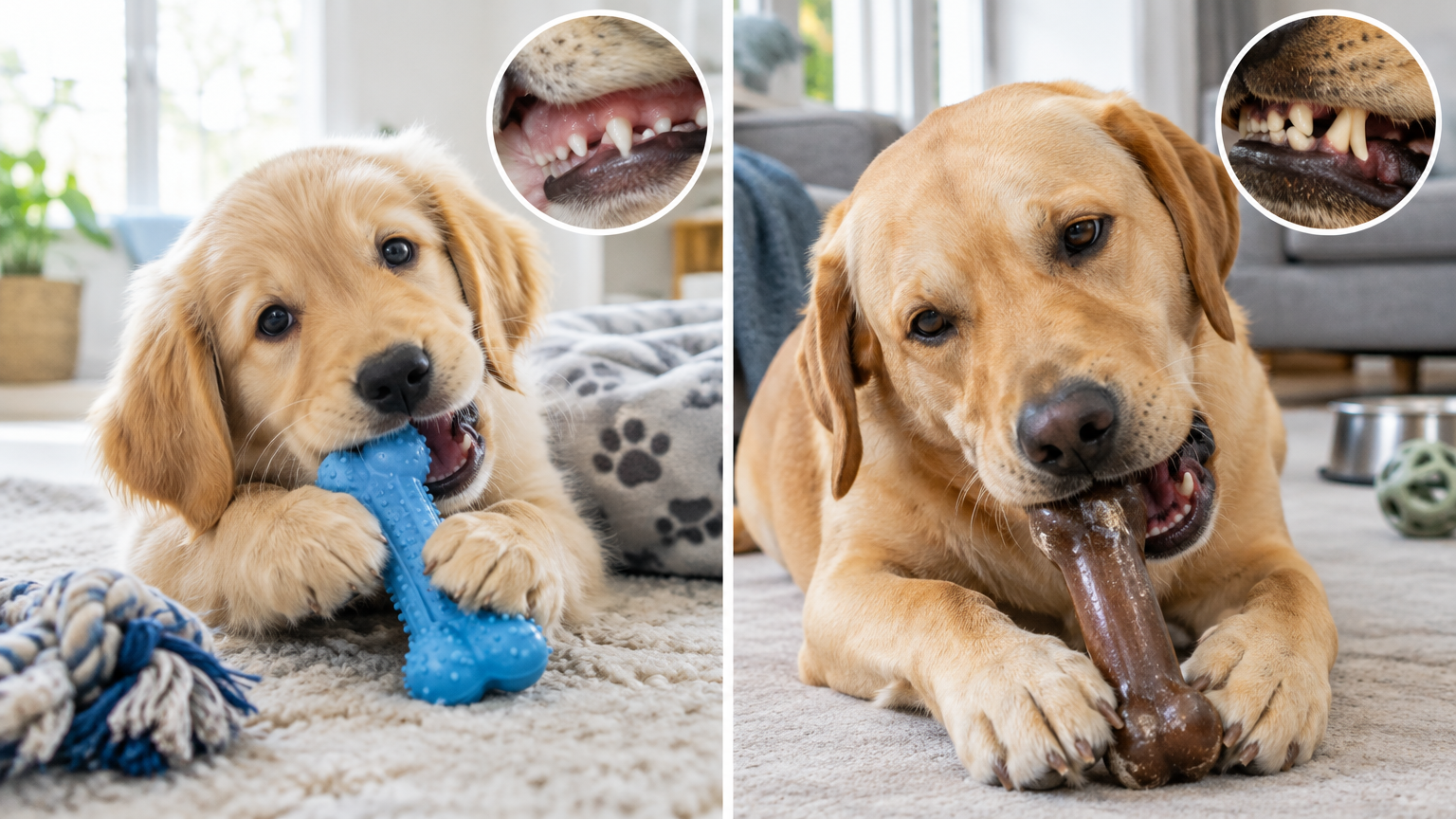
A chewed shoe or a gnawed table leg can come from very different causes depending on a dog's life stage. This guide explains puppy teething vs adult dog chewing, what separates the two, and how to respond to each. It is general guidance only, and your veterinarian can advise on your dog's individual timeline.
Key Takeaways
- Puppy chewing is often tied to teething discomfort and exploration. Adult chewing more often points to boredom, stress, habit, or dental or medical issues.
- Puppies need safe outlets and redirection. Adults need trigger-finding and enrichment.
- Punishment doesn't help at either stage.
- A sudden change in chewing at any age deserves a vet check.
Quick Answer: Puppy Teething vs. Adult Dog Chewing
Puppy chewing is often linked to teething discomfort and exploration as baby teeth give way to adult teeth. Adult dog chewing is usually not about teething, and more often relates to boredom, excess energy, stress, habit, or dental or medical issues. Puppies need relief and redirection; adults need cause-finding and enrichment.
Timelines vary by dog, so confirm with your vet rather than relying on a fixed age.
How Chewing Patterns Differ by Life Stage
Typical Puppy Teething Behavior
Teething puppies tend to chew broadly. Hands, furniture legs, cords, shoes, and bedding can all end up in their mouths, partly because they are also exploring the world with their mouths.
Possible signs of teething include:
- Sore or red-looking gums
- Increased mouthing or nibbling on people
- Small tooth fragments or lost baby teeth found around the home (this may occur, though many are swallowed or go unnoticed)
Teething puppies often seek out cold or textured items, which may feel soothing on tender gums.
Typical Adult Dog Chewing Behavior
Adult chewing is usually more targeted or repetitive. A dog might go after the same pillow, the same pair of slippers, or only chew when left alone or in the evening.
Common contributors include:
- Boredom or under-stimulation
- Anxiety or stress
- Attention-seeking
- Learned habit (chewing that was once rewarded by attention or relief)
Chewing for enjoyment is normal for dogs of any age. Destructive chewing is the real concern.
Side-by-Side Comparison
| Factor | Puppy Teething | Adult Dog Chewing |
|---|---|---|
| Likely cause | Teething discomfort, exploration | Boredom, stress, habit, energy, or dental/medical issues |
| Pattern | Broad: many items | Targeted or repetitive: certain items, times, or situations |
| Main goal | Soothe and teach what's allowed | Identify triggers and enrich |
| Supervision level | High; puppy-proofed space, frequent checks | Moderate to high, depending on the dog's habits; secure valuables |
| When to call the vet | Retained baby teeth questions, painful gums, not eating | Sudden onset, dental signs, vomiting, compulsive chewing |
Why Management Differs
Puppies: Chewing is developmental. The focus is on safe outlets, prevention, and teaching what's allowed.
Adults: Chewing is more often behavioral or medical. The focus is on finding the trigger and meeting the dog's needs, whether that means more exercise, more mental work, or treatment for a dental problem.
Why punishment doesn't help: Scolding after the fact can increase stress, and stress can fuel more chewing. It also doesn't teach your dog what to chew instead. Redirecting to an approved item and rewarding that choice gives your dog something useful to learn.
Dental pain can occur at any age. If your dog's chewing changes suddenly, a vet check is worthwhile before assuming it's a behavior problem.
What to Do for a Teething Puppy
Appropriate Chew Options
- Puppy-appropriate rubber or nylon chew toys, sized correctly so they can't be swallowed.
- Chilled (not frozen solid) soft toys or a damp washcloth, offered under supervision. Cool textures may feel soothing.
- Avoid items that are too hard or that could splinter or break teeth. Ask your vet about specific products.
Supervision and Environment
- Puppy-proof the space: remove cords and shoes, and use gates or a crate or pen as appropriate.
- Supervise chew sessions and remove toys that are worn down or damaged.
- Rotate toys so they stay interesting. A toy that has been out of sight for a few days often seems new again.
Redirecting and Teaching
When your puppy picks up something off-limits, calmly swap it for an approved chew and praise when they take it. For example, if your puppy grabs a sandal, trade it for a rubber toy, then reward the switch. Keep sessions calm and consistent, and make sure everyone in the household responds the same way.
What to Do for an Adult Dog Who Chews
Identify the Trigger
Spend a week tracking when, where, and what your dog chews. Also consider:
- Daily exercise and mental stimulation
- How much time your dog spends alone
- Recent changes such as a move, a new schedule, or a new pet
Example: If the couch only gets chewed on weekday afternoons, the trigger may be time alone rather than a love of upholstery.
Appropriate Chew Options and Enrichment
- Durable chews suited to your dog's size and chewing style.
- Food puzzles, sniff games, and short training sessions to give the brain a workout. If you want structured mental-enrichment ideas, you might explore a resource like Brain Training for Dogs alongside your vet's or trainer's guidance.
- Supervision with new chews. Discard pieces that become small enough to swallow or develop sharp edges.
Management Tools
- Secure valuables and keep tempting items out of reach.
- Provide a safe confinement option, such as a pen or a dog-proofed room, when you can't supervise.
- If anxiety is suspected, use gradual alone-time training, starting with very short absences.
Practical Step-by-Step Plan
1. Note your dog's life stage and any recent changes in chewing. 2. Check the mouth for visible concerns only if your dog tolerates it. Don't force it. 3. Remove access to risky items. 4. Offer two or three appropriate chews and rotate them. 5. Supervise and redirect consistently. 6. Increase exercise and mental enrichment. 7. Schedule a vet visit if red flags appear.
When to Talk to Your Veterinarian
Contact your vet about:
- Teething timelines, and whether baby teeth are being retained
- Signs of dental concern: bad breath, drooling, bleeding gums, reluctance to eat or chew, broken teeth, or pawing at the mouth
- Sudden onset of chewing in an adult dog
- Swallowed objects or vomiting, which need prompt veterinary attention
- Compulsive-seeming chewing or chewing tied to anxiety. Your vet may suggest a behaviorist or trainer.
FAQs
How can I tell if my dog is teething or just chewing?
Consider life stage, gum soreness, and the pattern. Teething chewing tends to be broad, while targeted or repetitive chewing suggests habit or another cause. A vet can confirm what's going on.
Do adult dogs need chew toys too?
Yes. Chewing is a natural behavior. Appropriate, supervised options support enrichment and can reduce destructive chewing.
Should I be worried if my adult dog suddenly starts chewing more?
A sudden change may reflect stress, boredom, or dental or medical discomfort. Check with your vet, especially if other symptoms appear.
Conclusion
Puppy teething vs adult dog chewing comes down to cause, so the response should differ too. Puppies need relief, safe outlets, and gentle teaching. Adults need detective work and enrichment. For both, provide safe chews, supervise, and consult your vet about timelines and dental concerns.
Disclosure: This article contains an affiliate link. If you use it, we may earn a commission at no extra cost to you.