
This article contains affiliate links. We may earn a commission if you buy through them, at no extra cost to you.
Common Beginner Medicinal Garden Problems: Troubleshooting Yellow Leaves, Leggy Seedlings, and Pests
Few things are more discouraging than watching a new herb garden struggle in its first few weeks. Leaves turn yellow, seedlings flop over, a fuzzy film appears on the soil, or tiny insects show up from nowhere. The good news is that most medicinal herb garden problems have simple, low-risk explanations, and most can be addressed with small adjustments to watering, light, airflow, and spacing.
This guide is organized by symptom so you can find what you see and work through the likely causes. Note: this article contains affiliate links, which means we may earn a commission if you click through and purchase, at no extra cost to you.
Quick Answer
Most medicinal herb garden problems in beginner gardens come from a few basics: too much or too little water, too little light, poor airflow, and crowding. Match what you see to the symptom sections below, change one thing at a time, and wait several days to judge the result. Also check your kit's instructions and your local cooperative extension office for guidance specific to your plants and region.
Key Takeaways
- Overwatering and low light are two of the most common beginner stumbling blocks. Check them first.
- Change one variable at a time, or you won't know what helped.
- Gentle fixes (adjusting watering, moving plants closer to light, adding airflow, thinning) are usually the best starting point.
- Confirm that any pest-control product is labeled for your plant type and intended use before you use it.
- When symptoms spread quickly or you can't identify the cause, ask your local extension office or the kit manufacturer.
Before You Troubleshoot
A few minutes of review can save you from chasing the wrong problem.
- Confirm what you planted. Check the seed packet or kit guide for each herb's light, water, spacing, and temperature needs. Different herbs have different preferences, and a routine that suits one may not suit another.
- Look at the whole setup. Consider container drainage, your light source and its distance from the plants, room temperature, and airflow.
- Keep notes or photos. Record watering dates and any changes you make. Patterns become much easier to spot after a week or two.
- Change one variable at a time. If you move the plants, change the watering, and add fertilizer all on the same day, you won't know which change worked.
If you're still setting up, a beginner-friendly overview of starting a medicinal herb garden kit can help you review the basics. The kit's own instructions remain your best reference, since no product specifics were supplied for this article.
Symptom-Based Troubleshooting
Yellowing Leaves
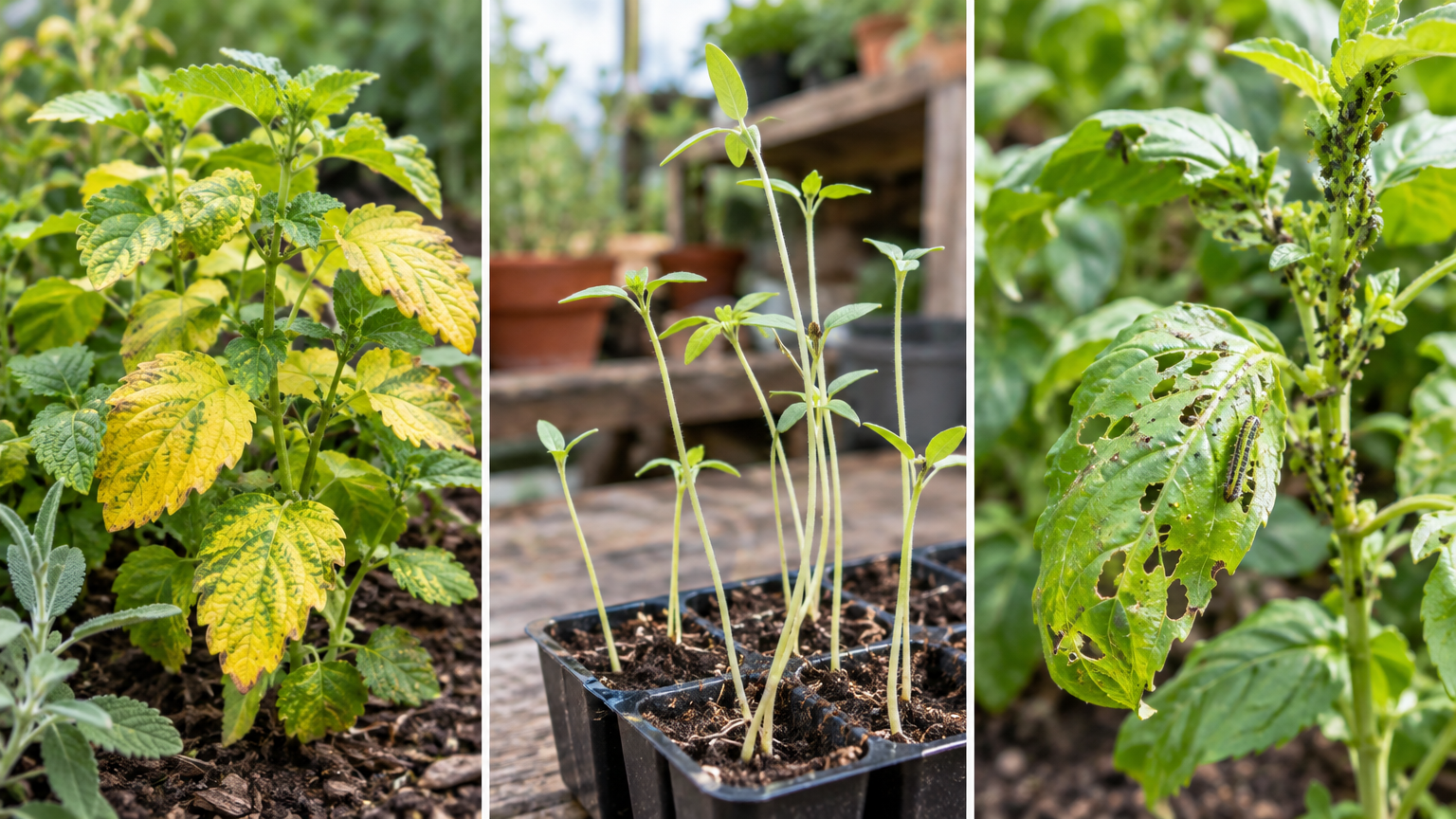
Yellow leaves are one of the most frequent complaints, and the cause isn't always obvious. The pattern matters: Are the oldest leaves yellowing first, or the newest? Is the whole plant pale, or only a few leaves? Is the soil soggy or bone dry?
Likely causes:
- Overwatering or poor drainage, where soil stays soggy
- Underwatering, where soil is dry and crispy
- Low light
- Nutrient shortage, especially if older leaves yellow first
- Crowded or root-bound roots
- Transplant stress
- Normal aging of the lowest leaves
- Pests (check leaf undersides)
Gentle fixes:
- Check soil moisture a finger-depth down before watering. If it still feels damp, wait.
- Make sure pots have drainage holes and don't sit in standing water.
- Move plants to brighter light if needed.
- Remove badly yellowed leaves so the plant isn't carrying dead weight.
- Feed only as the kit or label directs, and avoid overfeeding.
Practical example: Say your basil-type seedlings in a windowsill tray have yellow lower leaves, and the soil is dark and damp every time you check. Waterlogging is a likely suspect. Empty the tray, let the top layer dry slightly, and confirm the pot drains freely. If the yellowing doesn't spread to new leaves over the following week, you're probably on the right track.
Leggy Seedlings
Leggy seedlings have long, thin, pale stems and small leaves. They are stretching toward light, and the stems are often too weak to hold themselves up.
Likely causes:
- Not enough light
- Light source too far away
- Temperatures warmer than the plant prefers
- Crowded seedlings competing for light
Gentle fixes:
- Increase light and follow the grow light manufacturer's distance guidance.
- Rotate containers regularly for even light.
- Thin crowded seedlings so the strongest have room.
- Add gentle airflow, which encourages sturdier stems.
- Check the kit instructions for daily light duration and ideal temperature.
- Support stems, or bury them deeper when transplanting, only if the plant type tolerates it. Confirm this for each herb, because some plants do not respond well to deep planting.
Practical example: If seedlings on a dim shelf lean sharply toward a window, rotate the tray each day and move it to a brighter spot, or add a light source positioned according to its manufacturer's guidance. If you decide the shelf simply doesn't get enough light, you could compare grow light and seed-starting setups to find something suited to your space.
Keep in mind that stretched growth may not fully revert. The goal is to help new growth come in sturdier.
Mold on Soil
A white or gray fuzzy film on the soil surface is common in new seed trays. It usually signals that conditions are staying too damp for too long.
Likely causes:
- Soil staying wet too long
- Poor airflow
- A humidity dome left on too long
- Low light or cool conditions that slow drying
Gentle fixes:
- Let the surface dry slightly between waterings, as appropriate for the herb.
- Remove the dome or open its vents once seedlings emerge, per kit directions.
- Scrape off the affected surface layer and replace it with fresh mix.
- Improve airflow with a small fan on low, not aimed directly at seedlings.
- Water from the bottom or at the soil line, and empty excess water from trays.
- If growth is poor and the soil is persistently wet, consider restarting with fresh mix and clean containers.
Practical example: A tray under a closed dome shows fuzz on the surface a week after sprouting. Open the vents or remove the dome, scrape off the top layer, add a thin layer of fresh mix, and water only when the surface begins to dry. Check again over the next several days.
Pest Signs
Pests can appear even on indoor plants. Early detection makes them much easier to manage, so look closely at stems and the undersides of leaves.
Common signs and possible culprits:
- Sticky residue, clustered tiny insects, or curled leaves: aphids
- Tiny flying insects near soil: fungus gnats, often linked to constantly moist soil
- Fine webbing or speckled leaves: spider mites
- Small white flying insects when plants are disturbed: whiteflies
Gentle fixes:
- Isolate affected plants so problems don't spread.
- Inspect leaf undersides and stems regularly.
- Rinse leaves with a gentle water spray, or wipe them down.
- Remove heavily affected leaves.
- Let soil dry more between waterings to discourage gnats.
- Use sticky traps to monitor flying insects.
- Before using any pest-control product, confirm it is labeled for your plant type and intended use. Ask your local extension service for options.
Because these herbs may be used in ways other than decoration, be especially careful with any product you apply. Label directions matter, and an extension office can help you choose appropriately.
Quick Reference Table
| Symptom | Check first | Low-risk first step |
|---|---|---|
| Yellow leaves | Soil moisture, drainage, light | Check a finger-depth down; empty standing water |
| Leggy seedlings | Light distance and duration, temperature | Increase light; rotate trays; thin crowding |
| Mold on soil | Dome, airflow, how wet the surface stays | Open vents; scrape surface; let it dry slightly |
| Tiny flying insects | Soil moisture | Let soil dry more; use sticky traps |
| Webbing or speckled leaves | Leaf undersides | Isolate plant; rinse or wipe leaves |
| Sticky residue, curled leaves | Stems and new growth | Isolate plant; rinse; remove heavily affected leaves |
Prevention Habits for New Growers
Good habits prevent many of these problems before they start.
- Water based on soil moisture, not a rigid schedule. Temperature, light, and pot size all change how fast soil dries.
- Give plants adequate spacing and thin when needed. Crowding contributes to leggy growth, mold, and pest problems.
- Provide steady light and good airflow.
- Use clean containers and fresh seed-starting mix.
- Inspect plants a few times per week. Catching a problem early makes the fix simpler.
A Simple Weekly Checklist
- [ ] Check soil moisture before watering
- [ ] Empty any standing water from trays
- [ ] Rotate containers for even light
- [ ] Look at leaf undersides and stems
- [ ] Remove dead or badly yellowed leaves
- [ ] Note any changes in your journal or photos
When to Get Local Help
Sometimes a problem needs a second set of eyes. Seek help if:
- Symptoms spread quickly or don't improve after adjustments.
- You can't identify the pest or problem.
- You're unsure which treatments are appropriate.
Contact your local cooperative extension office or the kit manufacturer's support, and bring clear photos of the whole plant, affected leaves, and the soil surface. Extension offices can offer region-specific advice that general guides can't.
FAQs
Why are my herb seedlings turning yellow?
Common reasons include watering problems, low light, crowding, or nutrient shortage. Check soil moisture and drainage first, then light, and compare your setup with the kit instructions.
Can I fix leggy seedlings?
You can often improve them by increasing light, lowering temperatures if they're too warm, thinning, and adding gentle airflow. Existing stretched growth may not fully revert, but new growth can be sturdier.
What should I do if mold appears on the soil surface?
Reduce moisture, increase airflow, remove covers as directed, and scrape off the affected layer. If it keeps returning, replace the mix and use clean containers.
Conclusion
Most medicinal herb garden problems come down to the same handful of factors: water, light, airflow, and spacing. Start by identifying the symptom, work through the likely causes, and make one gentle change at a time. Give each change several days before you judge it, and keep notes so you can see what's working.
Your kit's instructions and your local cooperative extension office are valuable resources, especially for questions about specific plants, pests, or treatments. With patient observation and small adjustments, many early setbacks turn into useful lessons for the rest of the growing season.