
This article contains affiliate links. We may earn a commission if you buy through them, at no extra cost to you.
Are Plant-Based Meat Substitutes Worth Buying on a Budget? How to Compare Burgers, Crumbles, and Nuggets
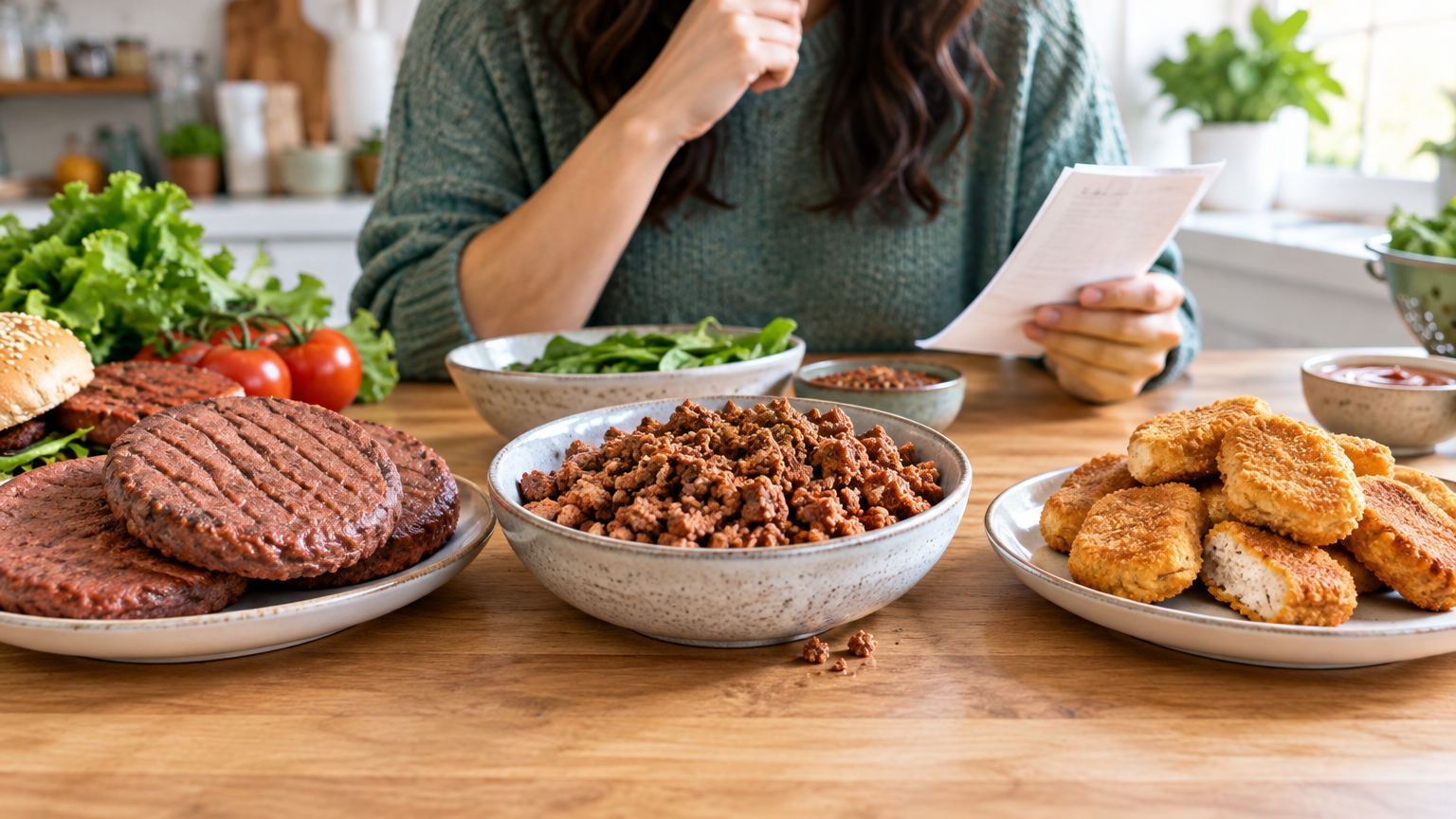
Plant-based burgers, crumbles, and nuggets can be convenient, but whether they fit your grocery budget depends on your prices, your habits, and what your household actually eats. This guide gives you a four-part checklist for comparing budget plant based meat substitutes, plus a simple method for measuring them against homemade options like bean burgers.
Direct Answer: Are They Worth It?
Sometimes. Packaged plant-based meat substitutes can be worth buying when they save time, help you get a meal on the table at home, or replace a more expensive takeout or convenience option. They may not be the best value if you cook often and already have cheaper staples like beans, lentils, oats, or rice on hand.
Worth is personal. It depends on:
- The price per serving at your store
- Ingredients you want or want to avoid
- How you like to cook
- Whether the product actually gets eaten
Prices and formulas vary by store, region, and brand, and they change over time. This article doesn't name winners or quote prices. Use your own receipts, shelf tags, and package labels.
Key Takeaways
- Calculate price per serving, not per package.
- Read the ingredient list and Nutrition Facts for what matters to your household.
- Match the cooking method to the time and equipment you have.
- Count the cost of everything else on the plate, not just the main item.
- Compare at least two packaged options and one homemade version before deciding.
Quick Comparison Checklist
Copy this table into a notes app or onto paper and fill it in at the store.
| Check | What to record | Why it matters |
|---|---|---|
| Price per serving | Package price ÷ servings per package | Makes different package sizes comparable |
| Realistic serving | Is one serving enough for one person? | Label servings may be smaller than what you eat |
| Main ingredients | First few ingredients, allergens | Shows the base and flags dietary conflicts |
| Nutrition Facts | Sodium, protein, fat per serving | Compare against your own needs |
| Cooking method | Stove, oven, air fryer, microwave; cook time | Affects effort, cleanup, and energy use |
| Storage | Frozen or refrigerated; shelf life after opening | Affects waste and freezer space |
| Dinner fit | Extras needed (buns, sides, sauce) | Reveals the true cost of the meal |
1. Price per Serving
This is the number most shoppers skip, and it's the most useful one for budgeting.
- Find the serving size on the label, not just the package count. A bag of nuggets might list a serving as a specific number of pieces or a weight.
- Divide the package price by servings per package. For example: your price ÷ servings listed = cost per serving.
- Ask whether a serving is realistic for your household. One patty may be a full portion for one person, while a serving of nuggets may be a few pieces that feel more like a side.
- Check the unit price on the shelf tag (price per ounce or pound) when you're comparing items sold by weight.
- Factor in sale prices, store brands, and format. Frozen and refrigerated versions may be priced differently in your store, so check both sections.
2. Ingredient List
- Look at the first few ingredients to see the main base, such as soy, pea protein, wheat, beans, or vegetables. Ingredients are listed by amount, so the first few tell you the most.
- Check for allergens like soy, wheat/gluten, and nuts. The allergen statement is usually near the ingredient list.
- Compare sodium, protein, and fat per serving on the Nutrition Facts panel, based on your own dietary needs or guidance from your healthcare provider.
- Notice the length of the list only if it matters to you. A shorter or longer list isn't automatically better or worse. What matters is whether the ingredients suit your household.
3. Cooking Method
- Identify the instructions: stove, oven, air fryer, microwave, or a combination.
- Consider cook time, cleanup, and extras. Does it need added oil, a sheet pan, or a specific appliance?
- Check whether it cooks from frozen, which matters on busy nights.
- Note storage. How much freezer space does it take? How long does it keep in the fridge once opened? [VERIFY on each package, since guidance differs by product.]
4. Fit in a Home-Cooked Dinner
A low-cost main dish can still lead to an expensive dinner if it needs a lot of add-ons.
- Does it work in dishes you already make, like tacos, pasta sauce, stir-fry, sandwiches, or sheet-pan meals?
- Count what you need to add: vegetables, grains, sauces, buns, toppings.
- Check whether one package covers your household or whether you'd need two.
- Think about leftovers. Will it reheat well enough that you'd eat it the next day? Your own trial is the best test.
If you're still building your repertoire of meatless meals, a resource with plant-based dinner ideas can help you judge how a product might fit into recipes you'd actually cook.
How to Compare by Product Type
Burgers, crumbles, and nuggets are used differently, so compare them in different ways.
Burgers
- Compare cost per patty, patty size, and the number of patties per package.
- Remember that you may still need buns, cheese or toppings, and a side.
- Best for: quick, single-serve meals where convenience is the priority.
Crumbles
- Compare cost per cooked cup or per recipe use, if the label gives enough information. If it doesn't, compare cost per serving and note how much your recipe calls for.
- Crumbles are flexible. They can go into sauces, chili, tacos, and casseroles.
- They may stretch further when mixed with vegetables, beans, or grains, which can lower the cost per plate.
Nuggets
- Compare cost per piece and per serving. Check the serving size carefully, because it's easy to underestimate how many pieces a person will eat.
- Decide whether nuggets are a main dish or a side/snack in your household. That changes how many packages you'll buy.
Compare Against Homemade Options
Homemade bean burgers are a common comparison point because the ingredients are often pantry staples. Whether they're actually cheaper is something you can check in a few minutes.
Build a Simple Homemade Cost Estimate
1. List the ingredients for a homemade bean burger, such as canned beans, oats or breadcrumbs, spices, and a binder. 2. Write down what you paid for each, using receipts or current store prices. 3. Estimate how much of each ingredient goes into one batch. A fraction of a can of beans, a few spoonfuls of spices, and so on. 4. Divide the total batch cost by the number of patties the batch makes. 5. Compare that to the packaged per-serving cost you calculated earlier.
A simple worksheet might look like this:
| Item | Amount used | Cost for that amount |
|---|---|---|
| Canned beans | [your amount] | [your price] |
| Oats or breadcrumbs | [your amount] | [your price] |
| Spices and binder | [your amount] | [your price] |
| Batch total | [sum] | |
| Per patty | [sum ÷ patties] |
Compare More Than Price
Price is only part of the picture. Consider:
- Time: prep, cooking, and cleanup for homemade versus heating a packaged product.
- Skill and equipment: mashing, forming, and pan-frying or baking. Do you have what you need, and do you enjoy it?
- Texture and taste: your household's acceptance matters. A cheaper option that nobody eats isn't a bargain.
- Storage: homemade patties can often be frozen, but test this yourself and see how they hold up.
- Waste: will leftover ingredients, like half a can of beans, get used before they spoil?
When Each Option May Make Sense
- Packaged may fit when you have limited time, want consistent results, or only use meat substitutes occasionally.
- Homemade may fit when you cook frequently, already have pantry staples, or want control over ingredients.
- A mix can work too. You might use packaged crumbles on a busy weeknight and make homemade patties when you have time.
Practical Steps to Decide
1. Pick one meal you want to replace, such as burger night or taco night. 2. Record the price, servings, and cooking method for two or three packaged options. 3. Estimate a homemade version's per-serving cost using the worksheet above. 4. Add the cost of sides and extras (buns, vegetables, sauces) for each version so you're comparing whole meals. 5. Try the smallest or sale-priced package first before committing to a larger one. 6. Note whether your household eats it and whether it fits your routine. 7. Recheck prices periodically, since they change.
A Practical Example
Say your goal is to replace a weekly takeout burger night. You'd write down the per-patty cost of two packaged burger options, then add buns and toppings. Next you'd estimate your homemade bean burger cost per patty plus the same buns and toppings. Finally, compare each total to what you usually spend on takeout. If you want to see what's available in your area, you can browse plant-based meat substitutes and note the serving sizes and cooking instructions before you shop.
Budget Tips
- Compare store brands and name brands using the unit price on the shelf tag.
- Check both the freezer and refrigerated sections. Similar products may be priced and packaged differently.
- Buy larger packs only if you'll use them before they expire, or if the product freezes well according to the package.
- Stretch with what you already have. Vegetables, beans, and grains can bulk up crumbles in sauces, tacos, and casseroles.
FAQs
How do I calculate price per serving for plant-based meat substitutes?
Divide the package price by the servings per container listed on the label. If you typically eat more than one serving, multiply the result by the number of servings you actually eat to get your real cost per meal.
Are homemade bean burgers always cheaper than store-bought options?
Not necessarily. Compare your actual ingredient costs, the time you spend, and whether you'll use up leftover ingredients. Homemade can be a good value when you already have staples on hand, but it depends on your prices and habits.
What should I check on the label besides price?
Check serving size, main ingredients, allergens, sodium, protein, cooking instructions, and storage guidance. These tell you whether the product fits your diet, your kitchen, and your schedule.
Conclusion
Budget plant based meat substitutes aren't automatically a bargain or a splurge. Their value depends on cost per serving, ingredients, cooking method, and how well they fit the dinners you already make. Take the checklist with you to the store and compare at least two packaged options with a homemade version. Then choose what fits your budget and routine, and recheck every so often as prices change.