
This article contains affiliate links. We may earn a commission if you buy through them, at no extra cost to you.
Common Beginner Mistakes When Cooking Plant-Based Dinners (and How to Fix Them)
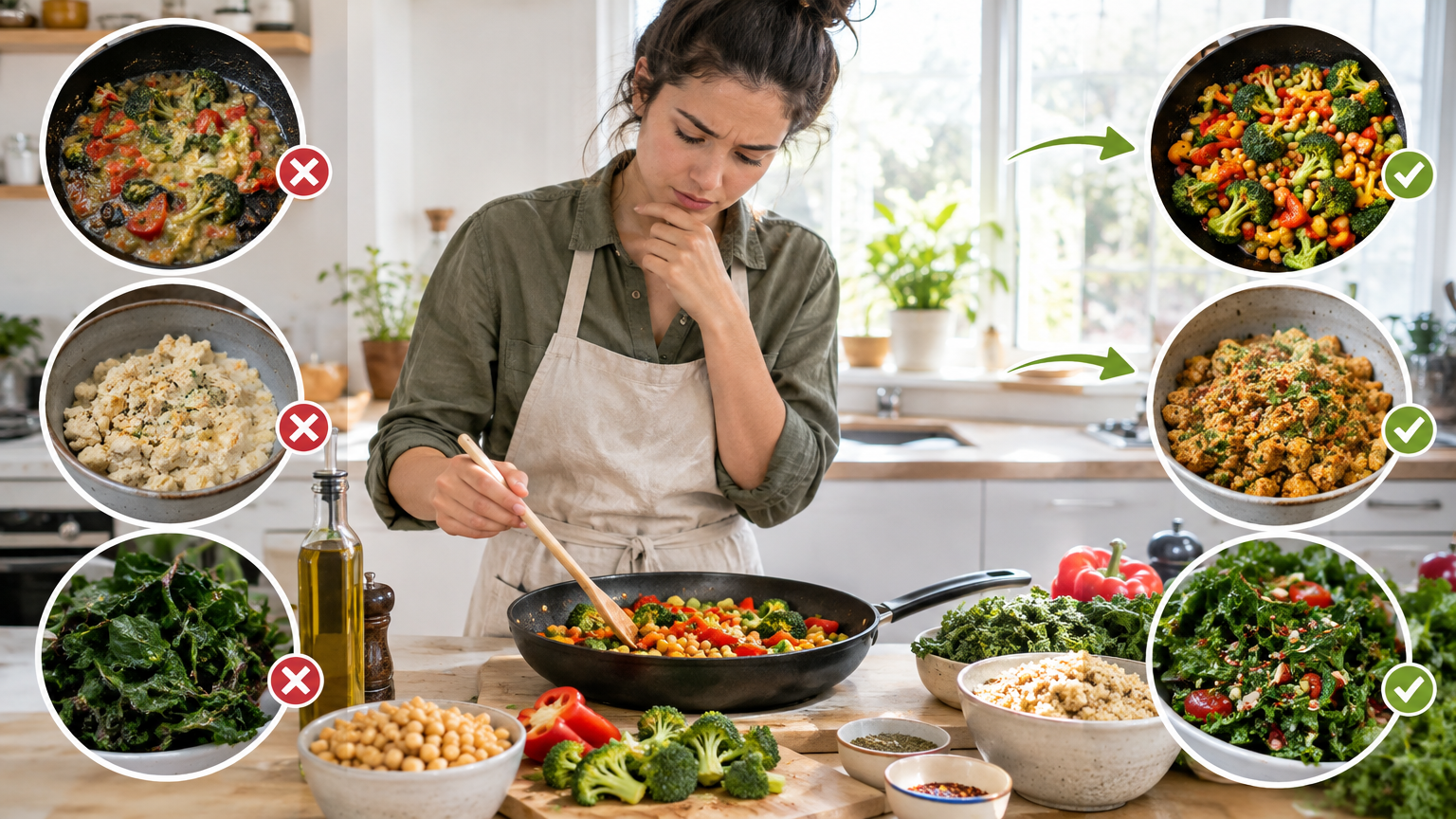
The most common plant based cooking mistakes beginners make are under-seasoning, overcooking vegetables, skipping prep for tofu, not cooking beans fully, choosing recipes that are too complex, and wasting ingredients. Each has a simple fix: season in layers, control heat and timing, press and sear tofu, taste-test beans, simplify your recipes, and plan around what you already have.
Disclosure: This article contains affiliate links. They don't change the advice here.
Key takeaways
- Most "bad" plant-based dinners come down to technique, not the ingredients.
- Salt, acid, fat, and umami fix most flavor problems.
- Heat, space in the pan, and uniform cuts keep vegetables from turning mushy.
- Tofu and beans need a little prep, but not much.
- Simple, repeatable recipes beat ambitious ones when you're learning.
Quick Troubleshooting Overview
Use this table to find your problem fast. Details for each follow below.
| Problem | Quick fix | Prevention habit |
|---|---|---|
| Bland flavor | Taste, then add salt, acid, fat, and an umami ingredient | Season in layers and taste at every stage |
| Mushy vegetables | Single layer, higher heat, cook in batches | Cut uniform pieces and set a timer |
| Dry or bland tofu | Press, season well, sear or bake, toss in sauce | Press and marinate while you prep the rest |
| Undercooked beans | Keep simmering until creamy throughout, or use canned | Cook a batch ahead; follow package directions |
| Overly complicated recipes | One protein, one vegetable, one starch, one sauce | Keep a rotation of 3-5 reliable recipes |
| Food waste | Use leftovers in stir-fries, soups, or bowls; freeze extras | Plan 3-4 dinners, shop with a list, check the fridge weekly |
Mistake 1: Bland Flavor
Why it happens
Beginners often use too little salt, acid, or fat. Many also season only once, at the very end, so the flavor sits on the surface instead of building through the dish. Without meat or dairy, there's less built-in richness, so these basics matter more.
Quick fix
Taste the dish first, then adjust one element at a time:
- Salt: Add a pinch, stir, and taste again.
- Acid: A splash of lemon juice or vinegar brightens flat-tasting food.
- Fat: Drizzle in olive oil, or stir in a spoonful of nut butter or tahini for body.
- Umami: Add soy sauce, miso, tomato paste, or mushrooms for savory depth.
Example: A pot of lentil soup tastes dull. Stir in a spoonful of tomato paste and a splash of soy sauce, then finish with a squeeze of lemon and a little olive oil. Taste after each addition so you learn what each one does.
Prevention habit
Season in layers: salt your aromatics (onion, garlic, ginger) as they cook, season the main ingredients as they go in, and adjust again at the finish. Taste at every stage. A clean spoon by the stove makes this easy.
Mistake 2: Mushy Vegetables
Why it happens
The usual causes are overcooking, a crowded pan, too little heat, or pieces cut in uneven sizes. A crowded pan traps steam, so vegetables simmer in their own moisture instead of browning.
Quick fix
- Spread vegetables in a single layer with a little space between pieces.
- Use higher heat so moisture evaporates quickly.
- Cook in batches if everything won't fit.
- Add dense vegetables (carrots, potatoes, broccoli stems) first and quick-cooking ones (zucchini, spinach, snow peas) later.
Example: For a stir-fry, start carrots and broccoli, then add bell pepper a couple of minutes later, and finish with leafy greens just before serving.
Prevention habit
Cut pieces to a uniform size so they cook at the same rate. Set a timer and start checking early. You can always cook something longer, but you can't undo mush.
Mistake 3: Dry or Bland Tofu
Why it happens
Common causes include skipping the pressing step, using no marinade or seasoning, and cooking with too little fat or heat. Tofu is mild on its own and holds a lot of water, which blocks browning and dilutes flavor.
Quick fix
1. Press out excess moisture. Wrap the block in a clean towel, set a heavy pan or plate on top, and wait while you prep other ingredients. If you cook tofu often, a tofu press is one option, though a towel and a heavy pan work too. 2. Cut it into cubes or slabs. 3. Season well with salt, spices, or a marinade. 4. Sear or bake until the edges are browned. 5. Toss in a sauce at the end so it clings to the surface.
Prevention habit
Press and marinate the tofu while you chop vegetables and start the grain. Also match the firmness to the dish: firm or extra-firm for searing and baking, softer tofu for sauces and scrambles.
Mistake 4: Undercooked Beans
Why it happens
Beginners may skip soaking, cut the cooking time short, or never test for doneness. Beans that are firm, chalky, or grainy in the center aren't finished.
Quick fix
- Keep simmering until the beans are creamy and tender all the way through. Taste several, since beans in one pot can cook unevenly.
- If you're short on time, use canned beans, drained and rinsed.
Prevention habit
Cook a batch ahead and store it for the week, following the package directions. Having cooked beans ready makes weeknight dinners faster.
Safety note: Red kidney beans need thorough boiling. Follow the package safety guidance and don't shortcut it. [VERIFY: confirm the exact boiling time and method against the specific package or a trusted food-safety source before publishing any specifics.]
Mistake 5: Overly Complicated Recipes
Why it happens
Long ingredient lists, unfamiliar techniques, and too many components make a recipe harder to execute. Beginners often pick impressive-looking dishes, then feel discouraged when the result is stressful or inconsistent.
Quick fix
Simplify to four parts:
- One protein (beans, lentils, tofu, or tempeh)
- One vegetable
- One grain or starch
- One sauce
Swap hard-to-find items for pantry staples. If a recipe calls for an unusual ingredient, ask what role it plays (acid? heat? creaminess?) and use something you already own that does the same job.
Example: Instead of a recipe with 20 ingredients and three sub-recipes, make rice, roasted broccoli, and chickpeas with a simple tahini-lemon sauce.
Prevention habit
Build a short rotation of three to five reliable recipes and repeat them before trying new ones. Repetition builds confidence, and you'll start making small adjustments by instinct. If you want structured ideas, plant-based cooking basics can help you choose beginner-friendly dishes to add to your rotation.
Mistake 6: Food Waste
Why it happens
Buying without a plan, forgetting produce at the back of the fridge, and cooking too much or too little all lead to waste. Fresh produce is the usual casualty.
Quick fix
- Turn leftover vegetables into stir-fries, soups, or grain bowls.
- Freeze extras, such as cooked beans, cooked grains, or chopped vegetables, before they spoil.
- Use wilting greens in soups or sauces, where texture matters less.
Prevention habit
- Plan three or four dinners for the week rather than seven.
- Shop with a list.
- Do a weekly "use it first" fridge check and build one meal around whatever needs eating soonest.
A Simple Beginner Dinner Formula
When you don't have a recipe, or you feel overwhelmed, use this five-step formula:
1. Pick a base: rice, pasta, potatoes, or quinoa. 2. Pick a protein: beans, lentils, tofu, or tempeh. 3. Pick vegetables: whatever is fresh, frozen, or about to expire. 4. Add a sauce or seasoning with salt, acid, and fat. A mix of soy sauce, lemon juice, and olive oil is one easy option. 5. Taste and adjust before serving.
Example combinations:
- Rice + black beans + sautéed peppers + lime, olive oil, and salt
- Pasta + white beans + spinach + garlic, lemon, and olive oil
- Quinoa + seared tofu + roasted broccoli + soy-tahini sauce
FAQ
How do I make plant-based meals taste better without a lot of extra ingredients?
Focus on salt, acid, fat, and one umami ingredient such as soy sauce, miso, or tomato paste. Toast spices briefly in a dry pan or oil, and brown your ingredients rather than just boiling or steaming them. Browning adds flavor without adding anything to your shopping list.
Do I have to soak dried beans?
Not always. Soaking can shorten cooking time, but check the package instructions and cook until the beans are fully tender. Canned beans are a convenient alternative: drain and rinse them before using.
How can I keep plant-based cooking affordable and low-waste?
Rely on pantry staples like beans, lentils, grains, and frozen vegetables. Plan your meals, shop with a list, and reuse leftovers in new dishes. [VERIFY: no price or savings claims are made here, since none were supplied.]
Conclusion
Learning to cook plant-based dinners doesn't require perfection, just a few reliable habits. Bland food, mushy vegetables, dry tofu, hard beans, overcomplicated recipes, and wasted produce all have simple fixes, and most come down to seasoning, heat, prep, and planning.
Don't try to fix everything at once. Fix one mistake at a time, and choose one habit to practice this week. That might be tasting at every stage, cutting vegetables evenly, pressing tofu while you prep, cooking a batch of beans, repeating a favorite recipe, or doing a weekly fridge check. Small changes like these add up quickly.