
This article contains affiliate links. We may earn a commission if you buy through them, at no extra cost to you.
Easy Plant-Based Soups and Stews for Beginners: Cheap Dinners That Make Leftovers
The short answer: The easiest plant-based soups follow one pattern. Soften aromatics in a little oil, add broth or water plus legumes or vegetables, simmer until tender, then adjust the seasoning. Pantry staples like onions, canned or dried beans, lentils, frozen vegetables, and canned tomatoes keep costs low, and one pot is all you need. Most batches make several servings, so they work well for leftovers.
If you're looking for easy plant based soup recipes for beginners, this guide covers a repeatable base method, five simple ideas, ways to fix common seasoning problems, and how to store and reuse what you don't eat. For more starting points, see these beginner-friendly plant-based dinner ideas.
—
Why Soups and Stews Work for Beginners on a Budget
Soup is one of the more forgiving places to start cooking. A few reasons it works well:
- Low-cost staples. Dried or canned beans, lentils, potatoes, carrots, cabbage, rice, oats, canned tomatoes, and frozen vegetables can all anchor a pot of soup.
- Minimal equipment. You need one pot with a lid, a knife, a cutting board, and a spoon. A blender or potato masher is optional, not required.
- Forgiving technique. Substitutions are easy, and timing is flexible. If the carrots cook five minutes longer than planned, dinner is usually fine.
- Built-in leftovers. Soups are often easier to reheat than many other dishes, and the flavors often taste more developed the next day.
—
The Base-Building Method (Master Formula)
Once you learn this five-step pattern, you can make dozens of variations without a written recipe.
Step 1: Build the Aromatics
Start with onion, garlic, celery, and carrot. Use whatever you have; an onion alone is enough to begin.
- Chop the vegetables into fairly even pieces so they cook at the same pace.
- Cook them in a small amount of oil, or a splash of water, over medium heat until softened.
- Optional: stir in tomato paste or ground spices and cook for a minute or so. This brief cooking deepens the flavor before the liquid goes in.
Step 2: Add Liquid
You have a few options:
- Store-bought broth
- Bouillon or paste dissolved in water
- Plain water with extra seasoning
Check labels to confirm the broth or bouillon is plant-based, since some contain animal-derived ingredients. Bouillon and broth can also be quite salty, so hold back on added salt until you've tasted the soup.
Step 3: Add Legumes or Vegetables
- Canned beans: drain and rinse them. They're the fastest route to a filling soup.
- Lentils: these cook relatively quickly and make a good starting point for beginners.
- Dried beans: these cost less per serving but take longer. Follow the package directions for soaking and cooking times.
- Vegetables: hearty ones such as potatoes, carrots, and squash go in early. Leafy greens and frozen peas go in near the end so they don't turn dull and mushy.
Step 4: Simmer
Bring the pot to a boil, then reduce the heat to a gentle simmer. Cover it partly or fully, and cook until everything is tender. If the soup gets too thick, add water.
Step 5: Finish and Taste
Taste before serving. Adjust salt, acid, and heat as needed (see the seasoning section below). This final step often separates a bland soup from a satisfying one.
—
Five Simple Soup and Stew Ideas
Each idea uses the master formula, so the method stays the same while the ingredients change.
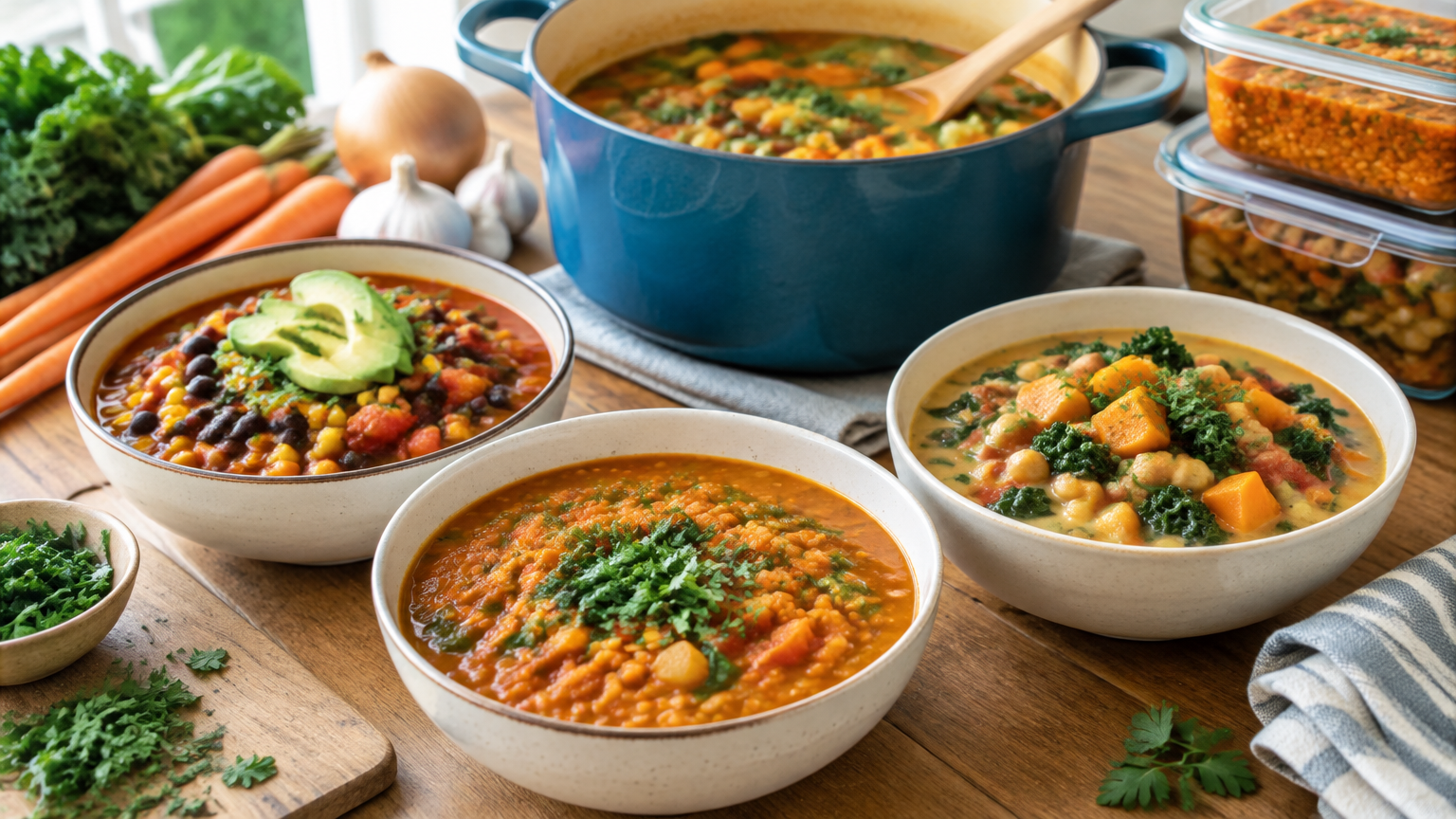
1. Red Lentil Soup
- Key ingredients: onion, garlic, red lentils, carrot, cumin, broth
- Quick method: Soften the onion, garlic, and carrot. Stir in the cumin for a moment, add rinsed lentils and broth, and simmer until the lentils are soft and starting to break down.
- Cost-saving tip: Lentils need no soaking. For a creamier texture, blend part of the soup, either with a blender or by mashing it in the pot.
2. White Bean and Vegetable Soup
- Key ingredients: canned white beans, celery, carrot, canned tomatoes, dried Italian herbs, greens
- Quick method: Cook the celery and carrot, add the tomatoes, herbs, beans, and broth, and simmer. Stir in the greens at the end until wilted.
- Cost-saving tip: Use frozen greens or whatever vegetables are on hand. This is a good "clean out the fridge" soup.
3. Black Bean Soup
- Key ingredients: black beans, onion, garlic, cumin, chili powder, lime
- Quick method: Cook the onion and garlic with the cumin and chili powder. Add beans and liquid, simmer, then finish with lime juice.
- Cost-saving tip: Mash some of the beans against the side of the pot to thicken the soup without extra ingredients.
4. Potato and Cabbage Stew
- Key ingredients: potatoes, cabbage, onion, paprika, broth
- Quick method: Soften the onion with the paprika, add cubed potatoes and broth, and simmer until the potatoes are nearly tender. Add chopped cabbage and cook until soft.
- Cost-saving tip: Cabbage and potatoes are typically inexpensive and stretch far, which makes this a good option for feeding several people.
5. Chickpea and Tomato Stew
- Key ingredients: chickpeas, canned tomatoes, onion, garlic, spices, spinach
- Quick method: Cook the onion and garlic with your chosen spices, add the tomatoes and drained chickpeas, and simmer until the flavors come together. Stir in spinach at the end.
- Cost-saving tip: Serve it over rice, bread, or potatoes to stretch the servings.
—
Seasoning Adjustments
Seasoning is where many beginners feel unsure. This quick reference covers the most common problems.
Fixing Common Problems
| Problem | Try this |
|---|---|
| Tastes flat | Add salt gradually, then a splash of acid (lemon juice or vinegar) |
| Too salty | Add water or unsalted broth, or add more vegetables or potatoes |
| Too acidic (tomato-based) | Add a pinch of sugar or more cooked vegetables |
| Too thin | Simmer uncovered, or mash some beans or potatoes |
| Too thick | Add water or broth |
| Lacking depth | Add tomato paste, soy sauce, herbs, or spices |
Seasoning Tips
- Season in layers. Add some seasoning at the start, then make final adjustments at the end. Seasoning only at the end can leave the flavor sitting on the surface.
- Add salt in small amounts. It's easy to add more and hard to remove it.
- Taste again after reheating. Leftovers may need a refresh, whether that's a bit more salt, acid, or spice.
—
Storage and Leftover Tips
A pot of soup often makes more than one meal, so a little storage know-how pays off.
Cooling and Refrigerating
- Cool the soup promptly rather than leaving it out for long stretches.
- Store it in covered, shallow containers, which help it cool faster than one deep container.
- For how long leftovers keep, follow current food safety guidance from sources such as the USDA rather than relying on rules of thumb.
Freezing
- Use freezer-safe containers and leave room at the top for expansion.
- Label each container with the name and date.
- Potatoes and some other vegetables may change texture after freezing, so soups built on beans, lentils, and tomatoes are often easier to freeze than potato-heavy stews.
- Freezing in portion-sized containers makes it easy to thaw only what you need. If you plan to batch-cook often, a set of reusable storage containers can be a practical addition.
Reheating
- Reheat until steaming hot. Add water or broth to loosen soup that has thickened in storage.
- Refresh the flavor with lemon juice, fresh herbs, or black pepper.
Turning Leftovers into New Meals
- Serve soup over rice or pasta.
- Use a thick stew as a baked potato topping.
- Thicken leftover bean soup into a spread or filling.
- Add extra vegetables or a handful of greens to stretch a small portion into a full meal.
—
Budget and Equipment Checklist
Pantry basics
- [ ] Oil
- [ ] Onions and garlic
- [ ] Salt and pepper
- [ ] Dried herbs
- [ ] Cumin and paprika
- [ ] Bouillon (confirm it's plant-based)
Shopping tips
- Buy dried legumes, frozen vegetables, and store brands when possible.
- Use seasonal produce.
- Build meals around ingredients you already have before buying new ones.
Equipment
- [ ] One pot with a lid
- [ ] Knife and cutting board
- [ ] Spoon
- [ ] Can opener
- [ ] Optional: blender or potato masher
—
FAQ
1. Can I make plant-based soup without store-bought broth?
Yes. Use water and build flavor with well-cooked aromatics, herbs, spices, tomato paste, or a splash of soy sauce. Season carefully and taste as you go, since water adds no flavor of its own.
2. Do I need to soak dried beans first?
Not always. Soaking can shorten cooking time, and lentils generally do not need it. Follow the package instructions, and use canned beans if you want the easiest option.
3. How do I make soup more filling without meat?
Add beans, lentils, potatoes, rice, pasta, or oats, and serve with bread or a grain. Blending part of the soup can also add body.
—
Key Takeaways and Next Step
- Remember the formula: aromatics, liquid, legumes or vegetables, simmer, adjust.
- Start with one recipe, then swap ingredients based on what you have.
- Season in layers, and taste again after reheating.
- Cook once, store properly, and enjoy leftovers throughout the week.
For your first pot, pick the recipe whose ingredients you mostly have already. Red lentil soup or black bean soup are straightforward choices, and once the pattern feels familiar, the other ideas follow the same steps.