
This article contains affiliate links. We may earn a commission if you buy through them, at no extra cost to you.
One-Pot Plant-Based Dinners: Easy Recipes With Few Ingredients
Suggested title tag: One-Pot Plant-Based Dinners: Easy Recipes With Few Ingredients Suggested meta description: Learn four simple one-pot plant-based dinner formats (chili, curry, pasta, and rice-and-bean skillets) with basic methods, shared ingredients, and easy cleanup tips.
Weeknight dinners get easier when you use one pot, a short ingredient list, and a method you can repeat. This guide covers four flexible formats (chili, curry, pasta, and rice-and-bean skillets), gives a basic method for each, and shows how their ingredients overlap so one shopping trip covers several meals.
Quick Answer
One pot plant based dinners are meals cooked in a single pot, pan, or skillet using ingredients like beans, lentils, grains, pasta, vegetables, and spices. Build flavor by sautéing aromatics first, add the main ingredients and liquid, simmer until tender, then season at the end. Chili, curry, pasta, and rice-and-bean skillets are good starting formats.
Key Takeaways
- Every format below follows the same six-step method, so you only learn one technique.
- Onion, garlic, canned tomatoes, beans, broth, and a few spices cover most of the shopping list.
- A wide, heavy-bottomed pot with a lid makes cooking easier and cleanup lighter.
- Cooking times here are approximate. Always check package directions for rice, pasta, and lentils.
What Makes a Good One-Pot Plant-Based Dinner?
A good one-pot dinner has a few parts that work together. Once you know the parts, you can build meals from whatever is in your pantry.
Core building blocks
- Aromatics: onion and garlic (ginger works for curries).
- Plant protein: canned beans, lentils, chickpeas, or tofu.
- Starch or grain: rice, pasta, or potatoes.
- Vegetables: fresh or frozen, whichever you have.
- Liquid: broth, water, canned tomatoes, or coconut milk.
- Seasoning: spices, salt, and an acid such as lemon juice or vinegar.
Why "few ingredients" works
Pantry staples carry most of the flavor. Canned tomatoes add body and tang, and a spice blend such as chili powder or curry powder replaces a long list of individual jars. Because the same handful of items shows up in several meals, you buy less and waste less.
Basic One-Pot Method (Works for Every Format)
Learn this sequence once and you can adapt it to any dish below.
1. Heat oil in the pot and soften the aromatics (onion first, then garlic). 2. Add spices and stir briefly, just until fragrant, to bring out their flavor. 3. Add the main ingredients and liquid: beans, lentils, grains, pasta, tomatoes, and broth. 4. Bring to a simmer, then cover or partially cover and stir occasionally. 5. Cook until tender: the grain, pasta, or vegetables should be done. 6. Taste, adjust salt and acid, and serve.
Four One-Pot Dinner Formats
1. One-Pot Bean Chili
Core ingredients: onion, garlic, canned beans, canned tomatoes, chili powder, cumin, broth or water.
Method: Sauté the onion and garlic in oil until soft. Stir in the chili powder and cumin for about a minute. Add the beans, tomatoes, and enough broth or water to keep things loose. Simmer, partially covered, until thickened. This usually takes about 20 to 30 minutes.
Beginner tip: Mash a few beans against the side of the pot with your spoon to thicken the chili without adding anything extra.
2. One-Pot Chickpea or Lentil Curry
Core ingredients: onion, garlic, ginger, chickpeas or lentils, curry powder, canned tomatoes or coconut milk.
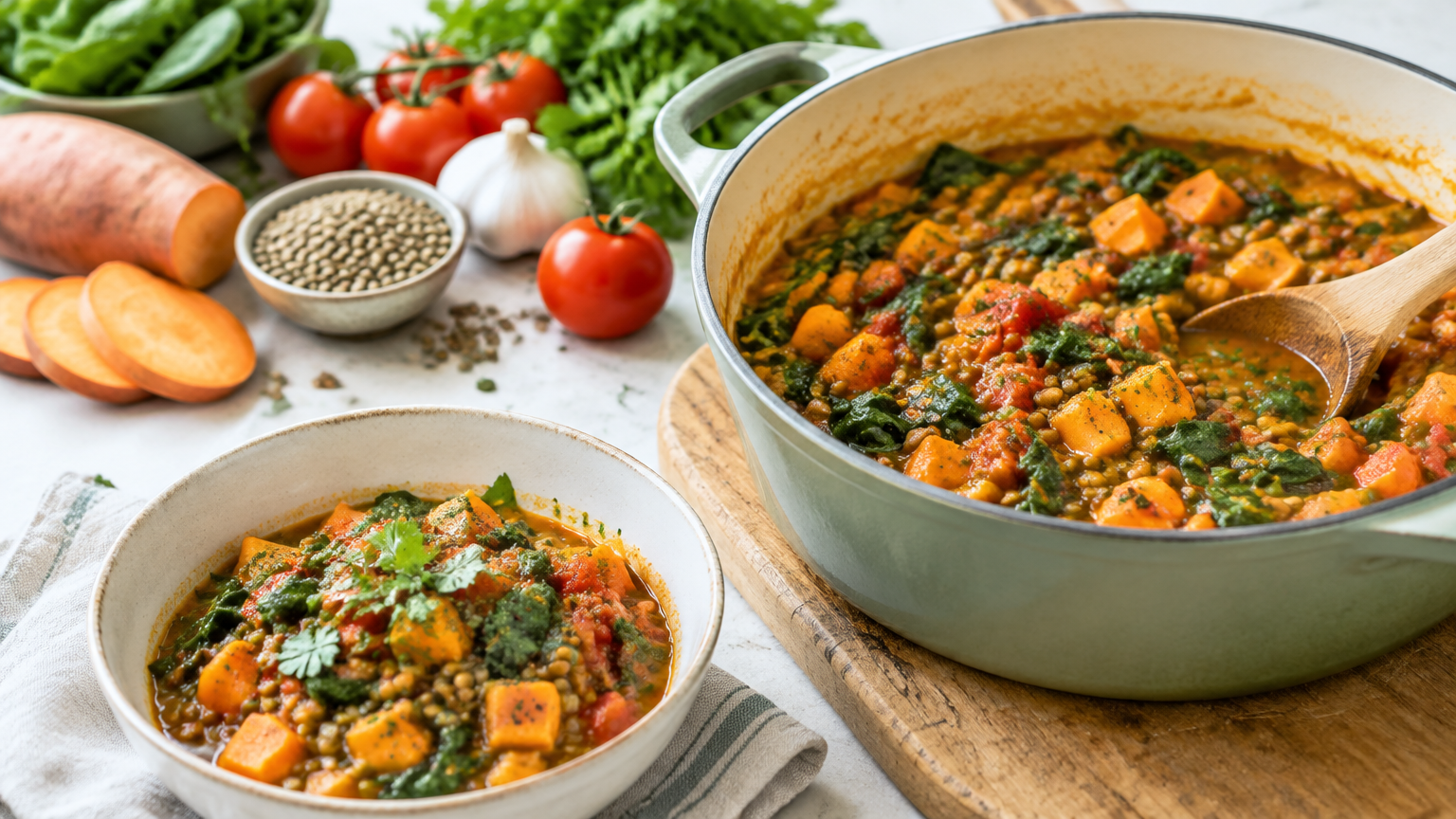
Method: Sauté the onion, garlic, and ginger. Add the curry powder and toast it for a minute. Add the chickpeas or lentils with your liquid (tomatoes, coconut milk, broth, or a mix) and simmer. Stir in a handful of spinach or other greens at the end so they wilt without turning dull.
Beginner tip: Lentil cooking times vary by type, so check the package. Canned chickpeas only need to heat through and absorb flavor, which makes them the faster choice.
3. One-Pot Pasta
Core ingredients: pasta, garlic, canned tomatoes or tomato sauce, vegetables, broth or water.
Method: Sauté the garlic briefly. Add the liquid and the pasta, then simmer and stir often until the pasta is tender. Stir in spinach or other quick-cooking vegetables near the end, and season once the pasta is done. Many pastas take roughly 10 to 15 minutes, but follow the package for your shape.
Beginner tip: Stir frequently so the pasta doesn't stick to the bottom. If the pot dries out before the pasta is tender, add a splash more liquid.
4. Rice-and-Bean Skillet
Core ingredients: rice, canned beans, onion, spices, salsa or tomatoes, broth or water.
Method: Sauté the onion. Add the rice and spices and stir for a minute so the grains are coated. Pour in the liquid and salsa, bring to a simmer, then cover and cook on low until the rice is tender. Stir in the beans at the end to heat through.
Beginner tip: Start with the rice package's liquid ratio, then adjust for the extra moisture from tomatoes or salsa. Resist lifting the lid too often, since steam does much of the cooking.
Ingredient Overlap: Shop Once, Cook Four Ways
Many of these meals share the same pantry items, so a single list can cover all four dinners.
| Ingredient | Chili | Curry | Pasta | Rice-and-Bean Skillet |
|---|---|---|---|---|
| Onion and garlic | ✓ | ✓ | ✓ | ✓ |
| Canned tomatoes | ✓ | ✓ | ✓ | ✓ |
| Beans or chickpeas | ✓ | ✓ | Optional | ✓ |
| Broth or water | ✓ | ✓ | ✓ | ✓ |
| Cumin, chili powder, or curry powder | ✓ | ✓ | – | ✓ |
| Frozen vegetables or leafy greens | ✓ | ✓ | ✓ | ✓ |
Simple shopping list for a week of one-pot meals
- Onions and garlic (plus a knob of ginger if making curry)
- Canned diced or crushed tomatoes
- Canned beans (such as black or kidney) and canned chickpeas
- Dried lentils, if you prefer them in curry
- Long-grain rice
- One box of pasta
- Vegetable broth (or just use water)
- Chili powder, cumin, and curry powder
- Salsa
- Frozen vegetables and a bag of spinach
- Lemon or vinegar for finishing
If you want more ideas for using the same staples, browse these plant-based one-pot recipe ideas for inspiration on rotating flavors through the week.
Minimal Cleanup Tips
One-pot cooking only saves effort if you also keep the rest of the kitchen tidy. These habits help:
- Choose the right cookware. A wide, heavy-bottomed pot or deep skillet with a lid distributes heat more evenly and helps prevent scorching. If you're shopping for one, a wide, deep pot or skillet with a lid is the type to look for.
- Prep on one cutting board. Chop everything in order, and open cans before you start cooking.
- Use a single spoon for stirring and tasting. Rest it on a small plate or the pot lid.
- Soak the pot right after serving with warm water to loosen stuck-on food.
- Cook extra. Leftovers mean fewer dishes on a future night.
Beginner-Friendly Technique Tips
- Don't skip the aromatics. Softening onion and garlic first builds a flavor base that water and canned goods can't provide on their own.
- Keep the heat at a gentle simmer. A hard boil makes food stick and scorch, especially rice and pasta.
- Add delicate vegetables near the end. Spinach, peas, and other quick-cooking vegetables only need a few minutes.
- Taste before serving. Adjust salt, spice, and acid. A squeeze of lemon or splash of vinegar often brightens a dish that tastes flat.
- Rinse canned beans if you want to control sodium or remove the canning liquid. Skip rinsing if you want the liquid to help thicken a dish like chili.
Easy Variations and Substitutions
Once a format is familiar, swap ingredients freely:
- Beans: black beans, pinto beans, white beans, or chickpeas all work in chili and skillets.
- Grains: brown rice or quinoa can replace white rice, but adjust the liquid and time according to the package.
- Pasta: whole wheat or gluten-free pasta works too. Check the package times, since they can differ from standard pasta.
- Toppings: avocado, fresh herbs, lime, nutritional yeast, or plant-based yogurt add freshness and texture without extra cooking.
Storage and Reheating
- Cool leftovers, then refrigerate them in airtight containers.
- Reheat thoroughly, adding a splash of water or broth to loosen the texture.
- Pasta and rice dishes may thicken as they sit, so expect to add a little liquid when you reheat them.
FAQ
What are the easiest one pot plant based dinners for beginners?
Bean chili and rice-and-bean skillets are the simplest. They rely on canned beans and need very little technique beyond sautéing and simmering.
Can I make one-pot plant-based dinners without a lot of ingredients?
Yes. Use pantry staples like onion, garlic, canned tomatoes, beans, spices, and broth, and build several meals from the same list.
How do I keep one-pot pasta or rice from sticking?
Use a heavy-bottomed pot, keep the heat at a gentle simmer, stir as needed, and make sure there is enough liquid.
Conclusion
One pot plant based dinners come down to one method and a handful of staples. Pick a format, follow the six basic steps, and adapt it with whatever beans, vegetables, and spices you already have. Start with the format that best fits your pantry, then rotate in the others during the week. By the third meal, you'll likely be cooking without a recipe.