
This article contains affiliate links. We may earn a commission if you buy through them, at no extra cost to you.
Plant-Based Bowl Dinners: How to Build a Cheap Grain Bowl Without a Recipe
Meta description: Learn a simple build-your-own formula for cheap plant based grain bowl ideas: pick a grain, protein, vegetables, sauce, and crunchy topping, then reuse leftovers all week.
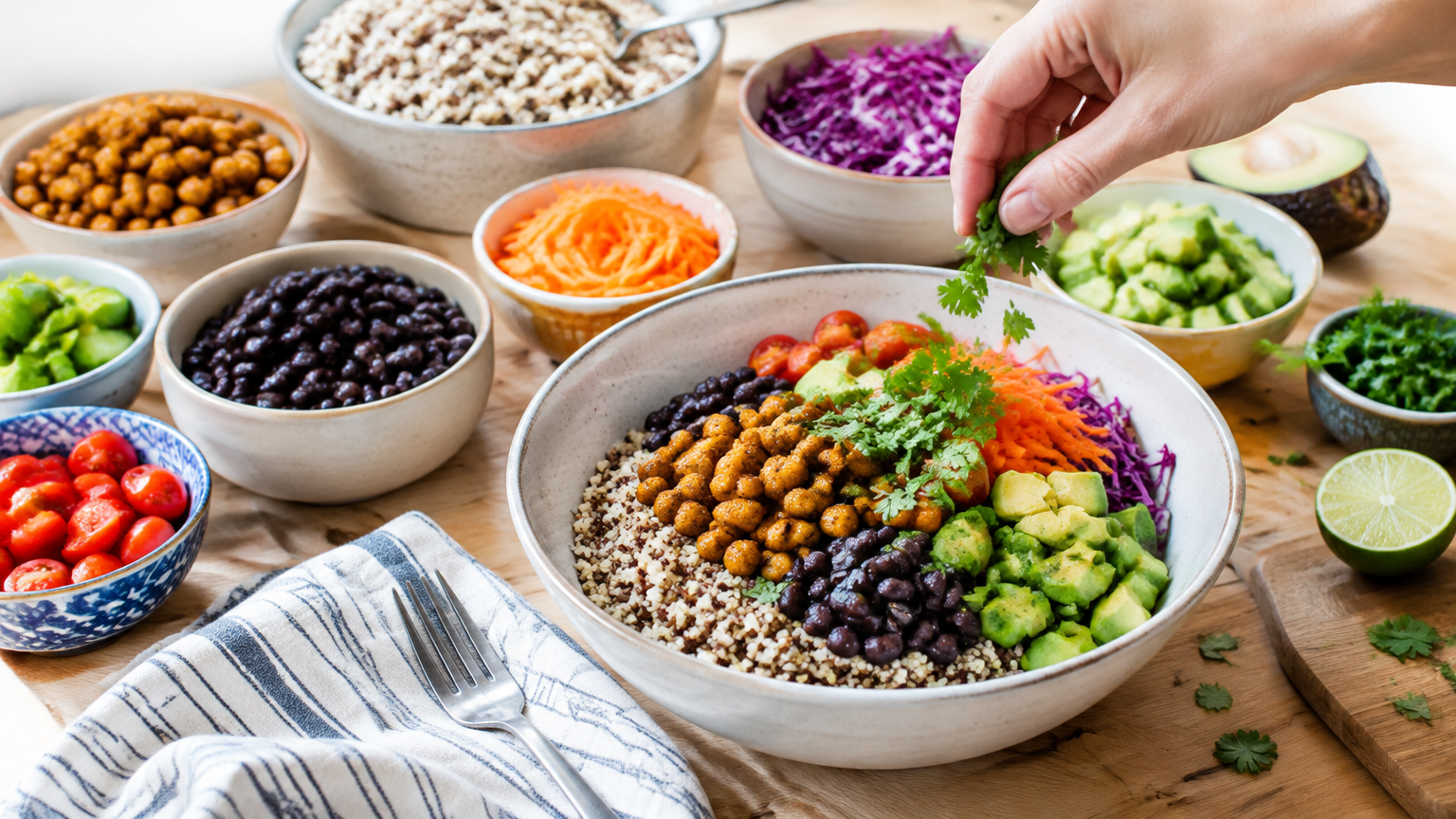
Bowl dinners work because they're a formula, not a recipe. Once you know the five building blocks, you can shop sales, use what's in the fridge, and still end up with a satisfying meal. This guide covers a five-part framework, budget-friendly combinations, ways to reuse leftovers, and a simple one-week rotation. These cheap plant based grain bowl ideas will help you cook with less planning and less waste.
Key Takeaways
- Every bowl is Grain + Protein + Veg + Sauce + Crunch.
- Swap freely within each category based on what's cheap or already in your kitchen.
- Cook grains, beans, and one tray of vegetables once, then vary the sauce and topping through the week.
- Season each component separately so the bowl doesn't taste flat.
- Add acid (lemon, lime, vinegar) and something crunchy to make simple ingredients taste finished.
The Short Answer: The 5-Part Cheap Grain Bowl Formula
Build a bowl from a grain base, a plant protein, roasted or raw vegetables, a sauce, and a crunchy topping. Choose inexpensive staples for each part, cook in batches, and mix and match through the week.
Formula: Grain + Protein + Veg + Sauce + Crunch
Use what you have. If a recipe-free approach feels loose, remember that each category is interchangeable: no barley, use rice; no chickpeas, use lentils; no tahini, use peanut butter.
Step-by-Step: Build Your Bowl Without a Recipe
Step 1: Choose a Grain Base
Budget-friendly options include:
- Rice (brown or white)
- Barley
- Bulgur
- Couscous
- Pasta
- Savory oats
- Quinoa, if you find it on sale
- Leftover cooked grains from other meals
Tip: Cook a big batch and season it lightly. A pinch of salt, a splash of vinegar, or cooking in broth instead of water gives the base some flavor of its own.
Rough ratio: Aim for about half the bowl to be grain and vegetables combined, then adjust to your appetite. Hungrier? Add more grain and protein. Want something lighter? Add more vegetables.
Step 2: Add a Plant Protein
Affordable choices include:
- Canned or dried beans
- Lentils
- Chickpeas
- Tofu
- Tempeh
- Peanuts
- Frozen edamame
Tip: Dried beans and lentils are typically the lowest cost per serving, while canned beans save time. If you're new to dried beans, a beginner's guide to cooking dried beans from scratch can walk you through soaking and simmering.
Flavor tip: Season the protein separately. Toss chickpeas with smoked paprika and salt, marinate tofu in soy sauce, or simmer lentils with garlic and bay leaf. Unseasoned beans dumped on top are the fastest route to a bland bowl.
Step 3: Pick Roasted or Raw Vegetables
Roasted: carrots, sweet potatoes, cabbage, cauliflower, broccoli, onions, squash
Raw: shredded cabbage, cucumber, carrots, tomatoes, greens
Frozen vegetables are a low-waste option. You use only what you need, and nothing wilts in the crisper drawer.
Basic roasting method: Toss chopped vegetables with oil and salt, spread them on a pan without crowding, and roast until browned at the edges. Timing varies by vegetable, so check often. Dense vegetables like squash take longer than broccoli.
Tip: Use one roasted and one raw vegetable in each bowl. Warm, caramelized sweet potato next to cool, crisp cabbage gives you contrast without extra effort.
Step 4: Make a Simple Sauce
Sauce does the most to make a bowl taste like a meal. You don't need exact recipes, just templates:
- Creamy: peanut butter or tahini + lemon or vinegar + water + salt
- Tangy: oil + vinegar or citrus + mustard or herbs
- Savory: soy sauce + garlic + a little sweetener + water
- Spicy: hot sauce or chili flakes stirred into any base
- Yogurt-style: plant-based yogurt + lemon + garlic
Tip: Thin the sauce with water until it's pourable, then taste and adjust. Too flat? Add salt or acid. Too sharp? Add a little sweetener or oil. Too thick? More water.
Step 5: Finish With a Crunchy Topping
Crunch makes the difference between a pile of soft food and a bowl you want to finish. Options include:
- Toasted seeds (sunflower, pumpkin, sesame)
- Chopped nuts
- Crushed crackers or tortilla chips
- Toasted breadcrumbs
- Crispy chickpeas
- Thinly sliced raw onion
Tip: Add the topping just before eating so it stays crunchy.
Cheap Plant Based Grain Bowl Ideas (Budget Combinations)
Here are five combinations built from common pantry staples. Treat them as starting points.
| Grain | Protein | Vegetables | Sauce | Crunch |
|---|---|---|---|---|
| Rice | Black beans | Roasted sweet potato + shredded cabbage | Lime-chili sauce | Crushed tortilla chips |
| Barley | Chickpeas | Roasted carrots + cucumber | Lemon-tahini sauce | Sunflower seeds |
| Brown rice | Tofu | Frozen broccoli + shredded carrots | Peanut-soy sauce | Peanuts |
| Lentils + rice | Lentils (built in) | Roasted cabbage + onion | Mustard vinaigrette | Toasted breadcrumbs |
| Couscous or bulgur | White beans | Tomatoes + greens | Garlic-yogurt sauce | Chopped nuts |
What each one offers:
- Rice + black beans + sweet potato: A sweet, smoky, bright bowl with a taco-night feel.
- Barley + chickpeas + carrots: Chewy, earthy, and lemony, with a Mediterranean tilt.
- Brown rice + tofu + broccoli: A takeout-style bowl using frozen vegetables and a quick peanut sauce.
- Lentils + rice + roasted cabbage: A rustic, hearty combination where the mustard vinaigrette cuts through the richness.
- Couscous or bulgur + white beans + tomatoes: The quickest option, since couscous and bulgur need little cooking.
Budget-Saving Tips
- Buy grains and dried beans in bulk when you have storage space.
- Choose seasonal or frozen vegetables. Frozen are handy when fresh produce is pricey.
- Make sauces at home from pantry basics rather than buying several bottled dressings.
- Stick to one flavor profile per bowl (say, lime and chili, or lemon and tahini) so you aren't buying a dozen ingredients for one meal.
Prices vary by store and region, so compare unit prices rather than assuming any one item is cheapest.
How to Reuse Leftovers in Bowls
Bowls are one of the easiest ways to use leftovers because every component is flexible.
- Leftover grains: Reheat with a splash of water, or crisp them in a hot pan for a toasty, fried-rice-style base.
- Leftover roasted vegetables: Serve them cold over greens, or blend them with a little oil, lemon, and salt into a sauce or spread.
- Leftover beans or lentils: Mash them into a spread for toast or wraps, or season them and add them to a new bowl.
- Odds and ends: Vegetable scraps and stray produce go into a "clean-out" bowl. Half an onion, a lone carrot, and a handful of greens all work.
- Leftover sauce: Use it as a salad dressing, sandwich spread, or dip.
Storage note: Refrigerate cooked food promptly in airtight containers, and follow standard food safety guidance (such as from your national or local food safety agency) for how long to keep leftovers. A set of stackable airtight containers for meal prep makes it easier to store each component separately.
A Simple Weekly Rotation
Prep once (about an hour, flexible): Cook one grain, one pot of beans or lentils, and one tray of roasted vegetables, and make one or two sauces. That's the base for the whole week.
Sample week (adjust to what you have):
- Monday: Rice + beans + roasted vegetables + chili-lime sauce
- Tuesday: Same grain + tofu or chickpeas + raw slaw + peanut sauce
- Wednesday: Leftover vegetables + lentils + vinaigrette + seeds
- Thursday: Fresh grain or pasta + beans + greens + tahini sauce
- Friday: Clean-out bowl with all leftovers + favorite sauce + crunch
- Weekend: Try a new grain, sauce, or topping
Tip: Change the sauce and topping to make repeated bases feel different. The same rice and beans taste like three different dinners with lime-chili sauce and tortilla chips, then peanut sauce and peanuts, then tahini and seeds. For more on sheet-pan technique, a guide to roasting vegetables without a recipe can help you vary the vegetables too.
Quick Build-Your-Bowl Checklist
- [ ] One grain, cooked and lightly seasoned
- [ ] One protein, seasoned separately
- [ ] One roasted vegetable
- [ ] One raw vegetable or handful of greens
- [ ] One sauce, tasted and adjusted
- [ ] One crunchy topping, added last
Common Mistakes to Avoid
- Bland grains. Season the cooking water or toss cooked grains with salt and a splash of vinegar.
- Skipping acid. A squeeze of lemon or lime, or a splash of vinegar, brightens the whole bowl.
- Too many ingredients. Stick to the five parts. More items mean more cost and more cleanup, not necessarily better flavor.
- No texture contrast. If everything is soft, add crunch.
- Dressing too early. Sauce a bowl right before eating, especially if the toppings should stay crisp.
FAQs
How do I make a plant-based grain bowl filling?
Include a solid portion of protein (beans, lentils, or tofu), a whole grain, and some healthy fat from the sauce, seeds, or nuts. Plenty of vegetables add volume, and a well-seasoned sauce makes the bowl more satisfying.
What is the cheapest base for a grain bowl?
Rice, barley, oats, and bulgur are often inexpensive, especially in bulk. Prices vary by store and region, so compare unit prices at your own market.
Can I meal prep grain bowls for the week?
Yes. Store the components separately and assemble the bowls when you eat. Keep sauces and crunchy toppings apart until serving, and follow food safety guidelines for storage times.
Conclusion
The best cheap plant based grain bowl ideas aren't recipes at all. They're a repeatable system: Grain + Protein + Veg + Sauce + Crunch. Cook a few staples once, keep your sauces simple, and rotate toppings to keep dinners interesting without extra spending.
This week, pick one item from each category and build your first bowl. Taste, adjust, and see what you'd change next time. That's the whole method.