
This article contains affiliate links. We may earn a commission if you buy through them, at no extra cost to you.
Puzzle Feeders and Enrichment Toys: How to Choose the Right Type for Your Dog
Meta description: Compare puzzle feeders for dogs, including snuffle mats, treat-dispensing toys, lick mats, and sliding puzzles, with a checklist to match the right type to your dog's experience level.
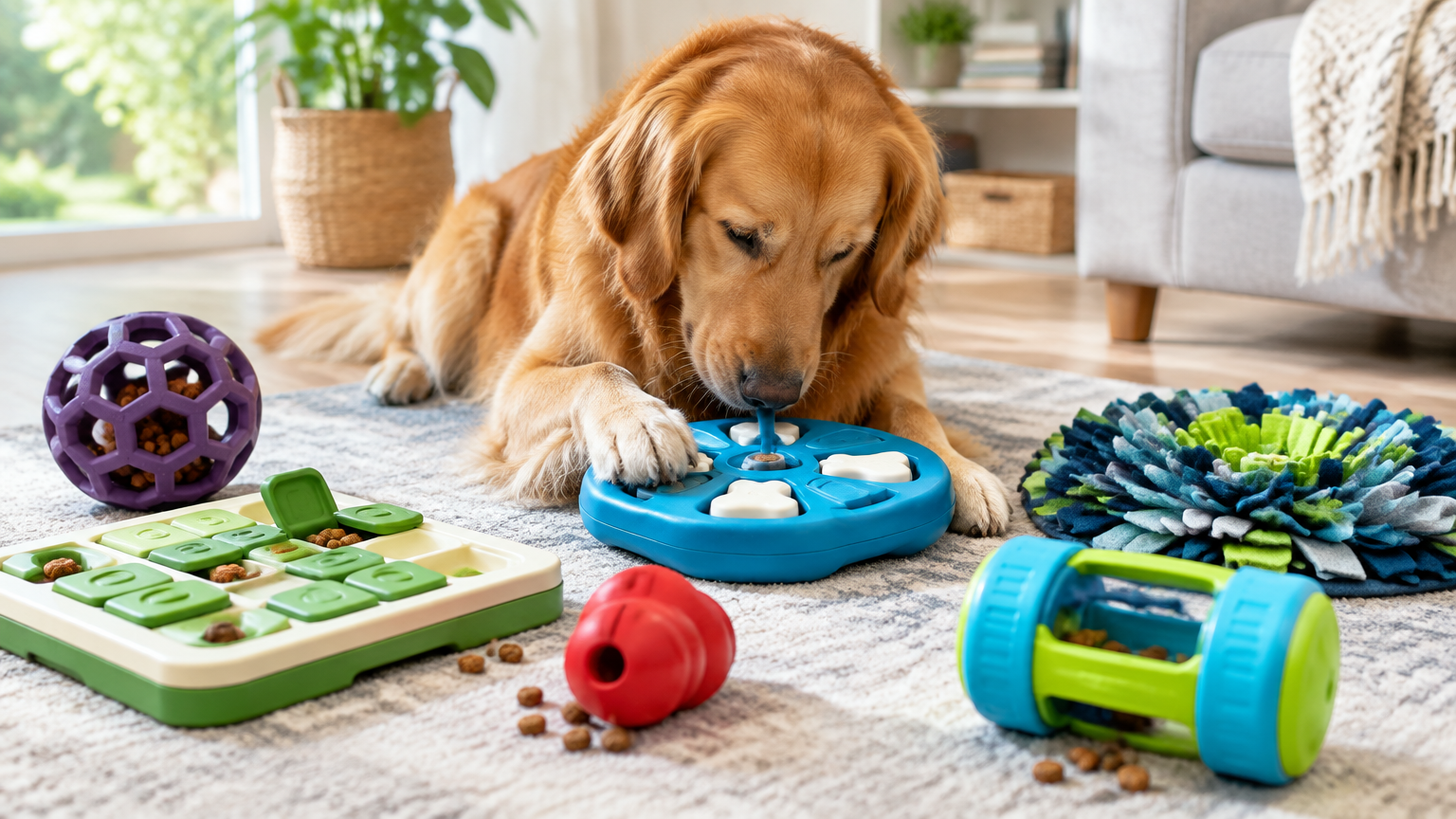
Shopping for puzzle feeders for dogs means sorting through formats that look very different and work in different ways. This guide compares four common categories and explains how to match each to your dog's experience, chewing habits, and eating style. It also covers supervision and cleaning.
Quick Answer: Which Type of Puzzle Feeder Fits Your Dog?
Match the feeder to your dog's experience level, chewing habits, and eating style. Beginners often do well with simpler formats, such as snuffle mats or lick mats. Dogs already familiar with puzzles may suit treat-dispensing toys or sliding puzzles. Always supervise, and choose a size and material suited to your dog.
Key takeaways
- Start easy. A simple format helps you see how your dog approaches food puzzles.
- Chewing habits matter as much as experience. A dog that tears fabric or cracks hard toys needs a different pick than a gentle eater.
- Cleaning ease is part of the purchase decision, not an afterthought.
- Supervision applies to every category.
| Type | Best starting level | Key consideration |
|---|---|---|
| Snuffle mat | Beginner | Fabric chewing risk, washability |
| Lick mat | Beginner | Food compatibility, hard-to-clean grooves |
| Treat-dispensing toy | Beginner to intermediate | Size, durability, how pieces separate |
| Sliding puzzle | Intermediate to advanced | Small removable parts, floor stability |
Puzzle Feeders for Dogs: Category Comparison
Snuffle Mats
What it is: A fabric mat with strips or folds where you hide food for your dog to find.
Good fit: First-time puzzle users and dogs that eat kibble. Scattering a few pieces in the folds is an easy setup to explain to a new dog.
Consider:
- Fabric chewing risk. If your dog tends to chew or swallow fabric, a mat may not be a good match. Supervise closely and stop the session if your dog starts tearing pieces off.
- Washability. Check whether the mat is machine-washable or hand-wash only, and how long it takes to dry.
- Mat size. A larger mat gives a bigger dog room to work. A small mat can be easier to store and clean.
Treat-Dispensing Toys
What it is: Toys that release food as the dog rolls, nudges, or manipulates them.
Good fit: Beginner to intermediate dogs, depending on how adjustable the opening is. A wide opening releases food readily. A narrow one asks more of the dog.
Consider:
- Size. The toy should be large enough that your dog can't swallow it or get it stuck on a jaw or paw.
- Durability. Compare the material to your dog's chewing style.
- Cleaning. Look at whether parts are dishwasher-safe or hand-wash only. Many dispensing toys have internal channels that trap residue.
- Separable pieces. Toys that twist apart are easier to clean but can come apart in play. Check how easily the pieces separate.
If you're comparing options, you can browse treat-dispensing toys and other puzzle feeders by category and check size and material details for each.
Lick Mats
What it is: A textured surface for spreading soft food, such as a thin layer of a spreadable food your dog already eats.
Good fit: Beginners and dogs that enjoy licking. Lick mats involve little movement or problem-solving, so they suit dogs that are hesitant about more active puzzles.
Consider:
- Food compatibility. Lick mats work with soft or spreadable foods, not dry kibble. Confirm that the food you plan to use fits.
- Grooves that are hard to clean. Deep patterns can hold residue. Look at the texture before buying.
- Non-slip base. A mat that slides around the floor can frustrate a dog. Check whether it has a grip or suction base, and whether that suits your flooring.
Sliding Puzzles
What it is: Boards with compartments covered by sliding pieces or lids. The dog moves the covers with a paw or nose to reach the food.
Good fit: Intermediate to advanced dogs comfortable with pawing or nosing objects.
Consider:
- Small removable parts. Sliders, lids, or knobs can come loose. Check them before each use.
- Stability. A lightweight board may skid. Check whether the base has a non-slip surface.
- Adjustable difficulty. Some puzzles let you leave compartments open or partially covered. This helps a dog that is still learning.
Fit by Experience Level
First-Time Puzzle Dogs
Start with open or easy formats: a snuffle mat, a lick mat, or a toy with a wide opening. The aim is for your dog to understand that food is available in the object. Use a familiar food and an easy setup.
Dogs With Some Experience
If your dog handles simple formats comfortably, try treat-dispensing toys or beginner sliding puzzles. For a sliding puzzle, begin with most compartments open and cover them gradually.
Experienced Problem-Solvers
Look for adjustable or multi-step puzzles. These let you change the challenge without buying a new product each time. Check how easy it is to reset and clean between sessions.
Special Considerations
Some dogs need extra thought:
- Puppies: Check the manufacturer's age and size guidance. Small parts and developing chewing habits both matter.
- Seniors and dogs with mobility concerns: Choose low-effort formats that don't require much bending, pawing, or rolling.
- Dogs with dental concerns: Hard materials may not be comfortable. Soft formats may be easier.
- Heavy chewers: Avoid fabric and lightweight parts unless the product is labeled for your dog's chewing style.
- Fast eaters: Some feeders slow down eating, but results vary by dog. Supervise and see how your dog handles it.
For questions about diet, feeding amounts, or health concerns, check with your veterinarian.
Decision Checklist
Work through these questions before you buy:
- [ ] Is my dog new to puzzles?
- [ ] Does my dog chew or tear objects?
- [ ] What food will I use (kibble, soft food, treats), and does it fit the feeder?
- [ ] What are my dog's size and breed type, and is the product appropriately sized?
- [ ] Does the product have small parts that could detach?
- [ ] How will I clean it, and is it dishwasher-safe or hand-wash only?
- [ ] Do I have space and a non-slip surface?
- [ ] Can I supervise during use?
- [ ] Do the product's material information and care instructions meet my needs?
- [ ] Does the price fit my budget, and are replacement parts available?
Practical example: Say your dog is new to puzzles, eats kibble, and doesn't chew fabric. A snuffle mat in a size that suits your dog is a reasonable starting point. If your dog tears fabric, a toy with a wide opening and durable material may fit better.
How to Introduce a Puzzle Feeder (Practical Steps)
1. Choose the easiest option for your dog's level. 2. Use a small amount of familiar food. 3. Let your dog watch you load it, and start with the easiest setup. 4. Supervise the first sessions. 5. Increase difficulty gradually. 6. Adjust food portions to account for what's used in the puzzle. 7. Stop and switch if your dog seems frustrated or damages the item.
If you want background on how dogs learn new tasks, a dog enrichment and training resource can help you plan the next steps.
Supervision and Safety Notes
- Supervise use, especially with new products and dogs that chew.
- Inspect for wear, loose pieces, or damage, and retire damaged items.
- Follow the manufacturer's age, size, and use guidance.
- Separate dogs in multi-dog homes during use.
- Don't give feeders as unsupervised chew toys unless they're designed and labeled for that.
Cleaning and Maintenance
- Follow the manufacturer's care instructions.
- Empty leftover food promptly.
- Wash after each use, especially with wet or soft foods.
- Dry thoroughly, particularly fabric mats.
- Check crevices and textured areas.
- Replace items that are cracked, frayed, or hard to clean.
FAQs
What are the best puzzle feeders for dogs just starting out?
Simple formats such as snuffle mats, lick mats, or wide-opening dispensing toys are common starting points. Match the choice to your dog's habits. A dog that chews fabric may do better with a lick mat or a sturdy toy than with a snuffle mat.
Can I use my dog's regular food in a puzzle feeder?
Often yes, depending on the feeder type and the food's form (dry or soft). Check the product instructions and adjust meal portions to account for food used in the puzzle. Ask your veterinarian about any dietary concerns.
How do I know when to move to a harder puzzle?
When your dog completes the current one easily and stays interested, increase the difficulty gradually. If your dog loses interest, go back to an easier level.
Next Step
Ready to compare options? Shop puzzle feeders by category to look at snuffle mats, lick mats, treat-dispensing toys, and sliding puzzles side by side. Before you buy, check the size, materials, and care instructions, and make sure they fit your dog and your cleaning routine.
Conclusion
The right puzzle feeder depends on your dog's experience, chewing habits, and eating style, and on how easy the product is for you to clean. Start with a simple format, supervise early sessions, and raise the difficulty gradually. Use the checklist above to narrow your options, and consult your veterinarian on diet and health questions.