
This article contains affiliate links. We may earn a commission if you buy through them, at no extra cost to you.
7-Day Beginner Plant-Based Dinner Plan (With One Shopping List)
If you're new to plant-based cooking and want simple dinners, less food waste, and a lower grocery bill, this plan is for you. It uses one shopping trip, one short Sunday prep session, and seven dinners built from overlapping ingredients.
Key takeaways
- Seven dinners share a small set of staples: beans, lentils, tofu, rice, pasta, and a few vegetables.
- Every fresh item is used in at least two meals.
- Rice, beans, roasted sweet potatoes, and sauces are prepped once and reused.
- Swap suggestions cover common allergens and dislikes, so you can adapt any dinner.
The Short Answer: What a Beginner Plant-Based Dinner Plan Looks Like
A beginner plant based dinner plan repeats a small set of staples (beans, lentils, tofu, rice, pasta, and a few vegetables) in different flavor styles across the week. Cook grains and beans once, reuse vegetables, and change the sauce or spice so dinners feel varied without a long shopping list.
Note: Quantities depend on household size, so adjust the amounts as needed.
How the Plan Cuts Waste and Cost
Overlapping ingredients
Each fresh item appears in at least two meals. Cabbage goes into the tacos and the peanut noodles. Spinach shows up in the curry and the lentil pasta. Sweet potatoes are roasted once for Day 1 and Day 7. Broccoli appears in the fried rice and the noodles, and onions run through the curry, pasta, and more. Because you buy fewer unique ingredients, less of the produce drawer goes unused.
Pantry-first structure
Dried and canned staples form the base of every dinner: rice, pasta, lentils, canned beans, chickpeas, tomatoes, and coconut milk. Fresh produce fills in around them. Many of these items keep well, so a busy week doesn't put your groceries on a countdown. Frozen peas and corn add flexibility, too.
Planned leftovers
Rice is cooked once and used in four dinners (Days 2, 3, 5, and 7). The peanut sauce is mixed once and stretched to a second meal. Leftover roasted sweet potatoes become a bowl topper later in the week. Planning leftovers on purpose turns "what's in the fridge?" into a head start.
The 7-Day Dinner Plan
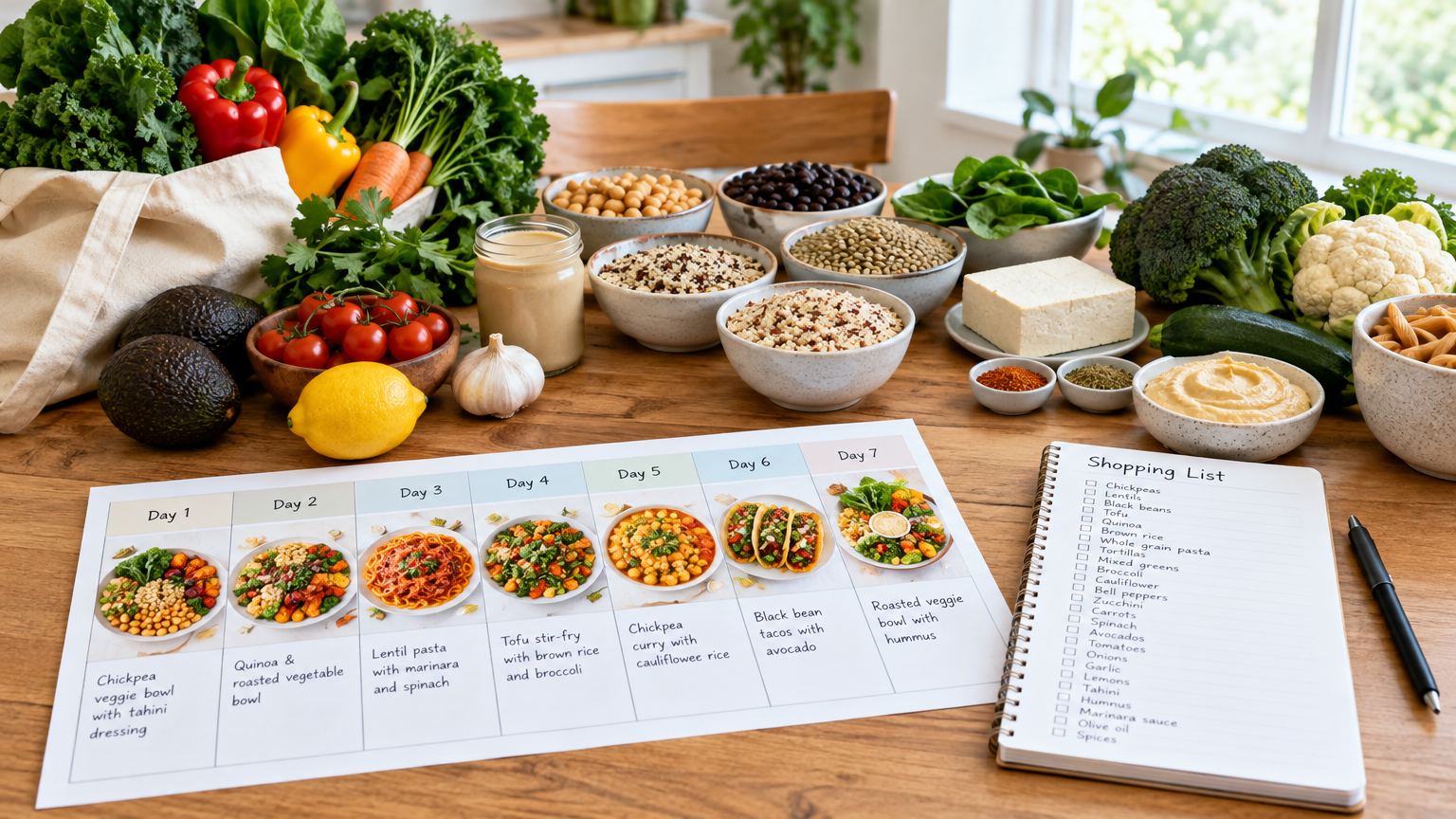
Here's the week at a glance, followed by details for each night.
| Day | Dinner | Reused from the week |
|---|---|---|
| 1 | Black Bean and Sweet Potato Tacos | Sweet potatoes, cabbage, black beans |
| 2 | Chickpea Coconut Curry Over Rice | Chickpeas, spinach, onion, rice |
| 3 | Tofu Veggie Fried Rice | Leftover rice, broccoli, carrots |
| 4 | Red Lentil Tomato Pasta | Diced tomatoes, onion, spinach |
| 5 | Burrito Bowls | Rice, black beans, avocado, lime |
| 6 | Peanut Noodles With Broccoli and Cabbage | Broccoli, cabbage, carrots, lime |
| 7 | Sheet-Pan Chickpea and Sweet Potato Bowls | Sweet potatoes, rice, peanut sauce |
Day 1 – Black Bean and Sweet Potato Tacos
Main ingredients: tortillas, black beans, roasted sweet potato, shredded cabbage, lime, avocado. Reuse note: Roast extra sweet potato for Day 7, and set aside half the beans and cabbage for later in the week.
Day 2 – Chickpea Coconut Curry Over Rice
Main ingredients: chickpeas, coconut milk, diced tomatoes, onion, spinach, curry powder, rice. Reuse note: Save some chickpeas for Day 7. Freeze any extra curry in portions.
Day 3 – Tofu Veggie Fried Rice
Main ingredients: leftover rice, tofu, carrots, broccoli, frozen peas, soy sauce. Reuse note: Cold, day-old rice works well here, which is why this dinner follows the curry. Use up the prepped carrots and broccoli.
Day 4 – Red Lentil Tomato Pasta
Main ingredients: pasta, red lentils, diced tomatoes, onion, garlic, spinach. Reuse note: This is a pantry-heavy night. It uses up the rest of the spinach and the second can of tomatoes.
Day 5 – Burrito Bowls
Main ingredients: rice, black beans, corn, bell pepper, avocado, salsa, lime. Reuse note: Reuse the taco spice mix and leftover beans, and use frozen corn straight from the bag.
Day 6 – Peanut Noodles With Broccoli and Cabbage
Main ingredients: noodles or pasta, peanut butter, soy sauce, broccoli, cabbage, carrots, lime. Reuse note: Make extra peanut sauce so Day 7 is easier.
Day 7 – Sheet-Pan Chickpea and Sweet Potato Bowls
Main ingredients: roasted chickpeas, sweet potato, bell pepper, rice, leftover peanut sauce or lemon dressing. Reuse note: This is the "clean out the fridge" dinner. Roast the chickpeas and bell pepper on one pan, and add the prepped sweet potato and rice.
Consolidated Shopping List
Quantities depend on your household size, so scale the list up or down. Before you shop, see the notes at the end of this section.
Pantry and Canned Goods
- Brown or white rice
- Pasta
- Rice noodles or spaghetti
- Red lentils
- Canned black beans, chickpeas, diced tomatoes, and coconut milk
- Peanut butter, soy sauce, olive oil, and salsa
- Spices: curry powder, cumin, chili powder, salt, pepper
Fresh Produce
- Sweet potatoes
- Yellow onions
- Garlic
- Carrots
- Broccoli
- Bell peppers
- Green cabbage
- Spinach
- Avocados
- Limes
- Cilantro (optional)
Refrigerated and Frozen
- Firm tofu
- Corn tortillas or flour tortillas
- Frozen peas
- Frozen corn
Before You Shop
- Check what you already own and cross off pantry duplicates. Spices and oils are the usual repeats.
- Buy store-brand canned goods where possible. Frozen vegetables are a fine substitute for fresh.
- If you want a place to start with recipes and technique, a beginner-friendly plant-based cookbook can help you build confidence beyond this one week.
Sunday Prep Checklist
Plan on about 60–90 minutes. Work in this order so the rice cools while you do everything else.
- [ ] Cook a large pot of rice; cool and refrigerate
- [ ] Rinse and drain canned beans and chickpeas
- [ ] Roast sweet potatoes (enough for Days 1 and 7)
- [ ] Shred cabbage; chop onions, carrots, bell peppers, and broccoli
- [ ] Press and cube tofu
- [ ] Mix peanut sauce (peanut butter, soy sauce, lime, water) for Day 6 plus extra for Day 7
- [ ] Make a simple spice mix for tacos and bowls
- [ ] Label containers by day; store cut vegetables airtight
Practical example of a spice mix: combine cumin, chili powder, salt, and pepper in a small jar. Use it on the taco beans on Day 1, in the burrito bowls on Day 5, and on the roasted chickpeas on Day 7.
Clear, stackable airtight food storage containers make labeling by day easier, though any containers you already own will work.
Note: Store and reheat leftovers following standard food-safety guidance.
Swaps for Common Dislikes and Allergens
Allergen Swaps (always check labels)
- Soy: Swap tofu for extra chickpeas or white beans, and use a soy-free seasoning sauce in place of soy sauce.
- Peanut: Use sunflower seed butter, or another seed butter if tolerated, in the Day 6 sauce.
- Gluten: Use rice noodles, gluten-free pasta, corn tortillas, and tamari labeled gluten-free.
- Coconut: Use a different creamy base, such as blended white beans with vegetable broth, in the curry.
Packaged foods vary by brand, so read ingredient and allergen labels every time, even for items you've bought before.
Dislike Swaps
- Beans (texture): Mash them lightly, or use lentils.
- Cilantro: Use parsley, or skip it.
- Spicy food: Reduce the chili powder and add heat at the table.
- Avocado: Use hummus or a spoonful of salsa.
- Cabbage: Use lettuce or extra carrots.
- Broccoli: Use green beans or zucchini.
When you swap, keep the ingredient's job in mind. Cabbage adds crunch, avocado adds creaminess, and tofu adds protein-style bulk, so choose a replacement that fills the same role in the dish.
Tips for Making the Plan Work
- Start small. If a full week feels like too much, swap in only a few of these dinners and keep your usual meals for the rest.
- Season at the end. Taste and adjust salt, acid (lime or lemon), and spice just before serving. A squeeze of lime often does more than extra salt.
- Freeze extras. Freeze extra cooked rice and curry in portions so a future night is already handled.
- Keep the order. The plan puts the most perishable items (spinach, avocado, broccoli) in the first half of the week and sturdier ones (cabbage, carrots, sweet potatoes) later. If you rearrange days, keep that logic.
- Use the frozen aisle. Frozen peas and corn cost little effort and rarely go to waste.
FAQs
Can I make this plan for one person?
Yes. Scale recipes down, freeze extra portions, and buy smaller produce amounts or frozen vegetables. Canned beans and cooked rice freeze or store well, so you won't need to eat the same dinner several nights in a row.
Can I prep ahead for more than one week?
Cooked rice, beans, and sauces can be frozen. Keep fresh vegetables for the week you will use them, and chop them close to the day you need them.
What if I do not have time to cook every night?
Use the Sunday prep, cook double batches on busy nights, and use leftovers for lunch or another dinner. Even a partial prep of rice and beans makes weeknight cooking quicker.
Conclusion
A beginner plant based dinner plan works best when it stays simple: a short list of staples, a single prep session, and flavor changes that keep dinners from feeling repetitive. This week of tacos, curry, fried rice, pasta, bowls, noodles, and sheet-pan dinners gets there with overlapping ingredients and planned leftovers.
To get started, print the shopping list, choose a prep time, and swap in any dinner that fits your household. If you'd like more ideas once this week is done, a collection of plant-based dinner recipes for beginners is a natural next step.