
This article contains affiliate links. We may earn a commission if you buy through them, at no extra cost to you.
Frozen vs. Fresh vs. Canned Produce for Plant-Based Meals on a Budget
Meta description: A practical guide to choosing frozen, fresh, or canned vegetables for plant-based dinners on a budget, with tips on storage, food waste, and reading labels.
Plant-based dinners can get expensive, or wasteful, when a crisper drawer full of produce spoils before you cook it. This dinner-by-dinner guide to frozen vs canned vegetables on a plant-based budget shows which form works best for stir-fries, soups, curries, and sheet-pan meals, plus storage, food waste, and label-reading tips. It focuses on cost, texture, convenience, and cooking results, not health outcomes.
The Short Answer: Which Form Should You Buy?
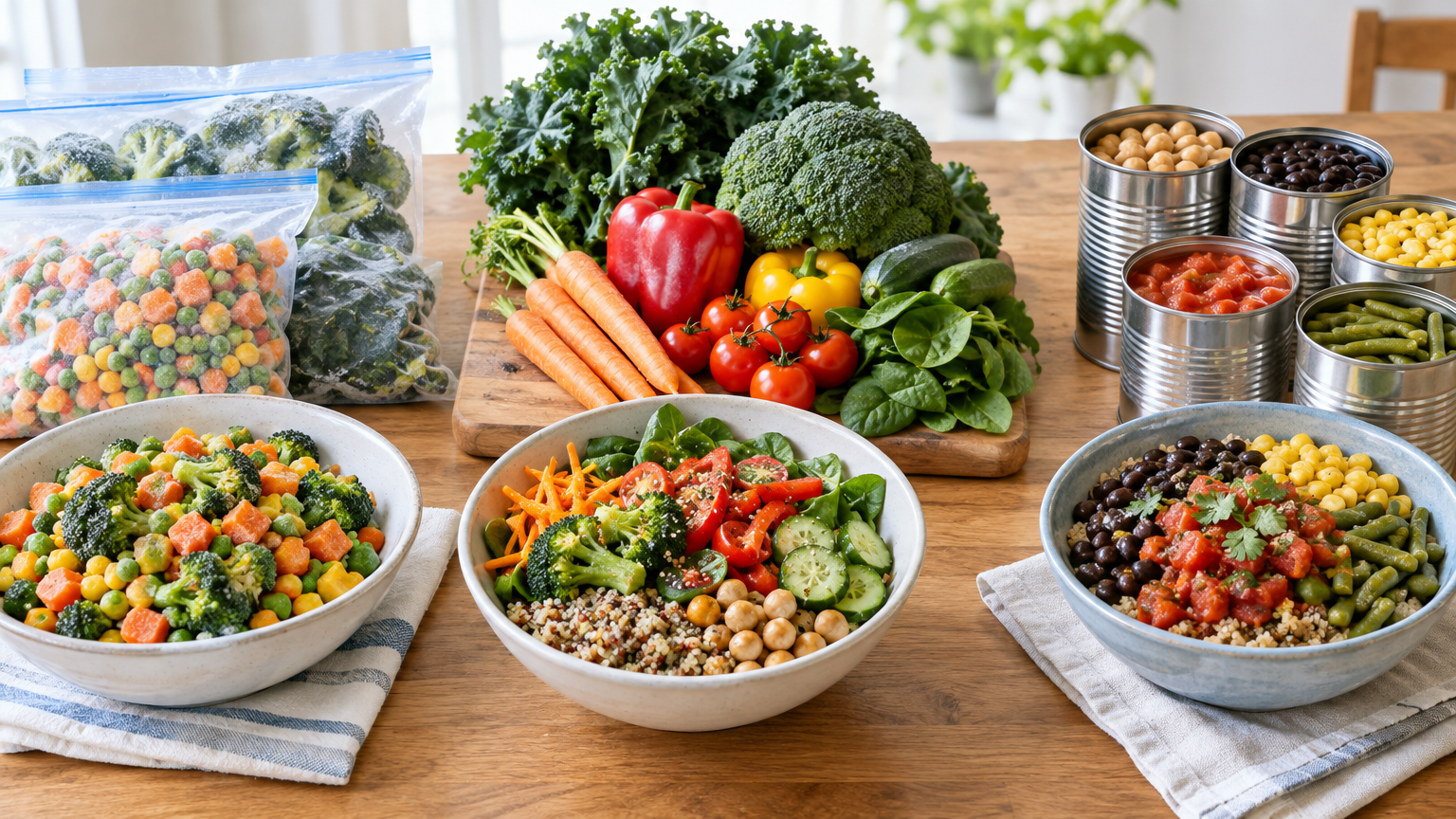
No single form wins. Frozen is often the most flexible for stir-fries, curries, and sheet-pan meals. Canned is handy for soups, stews, and pantry backups. Fresh works best when you will use it soon, want a specific texture, or find it in season at a good price.
| Dinner type | Best-fit form | Why |
|---|---|---|
| Stir-fry | Fresh for crisp vegetables; frozen for broccoli, blends, edamame | Fresh gives the most crunch; frozen is pre-cut and quick |
| Soup or stew | Canned tomatoes, beans, corn; frozen added late; fresh aromatics | Long simmering suits soft textures |
| Curry | Canned tomatoes, chickpeas, coconut milk; frozen spinach, cauliflower, peas | Sauce-based dishes forgive softer vegetables |
| Sheet-pan meal | Fresh hardy vegetables; frozen as a backup; canned chickpeas | Roasting needs structure and low moisture |
Prices vary by store and region, so compare unit prices locally rather than assuming one form is always cheaper.
Quick Comparison: Frozen vs. Canned vs. Fresh
Cost and Unit Pricing
Shelf tags usually list a unit price, such as price per ounce or per pound. Use it to compare across package sizes and forms. Also think about edible yield. Fresh produce may need trimming, peeling, or coring, so some of what you pay for ends up in the compost. Frozen and canned vegetables are usually ready to use, so the weight you buy is closer to the weight you cook. Fresh can still be the better value when it is in season or sold loose, so you can buy only what you need.
Texture and Cooking Behavior
- Frozen: Usually softer after cooking than fresh. Frozen vegetables tend to hold up better in cooked dishes than in raw ones.
- Canned: Already cooked and soft. They work best when simmered, mashed, or blended.
- Fresh: Gives you the most control over crispness and browning, which matters in stir-fries and roasting.
Convenience and Prep Time
Fresh vegetables need washing, chopping, and more cleanup. Frozen vegetables skip most of that. You open the bag and portion what you need. Canned vegetables and beans are the quickest of all, needing only a can opener and, if you choose, a colander for draining.
Shelf Life and Flexibility
Each form needs different space: the pantry for canned, the freezer for frozen, and the fridge or counter for fresh. Check package dates and storage instructions instead of assuming timelines. Canned and frozen items give you a cushion when plans change, while fresh produce asks you to cook on a schedule.
Best Form for Each Dinner Type
Stir-Fries
Fresh vegetables are the best choice when you want crisp textures. Bell peppers, cabbage, and carrots all stay snappy in a hot pan.
Frozen vegetables also work well. Broccoli, stir-fry blends, and edamame are common options. A few tips:
- Cook from frozen over high heat.
- Avoid overcrowding the pan, which causes steaming instead of searing.
- If the product looks watery, thaw and drain it first.
Canned vegetables have limited use here. Baby corn, water chestnuts, and bamboo shoots are the usual exceptions, and they add texture without extra prep.
Example: Sauté fresh cabbage and carrots, add a handful of frozen edamame, and toss in drained canned water chestnuts at the end. Serve over rice with your favorite sauce.
Soups and Stews
Canned tomatoes, beans, and corn make an easy base, and long simmering suits their soft texture. Add frozen vegetables near the end of cooking so they do not turn mushy. Keep a few fresh aromatics, such as onion, garlic, and celery, since they build flavor and cost little compared with the whole pot of food.
Example: Simmer onion and garlic, then add canned tomatoes, canned beans, and broth. Stir in frozen mixed vegetables for the last few minutes.
Curries
Curries are forgiving, which makes them ideal for pantry staples. Canned tomatoes, chickpeas, and coconut milk are a common trio. Frozen spinach, cauliflower, peas, and green beans slip easily into the sauce.
Use fresh where texture matters, such as potatoes and onions. Potatoes hold their shape and soak up flavor, and onions form the foundation of the sauce.
Sheet-Pan Meals
Fresh hardy vegetables roast best. Sweet potatoes, carrots, and Brussels sprouts brown well and keep their structure.
Frozen vegetables can work with care:
- Roast at high heat.
- Spread them in a single layer so they do not steam.
- Pat them dry if they are icy.
Canned chickpeas are a good add-in once they are drained and dried well, since they can turn crisp at the edges. Avoid canned soft vegetables for roasting, as they tend to fall apart.
Step-by-Step: Build a Budget-Friendly Produce Plan
1. Plan 3–4 dinners and note which produce form fits each one. 2. Buy fresh for the first half of the week, and rely on frozen or canned for the second half. 3. Check unit prices and store brands before you commit. 4. Keep a short list of staples: frozen mixed vegetables, frozen greens, canned tomatoes, and canned beans. 5. Cook the most perishable fresh items first. 6. Rotate older pantry and freezer items to the front so they get used.
If you like working from templates, plant-based meal planning resources can help you organize a weekly plan around this approach.
Storage Tips for Each Form
Fresh Produce
Store produce according to type. Some items belong in the fridge and others on the counter. Keep produce dry and avoid washing until you are ready to use it, since extra moisture can speed spoilage.
Frozen Produce
Reseal bags tightly, press out the air, and label them with the date opened. Avoid thaw-and-refreeze cycles, which can hurt texture and quality. If your bags keep ending up half-open, freezer-friendly storage containers are one option for keeping partial portions organized.
Canned Produce
Store cans in a cool, dry place. Transfer leftovers from opened cans to a covered container in the fridge instead of storing them in the can. Follow package guidance and safe food handling practices, and do not use cans with severe damage or bulging. For specifics on storage times, check USDA guidance rather than relying on rules of thumb.
Reducing Food Waste
- Use "first in, first out" shelving. Put newer items behind older ones.
- Freeze fresh vegetables you will not use in time. Check guidance on blanching for specific items first, since not every vegetable freezes the same way.
- Save scraps for homemade broth. Onion ends, carrot peels, and celery trimmings can go in a bag in the freezer until you have enough.
- Cook in flexible formats. Fried rice, soup, curry, and grain bowls absorb leftovers easily.
- Portion frozen vegetables. Take only what you need and return the rest to the freezer promptly.
- Plan one "clean-out-the-fridge" meal each week. It turns odds and ends into dinner.
How to Read Labels: Sodium, Sauces, and Add-Ins
Frozen Vegetables
Check for sauce packets, seasonings, butter, or cream. Plain frozen vegetables usually have a short ingredient list, often just the vegetable itself. Sauced blends can be convenient, but they may cost more per ounce of vegetable and limit how you can season the dish.
Canned Vegetables and Beans
If you want more control over seasoning, look for "no salt added," "low sodium," or "reduced sodium" on the label. Draining and rinsing may reduce some surface sodium, but check the label to see what applies to the specific product. Also look at the packing liquid, which may be water, brine, syrup, or sauce.
General Label Checks
- Read the ingredient list, serving size, and sodium per serving.
- Watch for added sugars in canned fruit or sauced products.
- Confirm the product fits your needs, including vegan preferences and allergen concerns.
- Verify that "plant-based" items do not contain animal-derived ingredients in their sauces or seasonings.
Quick checklist for the store:
- [ ] Is the unit price lower than the alternatives?
- [ ] Is the ingredient list short?
- [ ] Are there sauces, butter, or cream I do not want?
- [ ] Does the label say "no salt added" or similar, if I want that?
- [ ] Will I realistically use the whole package?
Common Mistakes to Avoid
- Buying large bags or cans you will not finish. A bargain only counts if you use it.
- Overcooking frozen vegetables. They are often partly cooked already, so they need less time than you might expect.
- Adding salt before tasting canned items. Canned foods may already be seasoned.
- Skipping unit price comparisons. Package size can hide the real cost.
- Using the wrong form for the cooking method. Soft canned vegetables will not roast well, and frozen vegetables will not stay crisp in a raw salad.
FAQs
Is it better to buy frozen or canned vegetables on a budget?
It depends on the dish and local prices. Frozen often suits stir-fries, curries, and sheet-pan meals, while canned suits soups, stews, and sauces. Compare unit prices and consider how likely you are to use the whole package.
How do I keep frozen vegetables from getting soggy?
Cook them from frozen over high heat, avoid crowding the pan, and pat off excess ice or moisture. For soups and curries, add them near the end of cooking.
Do I need to rinse canned vegetables and beans?
Not always. Rinsing can reduce surface salt or remove packing liquid you do not want, but some recipes benefit from the liquid. Check the label and match your choice to the dish.
Conclusion / Key Takeaways
Comparing frozen vs canned vegetables for a plant-based budget comes down to matching the form to the meal, not picking a winner.
- Match the form to the cooking method. Fresh for crisp and roasted dishes, frozen for flexible weeknight meals, canned for simmered ones.
- Keep a mix of fresh, frozen, and canned on hand so a change of plans does not mean wasted food.
- Read labels for sauces, added ingredients, and sodium.
- Store and rotate your food to cut waste.
- Compare unit prices at your own store, since prices vary by region.
Start with one week of 3–4 planned dinners, use the table and checklist above, and adjust based on what you actually finish.