
This article contains affiliate links. We may earn a commission if you buy through them, at no extra cost to you.
Easy Plant-Based Stir-Fry on a Budget: A Simple Formula Using Tofu, Frozen Veggies, and Rice
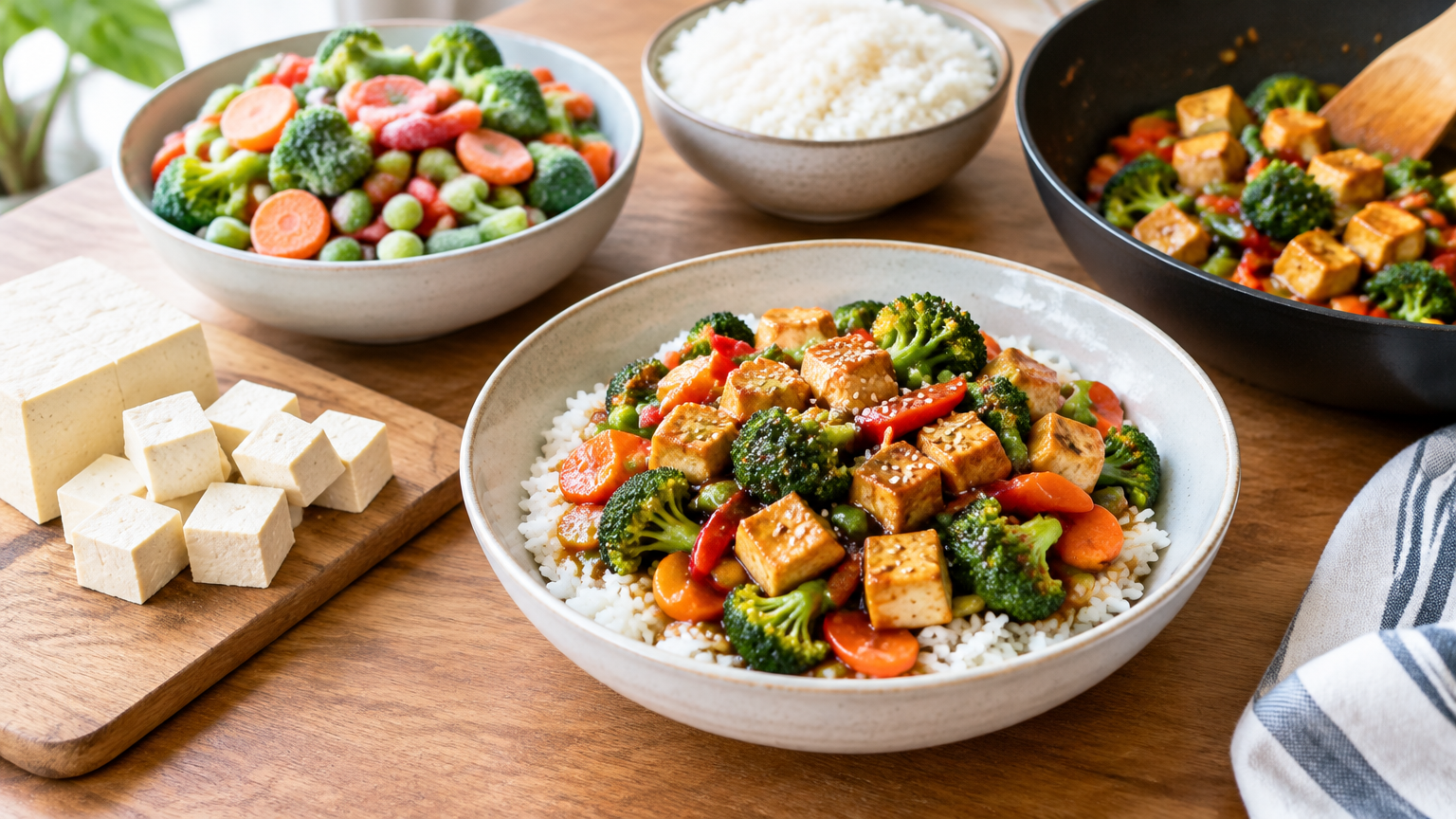
A stir-fry is a template, not a strict recipe. Once you know the pattern, you can cook whatever is on sale this week without hunting for a new recipe. The pattern is four parts: protein + vegetables + sauce + starch.
Key takeaways
- Every stir-fry follows the same four parts: protein, vegetables, sauce, and starch.
- Frozen vegetables go into the pan straight from the freezer. Don't thaw them.
- Dry tofu and a hot pan are the two biggest factors in browning.
- A basic sauce of soy sauce, acid, sweetener, cornstarch, and aromatics can be adjusted to taste.
- Nearly every ingredient can be swapped for something cheaper or more convenient.
Quick Answer: The Easy Plant-Based Stir-Fry Formula
For an easy plant based stir fry on a budget, cook pressed tofu until golden, add frozen vegetables straight from the freezer, stir in a simple soy-based sauce, and serve over rice. Use the same pattern each time and swap ingredients based on price.
The formula at a glance:
- Protein: extra-firm tofu
- Vegetables: frozen stir-fry mix or single-vegetable bags
- Sauce: soy sauce + acid + sweetener + thickener + aromatics
- Starch: rice (or noodles, or other grains)
If you're building a bigger rotation of meatless meals, these plant-based dinner ideas can give you more templates to pair with this one.
What You Need (Budget Pantry and Equipment)
You likely own most of this already, and everything here has many other uses.
Pantry staples
- Soy sauce: the salty, savory base of the sauce.
- Vinegar: rice vinegar or any mild vinegar. This adds brightness.
- Sugar or another sweetener: it balances the salt and acid.
- Cornstarch: it thickens the sauce so it clings to the food.
- Neutral oil: any high-heat-friendly cooking oil works.
- Garlic: fresh, or jarred if that's cheaper or more convenient.
- Ginger: fresh, jarred, or ground.
Equipment
- A large skillet or wok
- A spatula or wooden spoon
- A small bowl for mixing the sauce
If you don't own a large, sturdy pan yet, a large skillet or wok is the one piece of equipment worth considering. A pan with plenty of surface area makes it easier to avoid crowding.
Money-saving shopping tips
- Buy frozen vegetables in larger bags. You can use what you need and return the rest to the freezer.
- Choose store brands. For plain frozen vegetables, rice, soy sauce, and cornstarch, store brands are usually a sensible choice.
- Buy tofu in standard blocks. Plain extra-firm blocks are generally a simple, low-cost option compared with flavored or pre-cut versions.
- Cook rice in bulk. A large batch covers several meals.
- Check the freezer aisle for single-vegetable bags. Mixing your own blend can sometimes be more flexible than a premade mix.
Step-by-Step: How to Make a Beginner Stir-Fry
Step 1: Prep everything first
Stir-frying moves fast. Before you turn on the heat:
- Cook the rice (or reheat leftovers).
- Mix the sauce in a small bowl.
- Press and cube the tofu.
- Open the bag of vegetables and set it near the stove.
- Mince the garlic and ginger.
Step 2: Press and dry the tofu
Drain the tofu, wrap it in clean towels or paper towels, and blot gently. Pressing it under a weight for a while is optional but helps with browning. Either way, cut it into bite-size cubes and pat the cubes dry. Surface moisture creates steam, and steam prevents browning.
Step 3: Brown the tofu
Heat a tablespoon or two of oil in your pan over medium-high heat. Add the tofu in a single layer and leave it alone. When the pieces release easily from the pan, flip them. Keep cooking until most sides are golden, then remove the tofu to a plate.
Step 4: Cook the frozen vegetables
Add the vegetables straight from frozen. Don't thaw them. Cook over high heat, stirring regularly, until they're heated through and the extra water has evaporated. If your pan is small, cook in batches. Overcrowding traps steam and leaves the vegetables soft and watery.
Step 5: Add aromatics and sauce
Push the vegetables aside, or lower the heat slightly, and add the garlic and ginger. Stir them for about 30 seconds, until fragrant. Return the tofu to the pan, stir the sauce once more (the cornstarch settles), and pour it in. Stir until it thickens and coats everything.
Step 6: Serve over rice
Taste before serving and adjust:
- Flat or dull? Add a splash more vinegar or lime juice.
- Too sharp? Add a pinch more sweetener.
- Not savory enough? Add a little more soy sauce.
Spoon the stir-fry over warm rice and serve.
Basic Pan Technique for Better Results
A few habits matter more than any specific ingredient:
- Heat the pan before adding oil. A hot pan helps food sear instead of stick.
- Use enough heat to sizzle. If the garlic or sauce begins to burn, lower the heat.
- Don't crowd the pan. Food piled deep steams instead of browning. Cook in batches if needed.
- Stir often once vegetables are in, but let the tofu sit. Tofu needs undisturbed contact with the pan to form a crust.
- Add the sauce at the end. Early sauce makes everything soggy and can scorch.
Common mistakes to avoid:
| Mistake | What happens | Fix |
|---|---|---|
| Wet tofu | Steams, sticks, falls apart | Blot and pat dry |
| Cold pan | Food sticks, no browning | Preheat before adding oil |
| Sauce added too early | Soggy food, burnt sugar | Add after vegetables are cooked |
| Overcrowded pan | Watery, pale vegetables | Cook in batches |
A Pantry-Based Stir-Fry Sauce Ratio
You don't need bottled stir-fry sauce. A handful of pantry items does the job.
Starter ratio (for about 4 cups of food, 2–3 servings)
- 3 tbsp soy sauce
- 1 tbsp vinegar or lime juice
- 1 tbsp sugar (or maple syrup or agave)
- 1 tsp cornstarch mixed with ¼ cup cold water
- 1–2 cloves garlic, minced, and about 1 tsp ginger
Whisk everything together in a small bowl. Treat this as a flexible starting point and adjust to taste. If you're cooking for more people, scale up the ratio proportionally.
Easy variations
- Spicy: add chili flakes or chili sauce.
- Nutty: stir in a spoonful of peanut butter or a little sesame oil.
- Sweet-tangy: add a splash of orange or pineapple juice.
- Salt note: if you're using low-sodium soy sauce, you may need more to get the same savory depth. Add it gradually and taste.
Ingredient Substitutions: Cook What's on Sale
The formula works because each part is replaceable. Here's how to adapt.
Protein swaps
Tofu can be replaced with tempeh, canned or cooked chickpeas, edamame, or other beans. Cooking times and texture will differ. Canned beans and edamame mainly need heating through, while tempeh benefits from browning like tofu does. Drain and dry canned beans well before cooking.
Vegetable swaps
Use frozen stir-fry blends, or single bags of broccoli, peppers, or green beans. Fresh cabbage and carrots also work well and often keep for a long time in the fridge. Hard vegetables like carrots should go in a bit earlier or be cut small so they cook through.
Starch swaps
White or brown rice, quinoa, noodles, or other cooked grains all work. Use whatever you already have or can cook in bulk.
Sauce swaps
- Soy sauce → tamari (a gluten-free option, but check the label) or coconut aminos (usually milder, so adjust to taste)
- Sugar → any sweetener
- Vinegar → lemon or lime juice
- Cornstarch → arrowroot or potato starch
Quick swap table
| Component | Default | Easy alternatives |
|---|---|---|
| Protein | Extra-firm tofu | Tempeh, chickpeas, edamame, other beans |
| Vegetables | Frozen stir-fry mix | Broccoli, peppers, green beans, cabbage, carrots |
| Starch | Rice | Quinoa, noodles, other cooked grains |
| Salty base | Soy sauce | Tamari, coconut aminos |
| Acid | Vinegar | Lemon or lime juice |
| Sweetener | Sugar | Maple syrup, agave, other sweeteners |
| Thickener | Cornstarch | Arrowroot, potato starch |
Shopping and cooking checklist
- [ ] Rice cooked or reheated
- [ ] Sauce mixed in a bowl
- [ ] Tofu drained, dried, and cubed
- [ ] Vegetables opened and within reach
- [ ] Garlic and ginger ready
- [ ] Pan large enough to avoid crowding
Make It Last: Meal Prep and Leftovers
Stir-fry is a good candidate for batch cooking:
- Cook a big batch of rice and mix a double batch of sauce. You'll have the base for another meal ready to go.
- Store components separately. Keeping rice, tofu, vegetables, and sauce apart helps preserve texture.
- Reheat in a skillet. Add a splash of water if the food seems dry.
- Follow standard food-safety guidance for cooling and storing leftovers. Refrigerate promptly and check official guidance for recommended storage times. [VERIFY exact timeframes before publishing if you plan to state them.]
FAQs
Do I need to thaw frozen vegetables before stir-frying?
Usually no. Cook them from frozen over high heat so excess moisture evaporates. Thawing first can make them watery.
How do I keep tofu from falling apart or sticking?
Use extra-firm tofu, pat it dry, preheat the pan, and use enough oil. Let it brown before flipping, since pieces release more easily once a crust forms.
Can I make this stir-fry without a wok?
Yes. A large skillet works. Use high heat, avoid overcrowding, and cook in batches if needed.
Conclusion
The whole method fits in one line: protein + vegetables + sauce + starch. Brown dry tofu, cook frozen vegetables over high heat, finish with a quick pantry sauce, and serve over rice. Once the pattern feels familiar, you can swap in whatever is on sale this week, whether that's a different bean, another bag of frozen vegetables, or a grain you already have at home.
Try the template once as written, then change one ingredient the next time. For more ideas, look into rice meal prep, tofu cooking basics, and building a budget pantry list. Those are natural next steps for stretching this formula across a full week of dinners.