
This article contains affiliate links. We may earn a commission if you buy through them, at no extra cost to you.
Safe vs. Risky Things for Dogs to Chew: A Cautious Guide to Bones, Antlers, Rawhide, and More
Meta description: A neutral overview of common dog chew types, the pros and cons owners weigh, and a supervision and size-matching checklist. Confirm choices with your veterinarian.
Quick Answer: What Are Safe Things for Dogs to Chew?
No chew is risk-free. The safest choices are generally those that suit your dog's size, age, chewing style, and health, and that you offer under supervision. Your veterinarian can help confirm what fits your dog.
"Safe" depends on the individual dog. This guide covers general considerations, not product recommendations or health promises.
Key takeaways
- Every chew type has trade-offs, so weigh them for your own dog.
- Size, chewing style, and dental and medical history matter more than the label on the package.
- Supervise, inspect chews regularly, and discard worn or small pieces.
- Confirm your choices with your veterinarian before starting something new.
Why Chew Choice Matters
Chewing is a natural behavior for dogs. Owners often offer chews to occupy their dog's time, give an outlet for that instinct, or redirect attention from furniture and shoes.
Owners commonly weigh these concerns:
- Choking
- Intestinal blockages
- Broken teeth
- Mouth injuries
- Digestive upset
- Extra calories
Individual factors change the picture. A chew that suits a gentle senior terrier may not suit a powerful young retriever. Size, age, chew intensity, dental history, and medical conditions all affect which risks matter most.
Common Chew Categories: General Pros and Cons
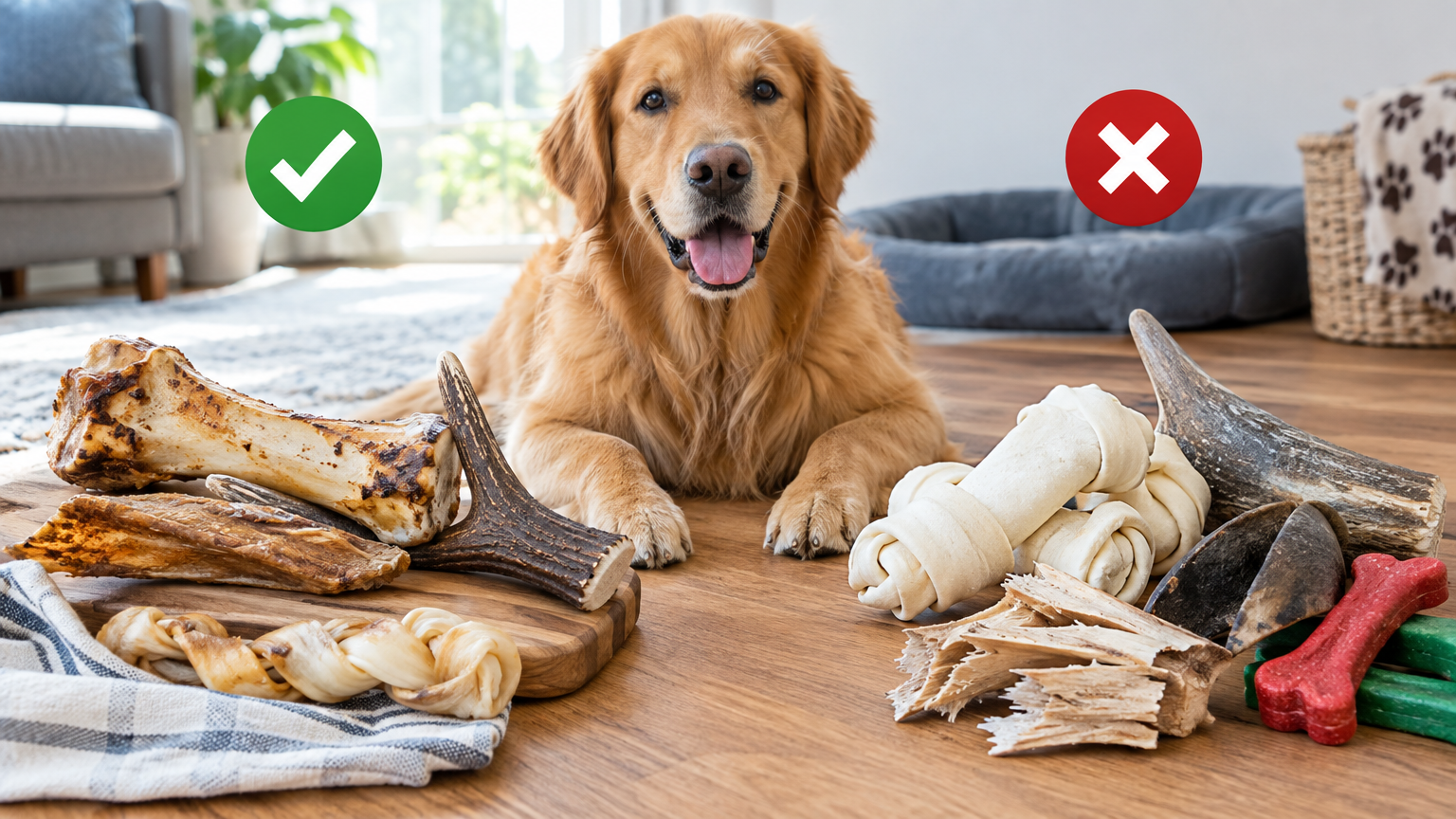
Bones (raw, cooked, and other types)
What it is: Animal bones offered whole, in pieces, or processed in some way.
What owners often like: Dogs tend to be very interested in them, and owners see them as a natural option.
Common concerns: Bones can splinter or break into pieces, and hard ones may damage teeth. Pieces can be swallowed, and raw products raise handling and hygiene questions. Cooked bones are widely flagged as a concern.
Questions for your vet: Is any bone appropriate for my dog's teeth and digestion? How should I handle and store it?
Antlers and Hooves
What it is: Natural hard items, sold whole or split.
What owners often like: They're long-lasting and don't resemble household items.
Common concerns: Their hardness is the main issue. Owners and veterinarians often raise tooth fractures, and pieces can chip off.
Questions for your vet: Given my dog's teeth and chewing intensity, is something this hard a good idea?
Rawhide
What it is: Chews made from processed animal hide.
What owners often like: They're familiar, widely available, and come in many shapes.
Common concerns: Softened pieces can be torn off and swallowed, which raises choking and blockage concerns. Some dogs experience digestive upset. Sourcing and processing details vary, so read labels carefully.
Questions for your vet: Is rawhide reasonable for my dog's size and habits? How should I handle a chew that gets slimy or small?
Edible Chews (bully-style sticks, dental chews, and similar)
What it is: Digestible chews made from animal parts or other ingredients, often marketed for particular purposes.
What owners often like: They're consumable, so there's less to clean up, and they come in many sizes.
Common concerns: They can add calories, and some dogs have ingredient sensitivities. Dogs may gulp the last piece whole. Marketing claims differ from product to product, so check labels.
Questions for your vet: How do these fit into my dog's daily calories and diet? Are there ingredients to avoid?
Rubber and Nylon Chew Toys
What it is: Durable, non-edible toys designed for chewing.
What owners often like: They're reusable, easy to clean, and available in many sizes and firmness levels.
Common concerns: Aggressive chewers may break off pieces. Overly hard toys raise dental concerns, and a toy that's too small can be swallowed or lodged.
Questions for your vet: What firmness suits my dog's teeth? When should I retire a worn toy?
Rope, Fabric, and Plush Items
What it is: Woven, stuffed, or fabric toys.
What owners often like: They're soft and good for tug or carrying, and many dogs enjoy them.
Common concerns: Dogs can swallow strings, fibers, or stuffing, and these can cause problems in the digestive tract. They're often a better fit for supervised play than for unattended chewing.
Questions for your vet: Is supervised tug or plush play okay for my dog? What should I do if they swallow fibers?
Household Items and Sticks (commonly flagged as risky)
What it is: Sticks, shoes, towels, plastic bottles, and other everyday objects.
What owners often like: They're free and always around, which is exactly why dogs find them.
Common concerns: Sticks can splinter and injure the mouth. Household items can break apart or contain materials not meant to be swallowed. These are commonly flagged as risky.
Questions for your vet: What should I do if my dog has already chewed or swallowed something like this?
Supervision and Size-Matching Checklist
Size and Fit
- The chew should be sized so your dog can't swallow it whole or lodge it in the throat.
- Check the manufacturer's size guidance, then confirm with your vet if unsure.
Match to Chewing Style
- A gentle chewer may do fine with options that would be risky for a determined, aggressive chewer.
- Aggressive chewers may break off pieces faster, so they often need closer watching and more frequent inspection.
- If you're not sure which type your dog is, watch a short supervised session and describe it to your vet.
Condition and Hardness
- Check for cracks, splintering, or small pieces coming loose.
- Be cautious with very hard items, especially if your dog has dental issues. Ask your vet.
Supervision Steps
- Stay present while your dog chews.
- Learn how to take a chew away calmly, such as by trading for a treat.
- Discard worn or small leftover pieces.
- Keep chews away from other pets and young children.
Special Situations
- Puppies: Their teeth and habits are still developing, so ask your vet what suits their age.
- Seniors: Dental wear or sensitivity may change what's comfortable.
- Dental or digestive conditions: Individual guidance from your vet is especially important.
- Weight management plans: Edible chews add calories, so ask how to count them.
Warning Signs to Call Your Vet About
- Choking or gagging
- Vomiting or diarrhea
- Lethargy
- Belly pain
- A swallowed large piece
- A mouth or tooth injury
If something seems urgent, contact your veterinarian or an emergency clinic right away.
Quick Reference Table
| Check | What to look for |
|---|---|
| Size | Too large to swallow whole; won't easily lodge in the throat |
| Style match | Suits gentle vs. aggressive chewing |
| Condition | No cracks, splinters, or loose pieces |
| Hardness | Discussed with your vet if teeth are a concern |
| Supervision | You're present and can remove it calmly |
| Retirement | Worn or small pieces discarded |
How to Choose and Introduce a New Chew (Practical Steps)
1. Talk with your veterinarian about your dog's health, teeth, and weight. 2. Pick a category that fits your dog's size and chewing style. 3. Read labels and ingredients, and check the sourcing information provided. 4. Introduce one new chew at a time, so you can tell what your dog tolerates. 5. Supervise the first sessions and watch how your dog chews: gnawing, tearing, or gulping. 6. Set time limits and remove chews once they're small enough to swallow. 7. Store chews properly and rotate options to keep interest up. 8. Reassess if anything changes, such as age, health, or behavior.
Practical example: Suppose you're trying a new edible chew. Offer it when you're home and can watch, with water available. Note whether your dog nibbles or gulps, take it away at the time limit you set, and check with your vet if anything seems off afterward.
Chewing isn't the only way to occupy a dog. Some owners also explore training and mental-enrichment resources, such as Brain Training for Dogs, alongside chews. Review any program's details yourself before deciding whether it suits you and your dog.
FAQ
1. Are there any chews that are completely safe for dogs?
No option is risk-free. Risk depends on both the dog and the chew. Supervision and size-matching lower the risk but don't remove it. Ask your vet which options make sense for your dog.
2. How do I know what size chew is right for my dog?
Choose one too large to swallow whole and not easy to lodge in the throat. Follow the manufacturer's size guidance, and have your vet confirm if you're unsure.
3. How often should I check in with my vet about chews?
Check in before starting a new type, and again whenever your dog's age, health, dental status, or chewing habits change.
Bottom Line and Veterinarian Reminder
Safe things for dogs to chew are the ones that fit your particular dog. Weigh the pros and cons of each category, match the chew to your dog's size and chewing style, supervise every session, and discard worn or small pieces.
Before you introduce anything new, confirm your choices with your veterinarian. They know your dog's teeth, weight, and health history.
Disclaimer: This article is general information only and is not veterinary advice. It makes no product recommendations or health claims. Consult your veterinarian about your dog's needs.