
This article contains affiliate links. We may earn a commission if you buy through them, at no extra cost to you.
Choosing Training Treats for Chew Redirection: Size, Texture, and Ingredient Considerations
Disclosure: This article contains affiliate links. This guide does not rank brands, and no products were tested for it.
The best training treats for dogs used in chew redirection are small, soft or easily swallowed, highly appealing to your dog, and low enough in calories to use many times a day. Check the label for ingredients your dog can't have, and ask your vet how treats fit into your dog's overall diet.
Key Takeaways
- Pick treats your dog eats in one or two seconds so sessions keep moving.
- Cut treats into tiny pieces to control calories and speed up repetition.
- Read both the calorie information and the ingredient list before buying.
- Keep more than one value level on hand: everyday treats and a higher-value option for tough trades.
- Ask your vet about treat allowances, especially with allergies, weight concerns, or medical diets.
Why Treat Choice Matters for Chew Redirection
What redirection and trading look like
Redirection means swapping something off-limits for something allowed. Your dog grabs a sock, you offer a treat or an approved chew, and your dog gives up the sock. The treat is the payment, so it needs to be worth the deal.
Why "drop it" practice needs a treat your dog values more than the item
If the treat is less interesting than the object, your dog has little reason to let go. A dry, bland biscuit may work for trading a paper towel but fail against a stolen chicken bone. Practice with items of different value, and match your treat to the challenge.
Why short sessions favor quick-to-eat treats
Short sessions of a few minutes depend on rhythm: ask, reward, repeat. If your dog spends 15 seconds crunching each reward, the rhythm breaks and focus drifts. Treats that disappear quickly keep your dog engaged.
Soft vs. Crunchy Treats
Soft treats
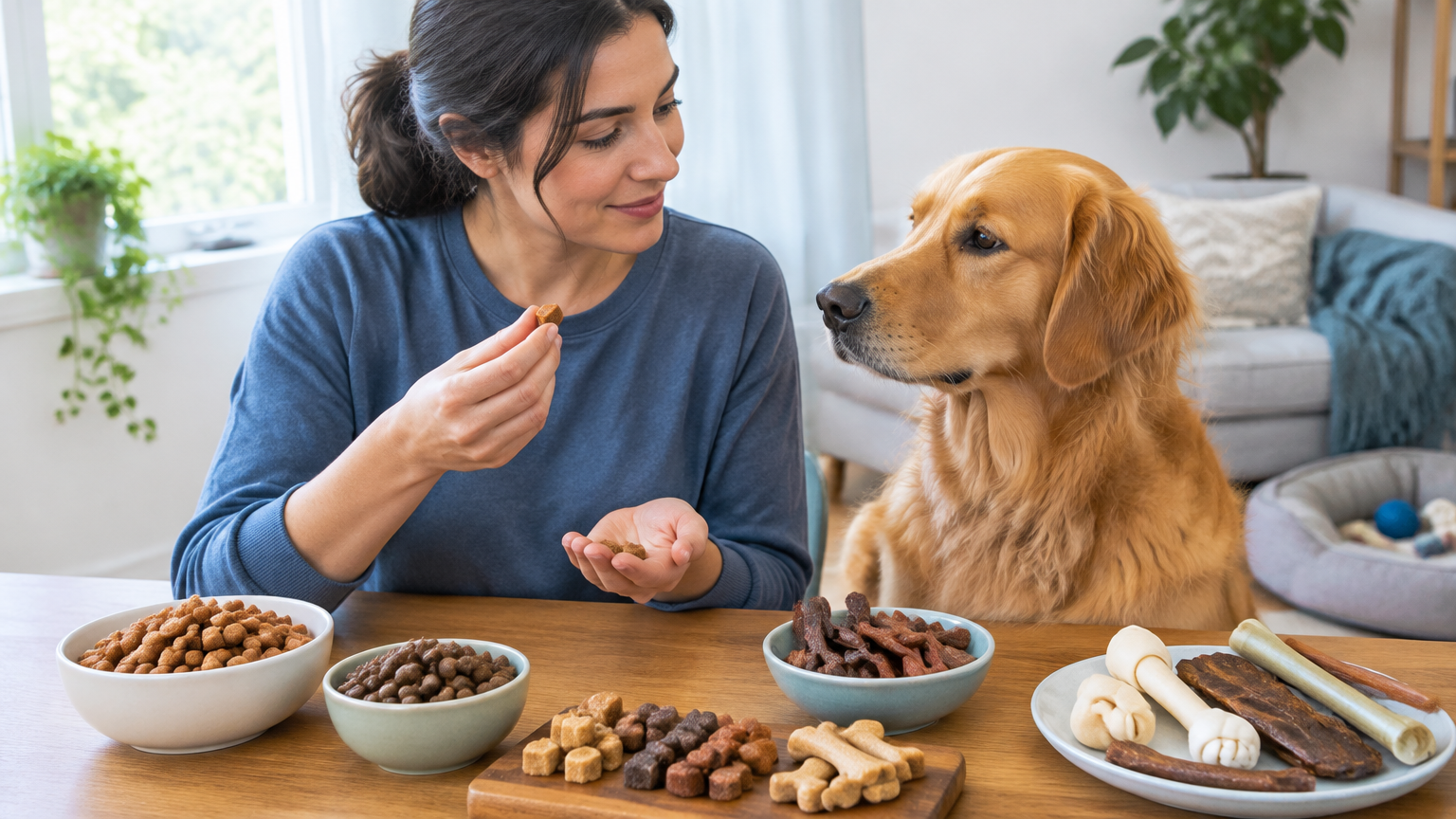
Soft treats are quick to swallow and easy to break apart, so there is less pausing between repetitions. They tend to suit trading and "drop it" drills, where timing matters.
Crunchy treats
Crunchy treats may last longer in a pouch and can feel less messy. But they can be slow to eat, leave crumbs your dog stops to search for, and make noise that may distract some dogs. Some are also hard to break into small pieces.
Which to choose by situation
| Situation | Often a good fit | Why |
|---|---|---|
| Trading a household item | Soft, small, appealing | Fast swap, minimal pause |
| "Drop it" drills | Soft, easily divided | Many quick repetitions |
| Distracting environments | Soft, higher-value | Competes with smells and sights |
| Easy, calm practice at home | Small crunchy pieces or kibble | Lower value is often enough |
Every dog differs. Your dog's own response is the best guide.
Size Considerations
Why tiny pieces work
Tiny pieces allow faster repetition, fill your dog less, and add fewer calories per reward. A dog who gets 20 small rewards stays interested longer than one who gets two large ones and feels done.
How to cut or break treats down
For many dogs, pea-sized or smaller works well. Soft treats can be pinched or cut with kitchen scissors. Do it before the session so you aren't fumbling mid-training. Treats that crumble unpredictably are harder to portion.
Matching size to your dog
A pea-sized piece may be generous for a toy breed, so go smaller, closer to a grain of rice or a lentil. A large breed may be fine with a slightly bigger piece, but keeping it small still helps with speed and calories. Adjust to your dog.
Practical example: You're practicing "drop it" with a small rope toy. You hold six pea-sized soft pieces in a pouch. Your dog releases the toy, you reward, then often hand the toy back. That keeps the game fair and the sessions short.
Calorie Awareness
Why treat calories add up
Ten rewards in one session, three sessions a day, equals thirty treats. Even small calories compound, particularly for small dogs.
Reading the calorie information
Check whether the package lists calories per treat or per serving, and check what a "serving" is. If calories are listed per serving, you may need to estimate per piece after cutting. If the package doesn't state calories clearly, that is worth noting when comparing products [VERIFY: calorie statement requirements vary by product type and region].
Planning treats as part of the daily total
Treats count toward your dog's daily intake. On heavy training days, you may need to reduce meal portions slightly. Ask your vet before changing amounts.
Asking your vet what allowance suits your dog
A sensible treat allowance depends on size, age, activity, and health. Your vet can give a personalized number rather than a general rule.
Ingredient, Allergy, and Sensitivity Label Checks
Reading the ingredient list
Ingredients are generally listed in order of weight, so the first few tell you the most. Note the protein sources and any additives, colors, or flavorings you don't recognize. A shorter, understandable list makes it easier to spot problems.
Avoiding known triggers
If your dog has reacted to certain proteins or grains, scan every label for them, including less obvious forms such as "meal," "by-product," or "flavor." Also check for allergen statements. Don't assume a flavor name tells you everything.
Limited-ingredient options
For dogs with sensitivities, limited-ingredient treats can make label checking simpler. Confirm with your vet before switching, especially if your dog is on a prescribed or elimination diet.
Checking for unsafe ingredients
Look for xylitol, a known toxin to dogs, particularly in human foods or specialty products. If you see it, don't use the product for your dog. Other foods are also unsafe for dogs, so if you use human food as treats, verify each one with your vet or a reliable veterinary source.
Introducing a new treat gradually
Start with a small amount and watch for digestive changes (loose stools, vomiting) or skin changes (itching, redness). Introduce one new item at a time so you can identify the cause of any problem.
Practical Steps to Choose and Use Treats
1. List your goals: trading, "drop it," short sessions. 2. Note your dog's profile: size, age, health needs, known sensitivities. 3. Pick a soft, small treat with a simple, understandable ingredient list. 4. Check calories and plan the daily treat amount. 5. Test a small amount and watch your dog's reaction. 6. Keep a few treat types for different value levels, everyday versus higher-value for harder trades. 7. Store treats properly and keep them handy in a pouch. 8. Review with your vet if your dog has health issues, weight concerns, or a special diet.
If you're ready to compare options, you can browse soft, small-piece training treats and apply the checklist below to each label.
If you also want a structured training program to pair with your treat plan, Brain Training for Dogs is one resource to look at. Review the details on the page yourself to decide whether it suits you.
What to Look for When Comparing Products
Checklist
| Factor | What to check |
|---|---|
| Size/breakability | Can you easily make pea-sized or smaller pieces? |
| Texture | Soft and quick to eat, or crunchy and slow? |
| Calories | Per treat or per serving? Is it clear? |
| Ingredient clarity | Understandable list, identifiable protein sources |
| Allergen info | Does it avoid your dog's known triggers? |
| Packaging | Resealable? Easy to portion? |
Evaluating claims without relying on marketing language
Phrases like "premium," "natural," or "irresistible" aren't a substitute for the ingredient list and calorie information. Focus on what the label specifically states, and be cautious about health claims you can't verify. If a claim matters to your dog's health, ask your vet.
Why this guide offers no brand rankings or testing claims
This guide doesn't rank brands or claim to have tested any product. Your dog's size, tastes, and sensitivities make a universal "best" unreliable, so the checklist is meant to help you judge products yourself.
When to Talk to Your Vet
Check in with your vet if your dog has:
- Diet restrictions or a prescribed food
- Weight management needs
- Suspected allergies
- Digestive issues
- Medications that interact with diet or affect appetite
FAQ
What are the best training treats for dogs during "drop it" practice?
Small, soft, appealing treats that your dog eats quickly. Vary the value as needed: use everyday treats for easy items and higher-value ones for harder trades.
How many training treats can my dog have per day?
It depends on your dog's size, activity level, and overall diet. Ask your vet for a personalized treat allowance, and count training treats toward the daily total.
Can I use regular food or kibble instead of treats?
Often, yes, for easy tasks. Save higher-value treats for harder trades, and count all calories either way.
Conclusion
Choosing the best training treats for dogs in chew redirection comes down to a few practical filters: small pieces, a texture your dog eats quickly, calories you've accounted for, and a label you've read closely. Use the checklist to compare products, introduce new treats gradually, and keep a mix of everyday and higher-value options. Before you change your dog's diet or treat plan, consult your vet.