This article contains affiliate links. We may earn a commission if you buy through them, at no extra cost to you.
Plant-Based Pantry Staples for Beginners: What to Buy First on a Budget
Title tag: Plant-Based Pantry Staples on a Budget: What to Buy First Meta description: New to plant-based cooking? Use this tiered pantry list to see what to buy first, what to add later, and how each staple works across several dinners.
Stocking a plant-based kitchen can feel overwhelming, and a tiered approach spreads out the spending. This guide gives you a short first-trip list, an "add later" list, and examples of how each item stretches across several dinners. Prices vary by store and region, so it does not quote specific costs.
Quick Answer: What to Buy First
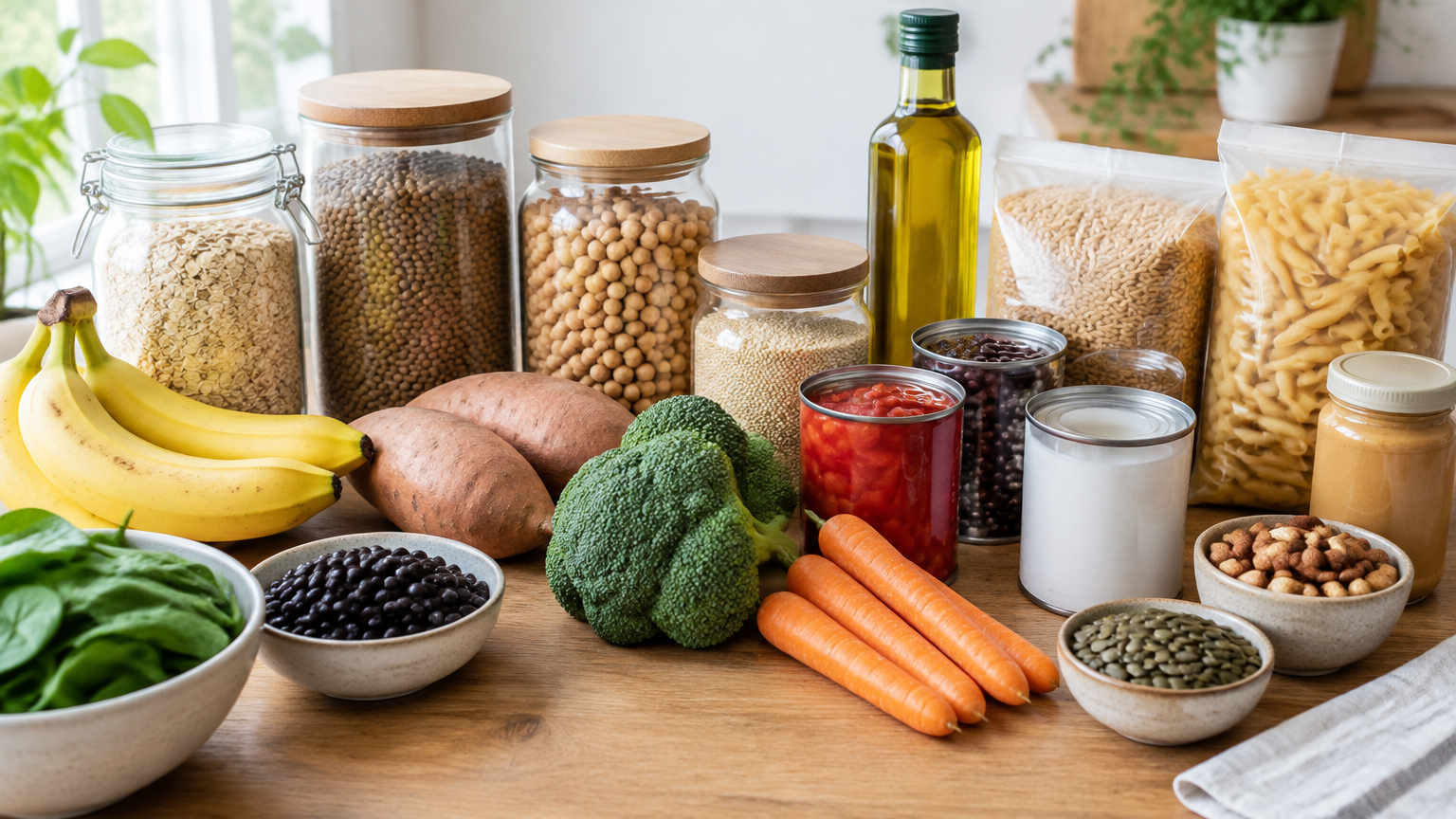
Start with a few versatile, shelf-stable items: one or two whole grains (such as rice and oats), dried or canned beans and lentils, canned tomatoes, a small set of core spices, one or two flavor-building sauces, and a bag of frozen vegetables. Add specialty items only after you know which meals you actually cook.
Tier 1 essentials at a glance:
- Grain: rice
- Beans and lentils: black beans or chickpeas, plus brown or green lentils
- Canned goods: diced or crushed tomatoes
- Spices: salt, black pepper, cumin
- Sauce: soy sauce or tamari
- Frozen: mixed vegetables
Key Takeaways
- Buy Tier 1 first and hold everything else until you've cooked a few meals.
- Pick staples that can be seasoned several different ways.
- Compare unit prices at your own store instead of assuming bulk or packaged is cheaper.
- Add one or two new items per shopping trip.
How to Use This Tiered List
- Tier 1 (buy first): the foundation for most meals.
- Tier 2 (add next): variety and flavor.
- Tier 3 (add later): nice-to-haves once your routine is set.
Tip: Choose items based on meals you already enjoy. If you love pasta nights, prioritize pasta, tomato sauce, and white beans. If you prefer rice bowls, start there. A pantry built around food you will actually eat is the best defense against waste.
If you want help turning a pantry into a weekly plan, a beginner-friendly plant-based meal planning resource can give you structure to work from.
The Tiered Starter List
Grains
- Tier 1: rice (brown or white), rolled oats, pasta
- Tier 2: quinoa, couscous, tortillas or whole-grain bread
- Tier 3: farro, barley, millet, and other less-common grains
Grains are the base for bowls, the side for stews, the start of breakfast, and the core of quick noodle dishes. Because they do so many jobs, they are a sensible place to begin. Keep Tier 1 to two or three options at first. Rice and oats alone cover a lot of ground.
Beans and Lentils
- Tier 1: one or two types of dried or canned beans (black, pinto, or chickpeas) and brown or green lentils
- Tier 2: red lentils, white beans, kidney beans
- Tier 3: specialty beans, split peas, and dried varieties you want to try
Dried vs. canned: Dried beans take planning, since they need soaking and longer cooking, but they give you control over texture, seasoning, and quantity. Canned beans are ready quickly and suit busy weeknights. Many beginners keep a mix of both. Which costs less depends on your store and brand, so check unit prices rather than guessing.
Canned Goods
- Tier 1: diced or crushed tomatoes, canned beans (if you're not buying dried)
- Tier 2: tomato paste, coconut milk, canned pumpkin or corn
- Tier 3: jackfruit, artichokes, roasted peppers
Canned tomatoes are the workhorse here. They become pasta sauce, stew broth, curry base, or chili. Tip: Check labels for added sodium or sugar if that matters to you. Many products come in versions with lower or no added salt.
Spices and Seasonings
- Tier 1: salt, black pepper, garlic powder, chili powder, cumin
- Tier 2: smoked paprika, oregano, curry powder, onion powder
- Tier 3: garam masala, nutritional yeast, specialty blends
Grains and beans need seasoning to taste good, and spices are how you change a dish's direction without buying new ingredients. Tip: Start with small amounts or bulk spice jars to test before committing to a full-size container you may not finish.
Sauces and Flavor Boosters
- Tier 1: soy sauce (or tamari), a vinegar, and a jarred tomato or pasta sauce
- Tier 2: tahini, peanut butter, hot sauce, mustard
- Tier 3: miso, curry paste, harissa
A few sauces can turn the same base ingredients into different meals. Rice and beans with soy sauce and vinegar tastes nothing like rice and beans with chili powder and cumin. Check labels on soy sauce and tamari if you need to avoid certain ingredients.
Frozen Items
- Tier 1: mixed vegetables, spinach or greens
- Tier 2: frozen fruit, corn, peas, stir-fry blends
- Tier 3: pre-cooked grains, veggie burgers, other convenience items
Tip: Frozen produce can reduce waste because you use only what you need and return the rest to the freezer. It also keeps vegetables available between shopping trips.
How Each Staple Works Across Several Dinners
One ingredient can serve many meals. Here is a sample week built only from Tier 1 items:
- Burrito bowls: rice + black beans + cumin + frozen vegetables
- Lentil stew: lentils + canned tomatoes + spices + rice
- Pasta with greens: pasta + tomato sauce + frozen spinach + white beans (a Tier 2 swap-in; chickpeas work if you're staying strictly in Tier 1)
- Quick chickpea curry: chickpeas + curry powder + canned tomatoes + rice
- Breakfast for dinner: oats, either sweet or savory
| Staple | Dinner use 1 | Dinner use 2 | Dinner use 3 |
|---|---|---|---|
| Rice | Burrito bowl base | Under lentil stew | Under chickpea curry |
| Black beans | Burrito bowls | Tacos in tortillas | Soup with cumin and tomatoes |
| Lentils | Stew | Lentil-and-rice skillet | Pasta sauce add-in |
| Chickpeas | Curry | Roasted with spices | Stirred into pasta |
| Canned tomatoes | Stew base | Curry sauce | Quick pasta sauce |
| Frozen vegetables | Bowl topping | Stir-fry with soy sauce | Stirred into soup |
| Oats | Sweet porridge | Savory bowl with soy sauce and vegetables | Breakfast-for-dinner night |
Tip: Repeat ingredients with different seasonings to avoid buying extra. Cumin and chili powder push a dish toward burrito bowls, while curry powder moves the same rice and beans in another direction.
Bulk Bins vs. Packaged Goods
When Bulk Bins May Help
- You buy only the amount you need, which is useful for trying a new grain or spice.
- They can reduce packaging and may suit items you use quickly, like oats or rice.
When Packaged Goods May Be Better
- Labeling is clear, and storage is consistent.
- They may suit slow-use items, since sealed packaging can keep them fresher longer.
- They're convenient for items you use rarely or when the bulk section is crowded or poorly stocked.
Practical Tips
- Compare unit prices at your own store rather than assuming one option is cheaper.
- Bring or request clean containers if the store permits it.
- Store in airtight containers and label them with purchase dates. A set of airtight pantry storage containers makes this easier.
- Check turnover: choose bins that look fresh, clean, and well-maintained, and skip any that look neglected.
Step-by-Step: Build Your Pantry on a Budget
1. Review 3–5 meals you would realistically cook this week. 2. Pick one item from each Tier 1 category. 3. Check what you already have at home. 4. Compare bulk and packaged options using unit prices. 5. Buy Tier 1 first. Hold Tier 2 until you've cooked a few meals. 6. Track what you use up and what sits unused. 7. Add Tier 2 and 3 items gradually, one or two per shopping trip.
Quick checklist for your first trip:
- [ ] Rice and/or oats
- [ ] Pasta
- [ ] One or two kinds of beans, plus lentils
- [ ] Canned tomatoes
- [ ] Salt, pepper, cumin, chili powder, garlic powder
- [ ] Soy sauce or tamari, vinegar, jarred tomato sauce
- [ ] Frozen mixed vegetables and spinach
Common Mistakes to Avoid
- Buying many specialty items before learning your preferences. Miso and harissa are great, but only once you know you'll use them.
- Skipping a flavor plan. Grains and beans need seasoning, so plan sauces and spices alongside them.
- Overbuying perishables or bulk items that may go stale before you finish them.
- Ignoring storage. Unlabeled, poorly sealed items are easy to forget and waste.
FAQ
What are the most important plant-based pantry staples to buy first?
Grains like rice and oats, beans or lentils, canned tomatoes, basic spices, a couple of sauces, and frozen vegetables. These combine into many different dinners.
Is it cheaper to buy dried beans or canned beans?
It depends on your store and brand, so compare unit prices. Dried beans need soaking and cooking time, while canned beans are ready faster.
Should I buy from bulk bins or packaged goods when starting out?
Bulk bins can be useful for small trial amounts, while packaged goods may suit items you use steadily. Compare unit prices and consider how quickly you'll use the item.
Conclusion
Start small. Buy Tier 1, cook with repeat ingredients, and expand over time as you learn what you reach for. A modest, well-chosen pantry usually gets more use than a crowded one.
Your next step: make a short shopping list from Tier 1 and plan three dinners around it. If you'd like extra guidance on what to cook, a plant-based dinner planning guide can help you turn those staples into a routine.