
This article contains affiliate links. We may earn a commission if you buy through them, at no extra cost to you.
The Adolescent Chewing Phase: What to Expect From Teenage Dogs and How to Manage It
Meta description: The adolescent dog chewing phase can start after teething ends. Learn why teenage dogs chew again and how to manage it with consistent rules, supervised freedom, and training.
Disclosure: This article contains affiliate links. If you use them, the site may earn a commission.
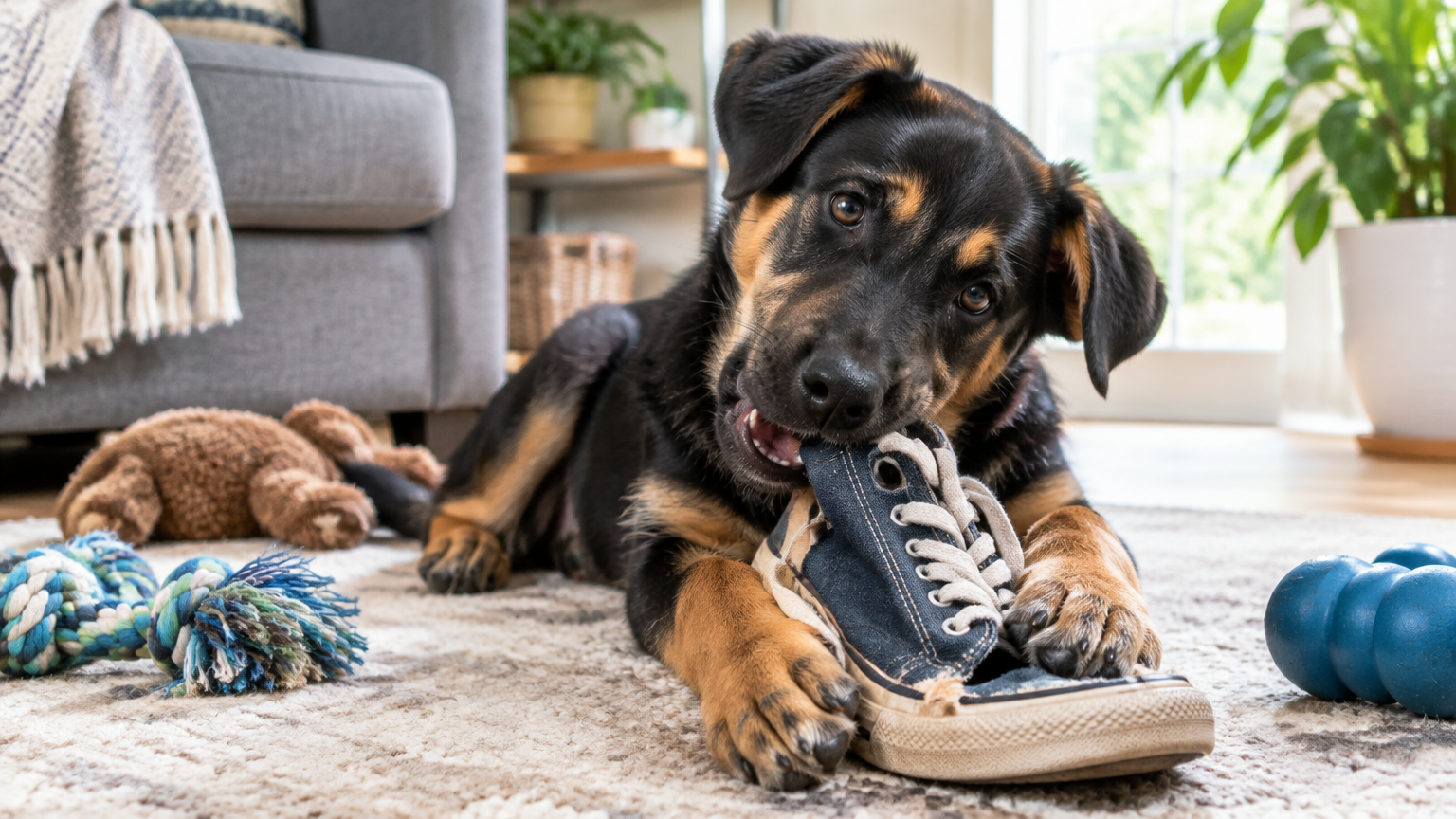
The puppy teeth are gone, yet your dog is chewing again, sometimes more destructively than before. Table legs, shoes, and remote controls are suddenly fair game. This is common during adolescence, which runs roughly from 6 to 18 months, though timing varies by dog and breed. This article explains why the adolescent dog chewing phase happens, what to expect, and how to manage it with a practical plan.
Key takeaways
- Adolescent chewing is separate from teething and is driven more by behavior, energy, and environment.
- Timing and intensity vary by individual dog and breed.
- Consistent rules, supervised freedom, and ongoing training are the foundation of management.
- Sudden, extreme chewing or swallowing non-food items warrants a call to your veterinarian.
Quick Answer: What Is the Adolescent Dog Chewing Phase?
The adolescent dog chewing phase is a period, roughly 6 to 18 months, when a dog that is past teething chews new or more items. It is driven by maturing behavior, more energy, curiosity, and greater freedom. It is manageable with consistent rules, supervision, and ongoing training.
Timing and intensity vary by individual dog and breed. Some dogs barely show it, while others have clear peaks.
Adolescent Chewing vs. Teething: Key Differences
Teething chewing (puppy stage)
Teething is linked to losing baby teeth and the arrival of adult teeth. It typically ends within the first several months of life. Chewing during this time often helps soothe sore gums.
Adolescent chewing
Adolescent chewing is not primarily about mouth discomfort. It is more about behavior, energy, and the environment your dog lives in. A dog with a full set of adult teeth may chew because it is bored, curious, or has simply learned that chewing the couch is rewarding.
Quick comparison
| Teething | Adolescent chewing | |
|---|---|---|
| Main cause | Baby teeth falling out, adult teeth emerging | Maturing behavior, energy, curiosity, freedom |
| Typical timing | First several months | Roughly 6 to 18 months (varies) |
| What helps | Safe, appropriate chew items; patience | Consistent rules, supervision, outlets, training |
Why Teenage Dogs Chew More (or Start Again)
Exploration and mouth-based curiosity
Dogs investigate the world with their mouths. As adolescents grow more confident and mobile, they find more things to explore, and they can reach more of them.
Excess energy and boredom
A growing body with plenty of energy and too little to do is a recipe for chewing. If exercise and mental work do not match the dog's needs, the dog will often invent its own entertainment.
Increased independence and testing of boundaries
Teenage dogs often seem to "forget" what they learned as puppies. They are more independent and may test the rules, including what is and isn't okay to chew.
Too much freedom too soon
Owners often relax rules once the dog looks grown. A dog that was reliable in a gated kitchen may suddenly have the run of the house. Physical size may be adult-like while judgment is still developing. This is one of the most common reasons chewing flares up.
Stress, frustration, or changes in routine
A new schedule, a move, a houseguest, or long stretches alone can all push a dog to chew as a way of coping or releasing tension.
When chewing may signal something else
Check with a veterinarian if you notice:
- Sudden or extreme chewing that is out of character
- Swallowing non-food items
- Signs of mouth pain, such as drooling, dropping food, or pulling away when touched near the face
What to Expect: Timing Varies by Dog and Breed
The 6-to-18-month window is a rough guide, not a fixed schedule. Several factors shape what you will see:
- Breed and size: Breeds and sizes mature at different rates, and chewing habits can differ.
- Individual temperament: Some dogs are naturally more mouthy.
- Exercise and mental stimulation: Unmet needs often show up as chewing.
- Past training: Dogs with solid foundations often recover more quickly from adolescent regression.
Some dogs sail through with only a chewed sock or two. Others have noticeable peaks and quiet stretches. Avoid expecting an exact end date. Focus on progress and consistency instead.
How to Manage the Adolescent Chewing Phase
Step 1: Set consistent rules
- Make sure every household member follows the same expectations. Mixed messages slow learning.
- Create clear "yours vs. not yours" categories. Keep dog items in one place and reward your dog for chewing them.
- When your dog grabs something off-limits, calmly trade for an appropriate item rather than chasing or scolding.
Example: Your dog picks up a slipper. Instead of chasing, you offer a chew toy, say "good," and put the slipper away.
Step 2: Use supervised freedom
Give access to space gradually, and let your dog earn more freedom as reliability grows.
- Use baby gates, closed doors, or a tether while you are watching.
- Provide a crate or pen for safe downtime. See our crate training basics guide if your dog is new to this.
- Remove temptations such as shoes, remotes, and laundry.
Example: Start with one dog-proofed room. After a few weeks without incidents, add a second room while you are home.
Step 3: Provide appropriate outlets
- Rotate several safe chew items with different textures so they stay interesting.
- Offer food puzzles, sniff walks, and structured play.
- Match exercise and mental work to your dog's age, breed, and health. If you are unsure what suits your dog, ask your veterinarian.
Step 4: Reinforce training
- Practice "drop it," "leave it," and "trade" in calm moments, not only when your dog has something forbidden.
- Reward good choices, such as picking up a chew toy on their own.
- Keep sessions short and frequent, and expect some regression during adolescence.
If you want structured guidance for daily practice, a program such as Brain Training for Dogs is one option to explore. [VERIFY: confirm program details before adding any claims about content or results.]
Step 5: Manage the environment
- Dog-proof high-risk areas such as cords, trash cans, and shoe racks.
- Use taste deterrents only if they are safe for your dog, and treat them as a supplement, not a fix.
What to avoid
- Punishment after the fact. Dogs may not connect it to the chewing, and it can increase stress and confusion.
- Giving old shoes or household items as toys. Dogs cannot tell the difference between "old" and "new."
- Unsafe chews. Choose items suited to your dog's size and chewing style, and supervise.
When to Call a Professional
Veterinarian: Contact your vet for a sudden change in behavior, signs of pain, ingesting non-food items, or any suspected medical issue.
Trainer or behaviorist: Consider help if chewing is paired with anxiety, if the dog is destructive when left alone, or if there is no improvement despite consistent management.
Quick Checklist
- [ ] Everyone in the home uses the same rules
- [ ] Dog-proofed shoes, laundry, and small items out of reach
- [ ] Freedom increases gradually and only with supervision
- [ ] Several safe chews rotated regularly
- [ ] Daily exercise, sniffing, and mental work
- [ ] "Drop it," "leave it," and "trade" practiced often
- [ ] Good choices rewarded
- [ ] No punishment after the fact
- [ ] Vet or trainer contacted if chewing seems extreme
FAQs
How long does the adolescent dog chewing phase last?
It is often tied to the roughly 6-to-18-month stage, but it varies by dog and breed. Consistent management helps it pass with fewer problems.
Is adolescent chewing the same as teething?
No. Teething relates to losing baby teeth and getting adult teeth. Adolescent chewing is more tied to behavior, energy, curiosity, and environment.
Will my dog grow out of chewing on their own?
Many dogs chew less as they mature, but habits can stick if they are rehearsed. Redirect your dog, reward appropriate chewing, and limit unsupervised access.
Conclusion
The adolescent dog chewing phase is a normal stage for many dogs, and it is manageable. Three pillars carry most of the work: consistent rules, supervised freedom, and training reinforcement. Build a simple daily routine with exercise, chew time, short training sessions, and safe downtime. If chewing seems extreme or you are worried about your dog's health or stress level, consult a veterinarian or qualified trainer.
Related reading (to link internally): puppy teething guide; safe chew toys by chewing style; crate training basics; teaching "drop it" and "leave it."