
This article contains affiliate links. We may earn a commission if you buy through them, at no extra cost to you.
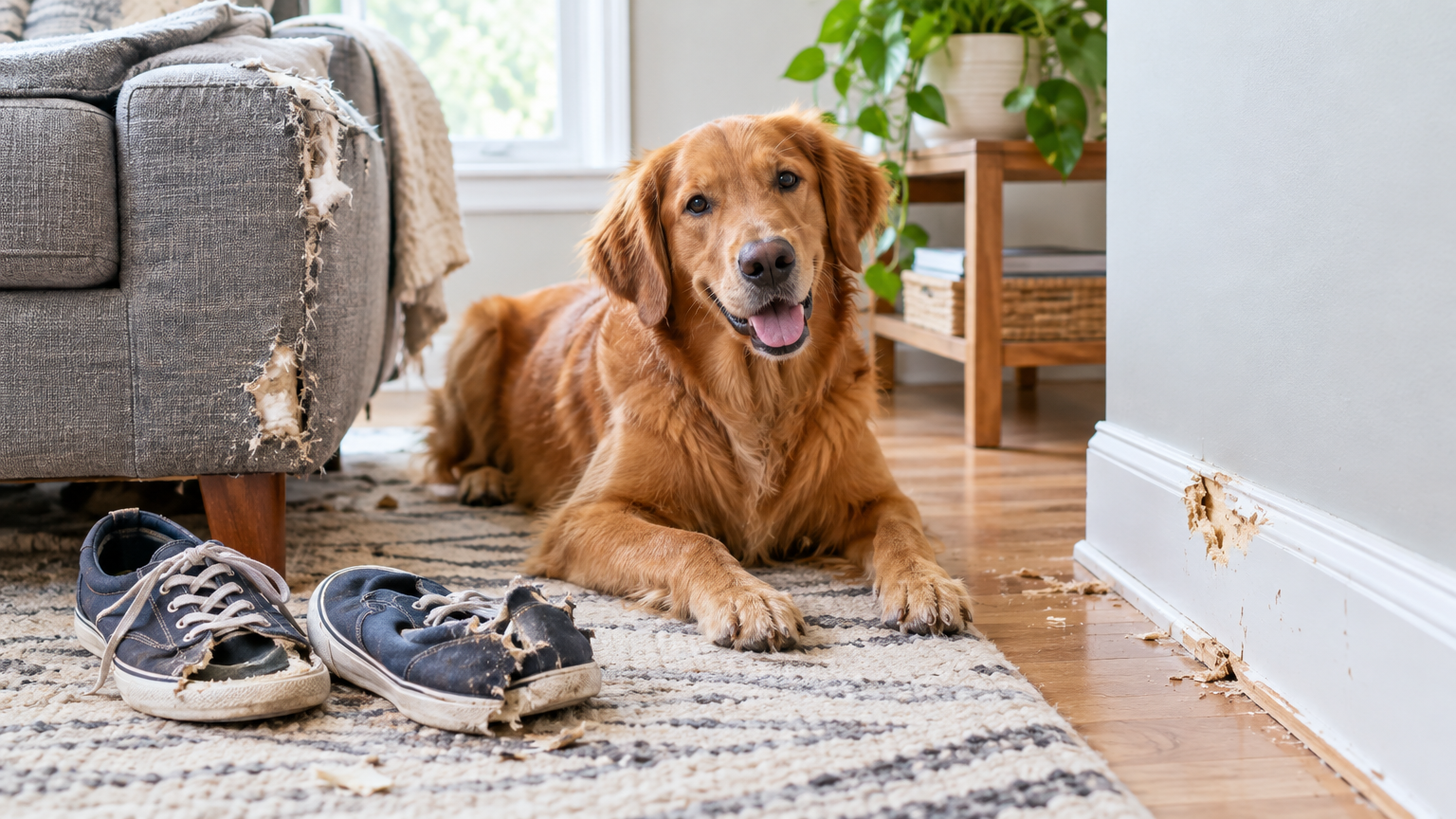
How to Stop a Dog From Chewing Furniture, Shoes, and Baseboards
Meta description: Learn how to stop dog chewing furniture, shoes, and baseboards with a step-by-step plan: manage the environment, redirect to approved chews, reward well, and stay consistent.
Chewing is normal dog behavior, so the goal is to guide it toward appropriate items rather than eliminate it. This article walks through a four-part plan: manage, redirect, reward, and stay consistent.
Quick Answer: How to Stop a Dog From Chewing Furniture
To stop a dog from chewing furniture, prevent access to off-limits items, offer appealing alternatives, and redirect your dog the moment the wrong chewing starts.
Key takeaways:
- Manage the environment so your dog can't practice the habit.
- Provide approved chews that are more interesting than your couch.
- Redirect, then reward the right choice within seconds.
- Meet exercise and mental stimulation needs every day.
- Keep everyone consistent, including guests.
- Persistent, intense, or sudden-onset chewing may warrant a vet or qualified trainer consult.
Why Dogs Chew (Brief)
Puppies and Teething/Exploring
Puppies explore with their mouths, and teething can make chewing feel good. Expect a lot of it.
Boredom or Under-Exercise
A dog with unmet physical or mental needs often invents entertainment. Table legs are convenient.
Stress or Anxiety-Related Chewing
Some dogs chew to cope with stress. If chewing happens mainly when you leave, separation-related issues may be involved, and that often needs professional help.
Chewing Is Self-Reinforcing
Chewing simply feels rewarding. Every successful session of gnawing a baseboard makes the next one more likely, which is why preventing rehearsal matters so much.
Step 1 – Set Up Management First
Management means arranging the environment so wrong choices aren't available. It's the fastest way to stop the habit from strengthening.
Puppy-Proof and Dog-Proof the Space
- Remove or elevate shoes, remote controls, kids' toys, and laundry.
- Tidy cords and use cord covers.
- Do a "dog's-eye" sweep at floor level.
Use Closed Doors, Baby Gates, and Exercise Pens
Limit unsupervised access to rooms with tempting items. A gated kitchen or a pen in the living room keeps your dog near you without free run of the house.
Use a Crate or Safe Room When You Can't Supervise
- Stock it with approved chews and build positive associations. A crate should never be a punishment.
- Keep durations appropriate to your dog's age and ability. Young puppies need frequent breaks.
Consider Taste Deterrents as a Supplement
Use pet-safe products, test them on a small hidden area first, and treat them as a backup, not a stand-alone fix.
Step 2 – Provide Approved Chew Items
Choose Appropriate Chews
- Offer a variety of textures: rubber, rope, and edible chews as suitable for your dog.
- Match size and durability to your dog. Supervise, and discard damaged items.
- Check with your vet if you're unsure about safety.
Rotate Toys to Keep Them Interesting
Keep a handful of items out and store the rest. Swap them every few days so old toys feel new.
Make Approved Items More Appealing
Stuff a hollow rubber toy with part of your dog's meal, or smear a little dog-safe filling inside. A chew that delivers food will often beat a chair leg.
Step 3 – Redirect and Reward at the Right Time
Interrupt Calmly and Redirect
If you catch your dog chewing something off-limits, use a calm interrupter ("oops" or a light noise), then offer an approved item. Keep your voice neutral so the moment doesn't become exciting.
Reward Timing
- Reward within seconds of the desired behavior, which is chewing the approved item.
- Mark the moment with a word like "yes" or a clicker, then deliver a treat or praise.
- A reward that arrives a minute later may be linked to something else, like walking away.
Why Scolding After the Fact Tends to Be Unhelpful
In general training terms, dogs link consequences to what's happening at that moment. If you find a chewed shoe an hour later and scold, your dog probably can't connect your reaction to the chewing. Instead:
- It can create confusion or fear around you, or around your return home.
- It doesn't teach what to do instead.
- Some dogs show "guilty" body language that is really a response to your tone and posture, not an understanding of the earlier act.
A better approach is to prevent, interrupt in the moment, and teach an alternative.
If you'd like structured help with the training side, you could explore a guided program such as Brain Training for Dogs. I haven't verified its contents, so review what it includes before deciding.
Step 4 – Meet Exercise and Enrichment Needs
- Provide daily walks, play, and sniffing time.
- Add puzzle feeders, short training sessions, and scheduled chew time.
- Tired, mentally satisfied dogs often chew less, though exact needs vary by age, breed, and individual.
Example: Instead of serving dinner in a bowl, scatter it on a snuffle mat or pack it into a food toy. It takes minutes to set up and gives your dog a legitimate job.
Step 5 – Stay Consistent
- Apply the same rules for all family members and guests. If one person lets the dog chew an old slipper, the rule falls apart.
- Keep management in place until chewing habits improve, then loosen access gradually, one room or one hour at a time.
- Track problem times and spots, such as evenings by the sofa, and adjust the plan.
- Expect setbacks, especially during adolescence.
What to Do by Commonly Chewed Item
| Item | Management | Redirect/Teach | Backup |
|---|---|---|---|
| Furniture | Gates, pens, closed doors | Chew at the same spot; designated dog bed | Taste deterrent |
| Shoes/clothing | Closets, high shelves | "Trade" for a treat; approved chew | Closed doors |
| Baseboards/trim | Block with furniture, gates, pens | Redirect and reward at the spot | Temporary covers or deterrents |
| Cords/remotes/toys | Cord covers, elevate items | Offer a chew | Supervision |
Furniture (Couches, Chairs, Table Legs)
- Block access with gates or pens, and supervise in furniture-free zones.
- When your dog starts chewing, redirect to a chew at the same spot. Consider a designated dog bed nearby.
- Use a taste deterrent as backup.
Shoes and Clothing
- Store them in closets or on high shelves, and close doors.
- Practice "trade": offer a treat, and when your dog drops the shoe, reward and return the dog's attention to a chew. Never chase.
- Offer a chew-appropriate alternative, but not old shoes. Dogs can't easily tell old shoes from new ones.
Baseboards and Trim
- Block access with furniture, gates, or pens.
- Redirect and reward at the chew location.
- Use temporary protective covers or deterrents.
- If chewing focuses on one area, consider boredom or stress triggers, such as a spot near the door where your dog waits for you.
Other Household Items
Cords, remotes, and kids' toys are common targets. Safety note: cords and small items can be hazardous if chewed or swallowed, so keep them out of reach.
When to Get Professional Help
Seek help if you see:
- Chewing with signs of distress when left alone
- Swallowing non-food items, or damage to the mouth or teeth
- Little progress despite consistent effort
Ask your veterinarian first to rule out medical causes, then a certified or qualified trainer or behavior professional for a tailored plan.
FAQs
Should I punish my dog if I find a chewed item later?
No. Dogs usually don't connect later scolding to the earlier act. Clean up, manage better, and reward appropriate chewing going forward.
How long does it take to stop a dog from chewing furniture?
It varies by age, history, and consistency. Puppies and adolescents may need ongoing management for months, so avoid expecting a fixed timeline.
Are bitter sprays enough to stop chewing?
Often not on their own, and some dogs ignore them. Use them alongside management, redirection, and enrichment.
Conclusion
Learning how to stop dog chewing furniture comes down to four habits: manage the environment, redirect to approved items, reward at the right moment, and stay consistent. Expect progress to be uneven, especially in puppyhood and adolescence. Stay patient, and bring in your vet or a qualified trainer if chewing is intense, sudden, or tied to distress.