
This article contains affiliate links. We may earn a commission if you buy through them, at no extra cost to you.
Easy Chickpea Curry for Beginners: A Budget Weeknight Dinner With Pantry Ingredients
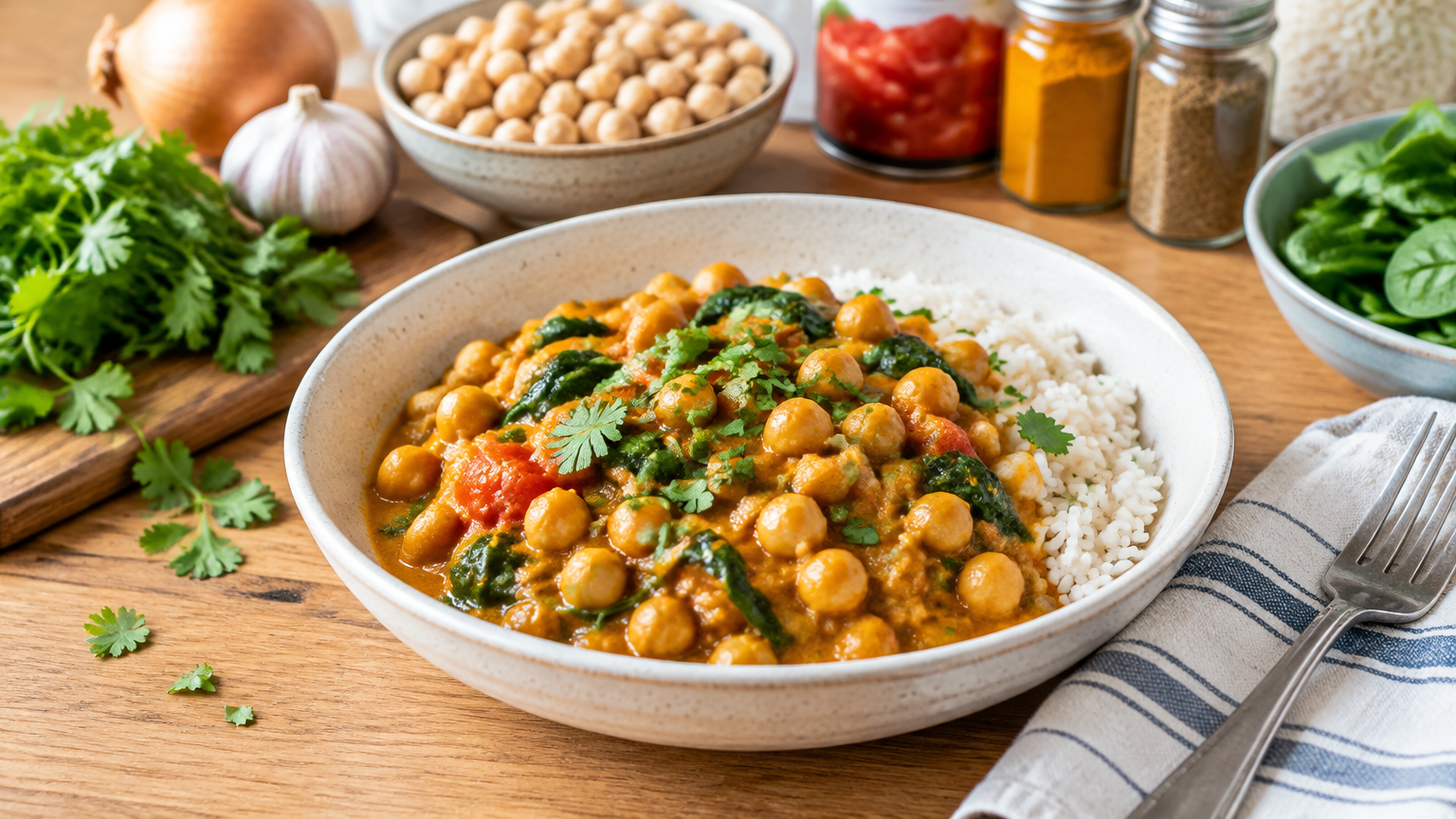
Easy chickpea curry for beginners takes about 30 minutes and uses canned chickpeas, canned tomatoes or coconut milk, an onion, garlic, and common spices like curry powder, cumin, and turmeric. Sauté the aromatics, toast the spices, add the liquid and chickpeas, simmer until thickened, then season to taste.
This guide gives you a flexible, low-effort recipe built for a budget weeknight dinner, plus simple fixes for the most common problems: bland flavor, watery sauce, and harsh spices.
Key Takeaways
- Canned chickpea curry needs only a handful of pantry ingredients and one pot.
- Choose a tomato base for tang, coconut milk for creaminess, or combine them for balance.
- Toast the spices in oil for under a minute to bring out their flavor.
- Salt, acid, and simmer time fix most bland curries. Uncovered simmering and mashed chickpeas fix most watery ones.
- Start mild and let everyone add heat at the table.
What You'll Need (Pantry Ingredients)
The recipe below makes about 3–4 servings. Amounts are flexible, so treat them as a starting point rather than a strict formula.
Core ingredients
- 2 cans (about 15 oz each) chickpeas, drained and rinsed
- 1 medium onion, chopped
- 3 cloves garlic, minced
- 2 tablespoons oil (any neutral cooking oil works)
- Base: one 14–15 oz can diced or crushed tomatoes, or one 13.5 oz can coconut milk, or half of each
- 1½ to 2 tablespoons curry powder, or a blend of 2 teaspoons cumin, 2 teaspoons coriander, 1 teaspoon turmeric, and ½ teaspoon chili powder
- Salt, starting with ½ teaspoon and adjusting at the end
Optional add-ins
- A thumb-sized piece of fresh ginger, grated
- 1–2 tablespoons tomato paste for deeper flavor
- A few handfuls of spinach or a cup of frozen vegetables
- Lemon or lime juice to brighten the finished dish
- Fresh cilantro for garnish
Basic equipment
You need a medium pot or deep skillet, a wooden spoon, and a colander for rinsing the chickpeas. If you're missing a wide, deep pan, a deep skillet or sauté pan gives you plenty of surface area for the sauce to thicken evenly. A regular pot works fine too.
Quick shopping checklist
| Item | Have it? |
|---|---|
| Canned chickpeas (2 cans) | ☐ |
| Onion and garlic | ☐ |
| Cooking oil | ☐ |
| Canned tomatoes and/or coconut milk | ☐ |
| Curry powder (or cumin, coriander, turmeric, chili powder) | ☐ |
| Salt | ☐ |
| Optional: ginger, tomato paste, spinach, lemon/lime, cilantro | ☐ |
Which Base Should You Choose: Tomatoes or Coconut Milk?
Both bases work well in canned chickpea curry. The difference is mostly in taste and texture.
- Tomato base: Tangier and lighter. The acidity gives the curry a bright, punchy flavor, and the sauce tends to look deep orange-red.
- Coconut milk base: Creamier and milder. It softens the spices and gives the sauce a rounder, richer feel.
- Combination: Balanced and rich. The tomatoes bring tang while the coconut milk smooths it out. This is a good choice if you want a middle path.
How to decide: Use what's in your pantry. If you only have tomatoes, you're set. If you only have coconut milk, you're also set, and a squeeze of lemon at the end will add the brightness tomatoes would have provided. If you have both, try half a can of each for your first batch and adjust next time.
If you're building a rotation of meatless meals, these plant-based dinner ideas can help you plan around staples like canned chickpeas.
Step-by-Step: How to Make Easy Chickpea Curry for Beginners
Step 1: Prep the chickpeas and aromatics
Drain and rinse the chickpeas in a colander. Chop the onion, mince the garlic, and grate the ginger if you're using it. Having everything ready before you turn on the stove helps, because the garlic and spices cook quickly.
Step 2: Cook the onion
Heat the oil in your pot over medium heat. Add the onion with a pinch of salt and cook, stirring occasionally, for about 5–8 minutes, until soft and lightly golden. Don't rush this step. Well-cooked onion gives the sauce a sweeter, more developed base.
Step 3: Add garlic and spices
Stir in the garlic (and ginger, if using) along with the curry powder or your spice blend. Cook for about 30–60 seconds, stirring constantly. You should smell the spices become fragrant. If they start to stick or look like they might scorch, add a splash of water right away.
If you're using tomato paste, add it now and cook it for a minute until it darkens slightly.
Step 4: Add tomatoes and/or coconut milk
Pour in your chosen base. Stir well and scrape up any browned bits from the bottom of the pot, since they carry a lot of flavor. If you're using tomatoes alone, add about ¼ to ½ cup water to keep the sauce from getting too thick too soon.
Step 5: Add chickpeas and simmer
Add the drained chickpeas and stir to coat. Bring to a gentle bubble, then lower the heat and simmer uncovered for about 15–20 minutes, stirring occasionally. Use the back of your spoon to lightly mash a few chickpeas against the side of the pot. The mashed ones release starch and help thicken the sauce naturally.
If you're adding spinach or frozen vegetables, stir them in during the last 3–5 minutes.
Step 6: Season and finish
Taste the curry. Add salt a pinch at a time. Then add a squeeze of lemon or lime juice to wake up the flavors. Stir in chopped cilantro if you have it. Taste once more and adjust. This final tasting step is what turns an okay curry into a good one.
How to Adjust the Spice Level
"Curry powder" blends vary widely in heat, so it helps to know your options.
Make it milder
- Use a mild curry powder, or reduce the chili powder in a homemade blend.
- Skip any fresh or dried chili.
- Use more coconut milk in the base.
- Stir a spoonful of yogurt into individual bowls at serving time.
Make it spicier
- Add chili powder, red pepper flakes, or a chopped fresh chili.
- Finish with a little black pepper.
- Add heat gradually, ¼ teaspoon at a time, and taste between additions. Heat often builds as the curry simmers, so go slowly.
Tip for tailoring to a group
Cook the pot on the mild side, then let people customize their own bowls with hot sauce, chili flakes, or sliced fresh chili at the table. This works especially well for mixed households.
Serving Ideas
With rice
Basmati, jasmine, or any plain rice is a classic partner. The rice soaks up the sauce and balances the spices.
With bread
Naan, pita, flatbread, or even simple toast all work for scooping. Warm the bread briefly in a dry skillet or oven first.
Other easy options
- Spoon the curry over a baked potato
- Serve with cooked quinoa
- Add a simple side salad for freshness
- Top with a dollop of yogurt
Leftovers note
Store leftover curry in a covered container in the refrigerator. Reheat it thoroughly until hot throughout, adding a splash of water if the sauce has thickened. Curries often taste even more flavorful the next day as the spices meld.
Troubleshooting Bland or Watery Curry
Even simple recipes can go sideways. Here's how to rescue the most common issues.
If the curry tastes bland
- Add salt in small amounts. Under-salting is the most common culprit. Add a pinch, stir, and taste.
- Add acid. A squeeze of lemon or lime juice, or a small splash of vinegar, brightens flat flavors.
- Bloom more spice. Heat a teaspoon of oil in a small pan, add a little more curry powder or cumin for 20–30 seconds, then stir it into the pot. You can also add more garlic or ginger.
- Simmer longer. Another 5–10 minutes can deepen the flavor.
If the curry is too watery
- Simmer uncovered longer. Evaporation concentrates the sauce.
- Mash some chickpeas. Press a handful against the side of the pot to thicken.
- Stir in tomato paste. A spoonful adds body and flavor. Cook it for a couple of minutes.
If it's too thick, sour, or harsh
- Too thick: Thin with water or broth, a few tablespoons at a time.
- Too sour: Balance with a pinch of sugar or a bit more coconut milk.
- Harsh or raw-tasting spices: This usually means the spices didn't cook long enough. Simmer the curry a bit longer, or bloom some extra spice in oil as described above.
Quick-fix summary
| Problem | First thing to try | Backup fix |
|---|---|---|
| Bland | Pinch of salt, then lemon/lime | Bloom more spice in oil |
| Watery | Simmer uncovered | Mash chickpeas or add tomato paste |
| Too thick | Splash of water or broth | Reheat gently, stirring |
| Too sour | Pinch of sugar | More coconut milk |
| Raw-tasting spices | Simmer longer | Bloom extra spice in oil |
FAQs
Can I make chickpea curry without coconut milk?
Yes. Use canned tomatoes alone, adding a little water as needed. If you want creaminess, finish with yogurt or a plant-based alternative.
Do I need to rinse canned chickpeas?
Rinsing is common and helps remove the canning liquid, which some people find has a strong taste. Follow the can's label and your own preference.
What can I use if I don't have curry powder?
Combine common ground spices such as cumin, coriander, turmeric, and chili powder, adjusting to taste. The amounts listed in the ingredients section are a good starting point.
Final Takeaway
Easy chickpea curry for beginners comes down to a few repeatable habits: cook the onion until soft, toast the spices briefly, simmer until the sauce thickens, and taste before serving. Because it relies on pantry ingredients and swaps easily between tomatoes and coconut milk, it fits comfortably into a budget weeknight dinner routine.
Try the base recipe once as written. Then make it your own with different spices, more or less heat, and your favorite rice or bread on the side.