
This article contains affiliate links. We may earn a commission if you buy through them, at no extra cost to you.
Plant-Based Dinners in 20 Minutes or Less: Quick Budget Ideas for Busy Nights
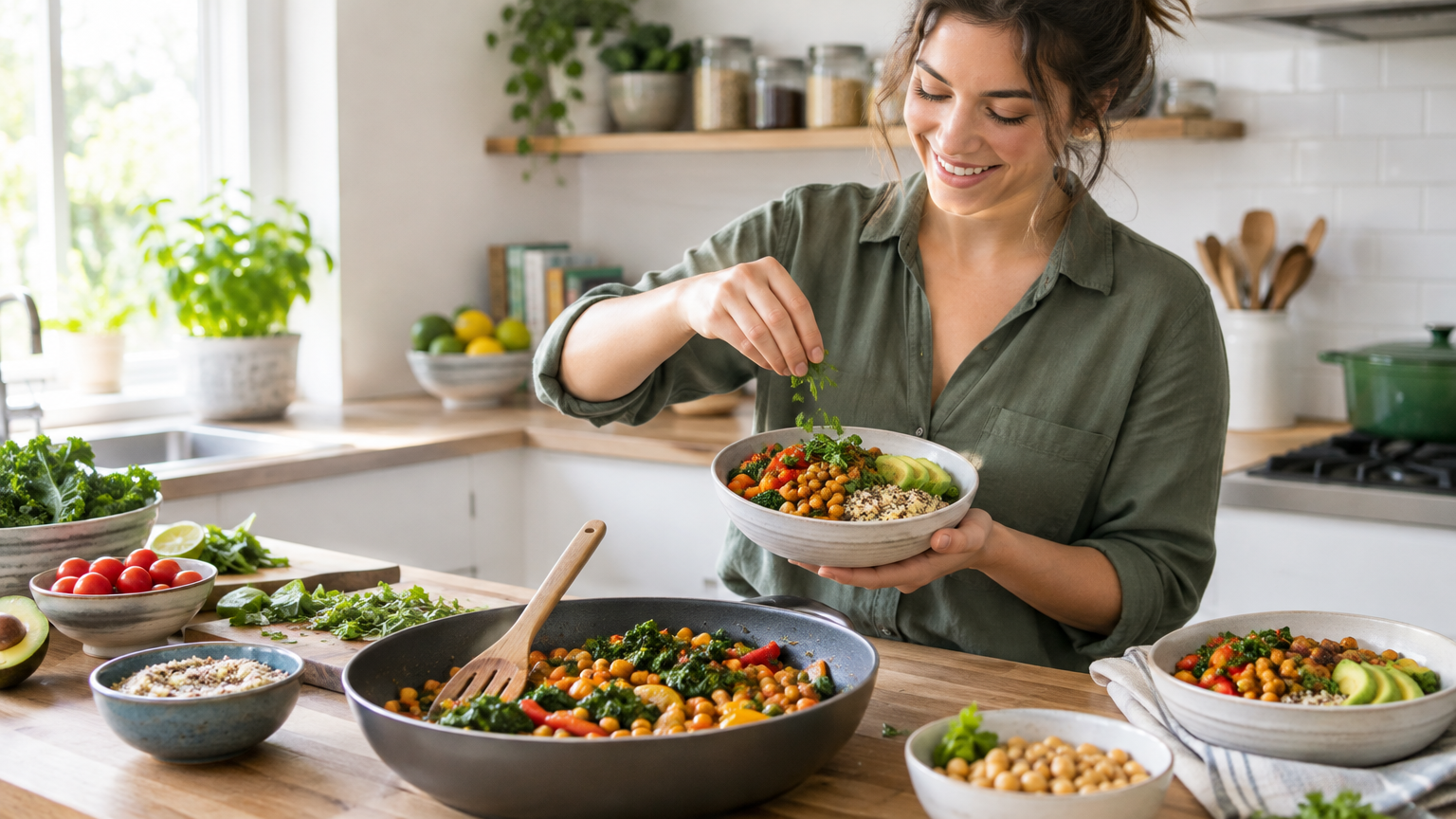
The easiest quick plant based dinners for beginners combine a fast base (instant rice, couscous, pasta, tortillas), a ready protein (canned beans, chickpeas, lentils, tofu), frozen vegetables, and a flavorful sauce or seasoning. Heat, combine, season, and eat. The patterns below are flexible templates, not strict recipes, so swap in whatever you already have.
Key Takeaways
- Every dinner here follows one formula: base + protein + vegetable + flavor.
- Canned beans, instant grains, and frozen vegetables need little or no prep, which keeps weeknight cooking short.
- Starting the slowest item first (usually water for rice or pasta) is the biggest time-saver.
- A small, versatile stock of staples can cover all five patterns.
- Cook extra grains or beans once and reuse them the next night.
The Simple 20-Minute Formula
Most fast plant-based dinners are variations on four parts:
Base + protein + vegetable + flavor
- Base: instant rice, couscous, quick-cooking pasta, noodles, tortillas, or flatbread
- Protein: canned beans, chickpeas, lentils, or tofu
- Vegetable: frozen vegetables, which are already washed and chopped
- Flavor: sauce, spices, salsa, or acid like lemon or vinegar
Practical steps
1. Start the slowest item first. Put water on for pasta or rice before you do anything else. 2. Drain and rinse canned beans while that water heats. 3. Cook vegetables straight from frozen in a skillet or the microwave. There's no need to thaw them first. 4. Combine everything and add sauce, spices, or acid (lemon, vinegar, salsa). 5. Taste and adjust salt at the end, since canned goods and bottled sauces already contain some.
Once this order feels natural, you can improvise without a recipe.
5 Fast Dinner Patterns
Here's a quick comparison, followed by details on each pattern.
| Pattern | Base | Protein | Vegetable | Flavor | Start first |
|---|---|---|---|---|---|
| Burrito bowls | Instant rice | Black or pinto beans | Frozen corn or peppers | Salsa | Rice |
| Tofu stir-fry | Instant rice or noodles | Firm tofu | Frozen stir-fry mix | Soy or stir-fry sauce | Rice or noodles |
| White bean and greens pasta | Quick-cooking pasta | Canned white beans | Frozen spinach or kale | Garlic, olive oil, lemon | Pasta water |
| Chickpea curry | Instant rice or flatbread | Canned chickpeas | Frozen vegetables | Curry powder or paste | Grain |
| Bean-and-veggie soup or stew | Toast or crackers | Canned beans or lentil pouches | Frozen vegetables | Broth, tomatoes, dried herbs | Everything in one pot |
1. Burrito Bowls
Build: instant rice, canned black or pinto beans, frozen corn or peppers, salsa, and optional avocado.
Prep-order tip: Start the rice first. While it cooks, warm the beans and frozen vegetables together in one pan, then assemble the bowls.
Practical example: Spoon rice into a bowl, then add the warm beans and corn. Top with salsa and sliced avocado if you have it. A squeeze of lime and a pinch of chili flakes or cumin add flavor with almost no effort. If you'd rather use tortillas, warm them in a dry pan and turn the same filling into burritos or tacos.
2. Tofu and Frozen-Veggie Stir-Fry
Build: firm tofu, frozen stir-fry vegetables, soy sauce or another bottled stir-fry sauce, and instant rice or noodles.
Prep-order tip: Start the rice or noodles, then cube and sear the tofu. Add the frozen vegetables next and the sauce last so it doesn't burn.
Practical example: Pat the tofu dry with a towel so it browns instead of steaming. Sear it in a hot, oiled skillet until golden on a few sides, then push it aside or remove it. Add the frozen vegetables and stir until hot. Pour in the sauce for the final minute and serve over the rice or noodles. Sesame seeds or chili flakes are an easy finish if you have them.
3. White Bean and Greens Pasta
Build: quick-cooking pasta, canned white beans, frozen spinach or kale, garlic, olive oil, and lemon.
Prep-order tip: Put the water on to boil first. Add the frozen greens and beans to the pan or pot during the last few minutes of the pasta's cooking time.
Practical example: While the pasta cooks, warm olive oil with minced garlic in a large skillet over low heat, taking care not to brown the garlic. Drain the pasta, saving a small cup of the cooking water. Toss the pasta, beans, and greens in the skillet, adding splashes of pasta water until the sauce coats everything. Finish with lemon juice and black pepper. If you use frozen spinach, press out extra water so the dish doesn't turn soupy.
4. Chickpea Curry
Build: canned chickpeas, canned tomatoes or coconut milk, curry powder or paste, frozen vegetables, and instant rice or flatbread.
Prep-order tip: Start the grain, then toast the spices briefly in oil before adding liquids, chickpeas, and vegetables. Simmer until heated through.
Practical example: Warm a spoonful of oil in a saucepan and stir in the curry powder or paste for under a minute, until fragrant. Add the tomatoes or coconut milk, the rinsed chickpeas, and a couple of handfuls of frozen vegetables such as peas or mixed vegetables. Simmer until everything is hot, then taste. A squeeze of lemon or lime brightens the finished dish. Serve over rice or with warmed flatbread. Using tomatoes gives a tangier curry, while coconut milk makes it creamier.
5. Fast Bean-and-Veggie Soup or Stew
Build: canned beans or pre-cooked lentil pouches, broth, canned tomatoes, frozen vegetables, dried herbs, and toast or crackers on the side.
Prep-order tip: Combine everything in one pot first, then use the simmer time to prepare the sides.
Practical example: Add broth, tomatoes, beans or lentils, frozen vegetables, and a teaspoon or so of dried herbs (Italian seasoning or thyme work well) to a pot. Bring it to a simmer. While it heats, toast bread or set out crackers. Season at the end, since broth and canned tomatoes may already be salty. If you want a thicker stew, mash a few beans against the side of the pot with a spoon.
What to Keep on Hand for Rushed Evenings
A short, repeatable stock list is what makes these dinners possible when you're tired. You can use this as a checklist. If you want a printable version, a beginner plant-based pantry checklist can help you organize it by store section.
Pantry
- [ ] Canned beans, chickpeas, and lentils
- [ ] Instant or quick-cooking rice, couscous, and pasta
- [ ] Canned tomatoes, broth, and coconut milk
- [ ] Tortillas or flatbread
If you're ready to stock up on basics like instant rice and canned beans, buy only what fits the patterns you plan to try first.
Freezer
- [ ] Mixed stir-fry vegetables, spinach, corn, peas, and peppers
- [ ] Optional: frozen cooked rice or edamame
Fridge
- [ ] Tofu, hummus, and lemons or limes
Flavor Boosters
- [ ] Soy sauce, salsa, curry powder, garlic, chili flakes, and olive oil
Many of these items overlap across patterns. Beans work in bowls, pasta, and soup, and one bag of frozen vegetables can go into a stir-fry or a curry.
Budget and Time-Saving Tips
- Choose versatile staples. Pick items that work in several patterns, such as canned beans, frozen mixed vegetables, and a single all-purpose spice blend, rather than ingredients for only one dish.
- Rinse canned beans, and check labels for sodium if that matters to you. Rinsing is a common way to reduce the salt from the canning liquid, and labels vary by brand and product.
- Cook once and use twice. Make extra rice or beans tonight and use them tomorrow in a bowl, a soup, or a quick curry. Refrigerate leftovers promptly.
- Use one pan or one pot. Fewer dishes mean less time spent after dinner. Soups, curries, and skillet meals are good for this. For more ideas, see one-pot plant-based meal ideas.
- Build from what's already in your kitchen. If you have half a bag of frozen peas, put them in the curry instead of buying something new.
FAQ
Are canned beans and frozen vegetables acceptable for plant-based dinners?
Yes. They are pre-cooked or ready to cook, which makes them practical for beginners. Rinsing canned beans is a common way to reduce the salt from the canning liquid.
How can I make quick plant-based dinners more filling?
Include a protein (beans, lentils, tofu), a starch or whole grain, and a source of fat such as olive oil, nuts, seeds, or avocado.
Can I prep any of this ahead?
Yes. Cook extra grains, rinse and store beans, chop fresh vegetables, or mix sauces in advance. Refrigerate leftovers promptly.
Conclusion
Quick plant-based cooking comes down to a repeatable formula: a fast base, a ready protein, frozen vegetables, and a flavorful finish. Pick one of the five patterns, stock a few staples, and rotate flavors with salsa, soy sauce, curry powder, or lemon as the week goes on. The same cans and bags can make very different dinners.
Start with one pattern this week and build your pantry list around it. Once the steps feel familiar, you can mix and match the patterns without a recipe.