
This article contains affiliate links. We may earn a commission if you buy through them, at no extra cost to you.
Easy Plant-Based Sauces and Seasonings That Make Cheap Dinners Taste Better
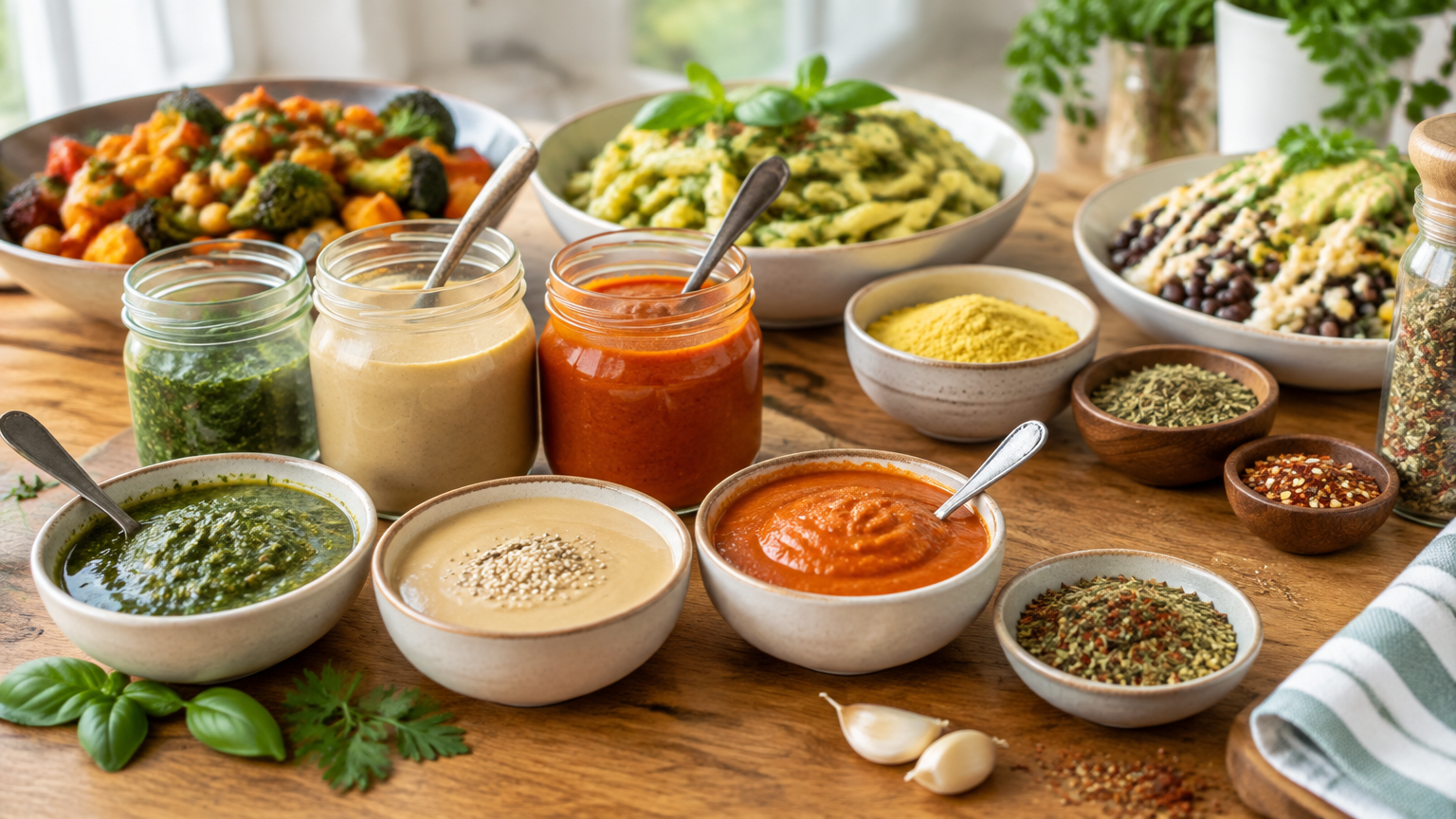
The easiest plant-based sauces for beginners use pantry staples and need only a bowl and a whisk, or a blender. Start with five: peanut sauce, tahini-lemon, tomato-garlic, a cashew-free creamy sauce, and spicy soy-ginger. Each turns plain rice, beans, or vegetables into a meal. Add a few basic spices and you can vary the flavor all week.
Key Takeaways
- Five sauces cover most flavor styles: nutty, tangy, savory-tomato, creamy, and spicy.
- Three of the five (peanut, tahini-lemon, spicy soy-ginger) need no cooking.
- Season in this order: salt first, then acid, then spice.
- One sauce plus a cheap base, a protein, and vegetables makes a complete dinner.
- Make one sauce in bulk and change the toppings through the week.
How to Use This Guide
Each sauce below has an ingredient list, quick steps, and serving ideas. A few ground rules make them easier to follow:
- Amounts are starting points. Taste, then adjust salt, acid (lemon or vinegar), and heat.
- Thin with water one tablespoon at a time. It's easy to add more and hard to take it back.
- Thicken by adding more of the main ingredient, such as more peanut butter, tahini, or beans.
If you like learning from structured recipes, a beginner-friendly plant-based cookbook or recipe collection can be a useful companion once you've tried these basics.
Spice-Rack Starter List
You don't need a full spice wall. A small set covers a wide range of flavors.
Core spices and seasonings
- Salt and black pepper
- Garlic powder
- Onion powder
- Smoked paprika
- Ground cumin
- Chili flakes or cayenne
- Dried oregano or Italian seasoning
- Curry powder or chili powder (pick one to start)
Flavor boosters to keep on hand
- Soy sauce or tamari
- Vinegar (rice or apple cider)
- Lemons or bottled lemon juice
- Nutritional yeast
- Fresh garlic and ginger
Beginner tip
Buy small amounts of spices first. Add more only after you use them up. That keeps your spending low and shows you which flavors you actually reach for.
Five Easy Plant-Based Sauces
1. Peanut Sauce
Ingredients:
- 3 tablespoons peanut butter
- 1 tablespoon soy sauce or tamari
- 1 tablespoon lime juice or vinegar
- 1 small clove garlic, minced (or a pinch of garlic powder)
- 1 teaspoon sweetener (maple syrup or sugar)
- 2–4 tablespoons warm water
- Optional: chili flakes
Steps: Whisk everything together in a bowl. Add warm water a spoonful at a time until the sauce is pourable.
Use it on:
- Rice with steamed broccoli or cabbage
- Noodles
- Roasted sweet potatoes
- As a dip for raw vegetables
Tip: Warm water blends into peanut butter more easily than cold.
2. Tahini-Lemon Sauce
Ingredients:
- 3 tablespoons tahini
- 2 tablespoons lemon juice
- 1 small clove garlic, minced
- Pinch of salt
- 2–4 tablespoons water
- Optional: a pinch of cumin
Steps: Whisk the tahini and lemon juice. It will thicken and look clumpy at first, which is normal. Add water gradually until smooth, then season to taste.
Use it on:
- Chickpeas
- Roasted carrots or cauliflower
- Grain bowls
- Falafel-style patties
Tip: If it tastes bitter, see the troubleshooting section below.
3. Tomato-Garlic Sauce
Ingredients:
- 1 can (about 14–15 oz) crushed tomatoes
- 2 tablespoons olive oil
- 2–3 cloves garlic, sliced or minced
- 1 teaspoon oregano or Italian seasoning
- Salt to taste
- Pinch of sugar, only if the sauce tastes too acidic
- Optional: chili flakes
Steps: Gently cook the garlic in the oil over low to medium heat until fragrant, without letting it brown. Add the tomatoes and seasonings. Simmer until slightly thickened.
Use it on:
- White beans over rice
- Pasta
- Sautéed zucchini or eggplant
- Baked potatoes
Tip: This is the one sauce here that needs a stove, but it stays hands-off while it simmers.
4. Cashew-Free Creamy Sauce
Many plant-based creamy sauces rely on cashews. White beans make a budget-friendly alternative.
Ingredients:
- 1 can white beans (cannellini or great northern), drained and rinsed
- 2 tablespoons olive oil
- 2 tablespoons lemon juice
- 1 clove garlic
- 2 tablespoons nutritional yeast
- ½ teaspoon salt, plus more to taste
- ¼–½ cup water, as needed
Steps: Blend until smooth, adding water as needed. Warm gently in a small pot if you'd like it hot.
Use it on:
- Pasta
- Steamed or roasted vegetables
- Rice bowls
- As a spread or salad dressing
Note: Sunflower seeds or silken tofu also work as a base. Adjust the liquid to get the texture you want. Sunflower seeds may need soaking or a stronger blender [VERIFY based on your blender and the seeds you use].
5. Spicy Soy-Ginger Sauce
Ingredients:
- 3 tablespoons soy sauce or tamari
- 1 teaspoon grated fresh ginger
- 1 clove garlic, minced
- 1 tablespoon rice vinegar
- ½ teaspoon chili flakes or 1 teaspoon chili sauce
- 1 teaspoon sweetener
- Optional: a splash of water
- Optional: a few drops of sesame oil, if you have it
Steps: Stir everything together. For a thicker glaze, simmer briefly with a small cornstarch-and-water mixture (about 1 teaspoon cornstarch mixed into 2 teaspoons cold water).
Use it on:
- Stir-fried vegetables over rice
- Tofu
- Black beans
- Roasted broccoli
Tip: Start with less chili. You can always stir in more.
Quick Comparison Table
| Sauce | Cooking needed? | Main flavor | Good with |
|---|---|---|---|
| Peanut | No (whisk) | Nutty, savory, a little sweet | Rice, noodles, sweet potatoes, raw veggies |
| Tahini-lemon | No (whisk) | Tangy, earthy | Chickpeas, roasted vegetables, grain bowls |
| Tomato-garlic | Yes (simmer) | Savory, herby | White beans, pasta, potatoes |
| Cashew-free creamy | No cooking (blender) | Mild, lemony, creamy | Pasta, vegetables, rice bowls |
| Spicy soy-ginger | No (stir) | Salty, sharp, spicy | Stir-fries, tofu, black beans |
Simple Formula for Cheap Dinners
You don't need a recipe for every meal. Use this pattern:
1. Pick a base: rice, potatoes, pasta, or another grain. 2. Add a protein: beans, lentils, chickpeas, or tofu. 3. Add vegetables: fresh, frozen, roasted, or sautéed. 4. Spoon on one sauce. 5. Finish with something fresh or crunchy, such as herbs, scallions, or seeds.
Practical examples
- Rice + black beans + frozen broccoli + spicy soy-ginger sauce + scallions. Heat the beans and broccoli, then drizzle the sauce over the top.
- Baked potato + white beans + tomato-garlic sauce + chopped parsley. Spoon the warm beans and sauce over a split potato.
- Quinoa or rice + chickpeas + roasted carrots + tahini-lemon sauce + sesame seeds. Roast the carrots while the grain cooks.
- Pasta + steamed cauliflower + cashew-free creamy sauce + black pepper. Toss everything in the warm sauce.
- Noodles + shredded cabbage + peanut sauce + crushed peanuts. Serve warm or cold.
Make-Ahead and Storage Tips
- Make a double batch of one sauce at the start of the week.
- Store in airtight containers in the refrigerator and use within a few days.
- Stir or whisk before serving, and add a little water if the sauce has thickened.
- Discard any sauce that smells or looks off.
Sauces made with beans or tomatoes are perishable, so treat them like leftovers. Label the container with the date so you don't have to guess. If you plan to batch-cook often, a set of airtight glass storage containers makes it easier to keep sauces organized, though any clean lidded container works.
Beginner Troubleshooting
- Too thick: add water a spoonful at a time.
- Too bitter (tahini): add a little more lemon, salt, or sweetener.
- Too salty: add water, acid, or more of the base ingredient.
- Bland: add salt first, then acid, then spice.
A quick tasting checklist
Before serving any sauce, taste it and ask:
- [ ] Does it need more salt?
- [ ] Does it taste flat? Add lemon, lime, or vinegar.
- [ ] Do you want more heat? Add chili flakes a pinch at a time.
- [ ] Is it the right thickness for the dish?
- [ ] Does it need something sweet to soften sharp or bitter notes?
FAQ
What are the easiest plant-based sauces for beginners to make?
Peanut sauce, tahini-lemon, and spicy soy-ginger are the simplest. They need no cooking and just a whisk.
Can I make creamy sauces without cashews?
Yes. Blend white beans, silken tofu, or sunflower seeds with lemon, garlic, and a little oil or water.
How do I use these sauces on a budget?
Pair a sauce with inexpensive staples like rice, beans, frozen vegetables, or potatoes. Make one sauce in bulk and change the toppings through the week.
Conclusion
Plain rice, beans, and vegetables become much more interesting with a good sauce. Start with one this week. Peanut or tahini-lemon is a good first pick because it needs only a bowl and a whisk. Once you're comfortable, add a second sauce, then build out your spice rack gradually. Taste as you go, adjust the salt, acid, and heat, and you'll soon be making these without measuring.